‘Drones all night. By morning, you smell the smoke’: life in the last hotel on Ukraine’s frontline
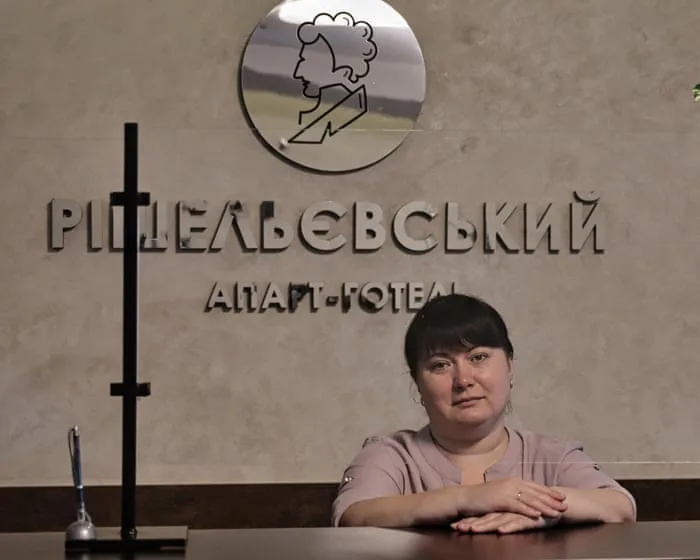
Amid blackouts, artillery fire and the onslaught of Russian drone attacks, the Richelievsky in Kherson provides a refuge for those with nowhere else to go
T here is one important rule in the Richelievsky, Kherson’s last functioning hotel: close the curtains before dusk. Less than a kilometre away lies the Dnipro, the river that has formed the frontline since Ukrainian forces liberated Kherson in November 2022; Moscow’s troops are on the opposite bank.
In a city where Russian drone operators hunt civilians in what is now widely known as the “human safari”, even a sliver of light escaping through a window may be enough to reveal someone’s location after dark.
In the lobby, Yevhen Emtsov, the hotel’s manager, sits at a small round table almost buried beneath papers. Outside, explosions punctuate the evening, joined at intervals by the mechanical hum of drones patrolling the streets in the red zone. Inside, residents pass through, pausing with questions and requests at the table that now serves as Emtsov’s office.
In more peaceful times, the Richelievsky accommodated tourists and business travellers attending conferences. The three-star hotel belonged to a different Kherson, one in which the river drew visitors rather than marking a frontline.
But in March 2022, as Russian forces closed in, Emtsov began taking in people fleeing heavily shelled communities along the Dnipro without waiting for the hotel owners’ approval. By the time the city came under occupation, the building had already begun its transformation from a commercial hotel into a refuge.
In the months that followed the invasion, between 200 and 300 people were staying, far beyond its intended maximum capacity of 120. Russian patrols would enter the building, questioning residents and recording their fingerprints. “Imagine you are sitting at home, strangers come in and begin doing whatever they want,” Emtsov says.
Today, the hotel is home to 41 displaced people, with rooms and three meals a day provided free of charge. “People come to us,” Emtsov says. “You can sleep here today, and tomorrow we will see. Nobody sleeps on the street. Nobody.”
It is close to midnight when the power cuts out, leaving the hotel and the city in complete darkness. “Drones and artillery can be heard throughout the night,” Emtsov says. “By morning, you will be able to smell the smoke.”
Hours later, kept awake by the noise of bombing outside, I make my way towards the top of the building, where the seventh floor lies deserted.
From up here, Kherson is almost entirely dark, its streets and buildings barely distinguishable in the blackout. Brief flashes flare among the stars, while explosions and the buzz of drones carry through the night.
When daylight returns, the building shows no sign of stirring. At this hour, the Richelievsky feels like a ghost hotel, mirroring the emptied neighbourhoods of Kherson’s red zone.
The first people to emerge are in the hotel kitchen: Natalia Yastreb and Iryna Rybalchenko reheat fishcakes and stew from the previous evening.
5News aggregated this summary from the outlet’s public feed. The full article, with all the context, is on www.theguardian.com — the content belongs to The Guardian UK.