What to expect from each stage of the partial lunar eclipse on Aug. 27-28
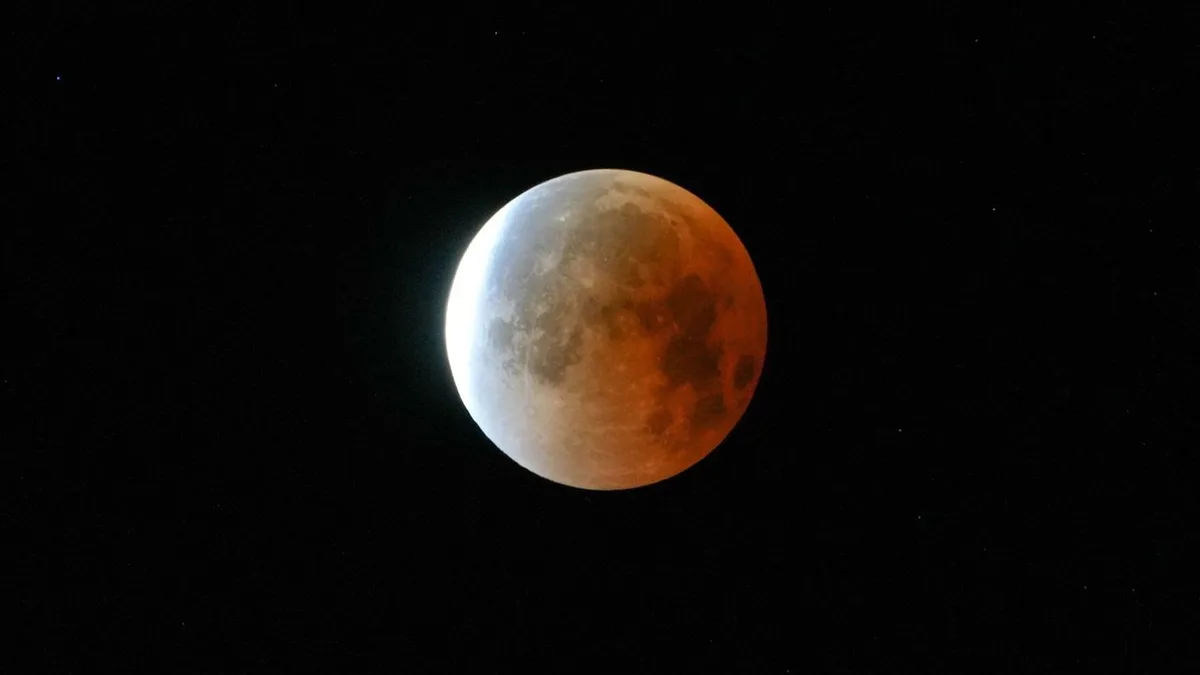
Here's what to expect during each stage of the Aug.
27-28 partial lunar eclipse, as our planet's colossal shadow swallows 96% of the moon's surface for billions on the night side of Earth.
August's lunar eclipse is the closing act of a dramatic two-part show, the opening act of which began on Aug.
12 as the moon covered the face of the sun to trigger a spectacular total solar eclipse over parts of Greenland, Iceland and Spain.
Eclipses always come in pairs , but the stages to be expected during a lunar eclipse are staggeringly different from its solar equivalent.
One major bonus of a lunar eclipse is that each stage unfolds simultaneously for everyone on the night side of Earth , where the lunar disk is above the horizon.
However, the local time for each stage will differ based on your location.
Lunar eclipses are also completely safe to view with the naked eye, or even through a pair of binoculars of a telescope, which will offer a magnified view of the moon as Earth's shadow sweeps across its cratered landscape.
Earth's shadow is divided into two concentric cones that are only visible during the brief window of a lunar eclipse.
The outer penumbral cone casts a soft, wide shadow, while the inner umbra reveals the distinct curve of Earth's silhouette.
The 5 stages of the partial lunar eclipse August 2026 Stage 1: Earth's penumbral shadow sweeps across the moon The penumbral stage of the May 2021 lunar eclipse, captured over Chile. (Image credit: Photo by MARTIN BERNETTI/AFP via Getty Images) The eclipse officially begins at 9:23 p.m.
EDT on Aug.
27 (0123GMT on Aug.
28), as Earth's outer penumbral shadow begins to cover the moon's surface, according to TimeandDate.com .
5News aggregated this summary from the outlet’s public feed. The full article, with all the context, is on www.space.com — the content belongs to Space.com.