A Big Swing Is Not Always Enough
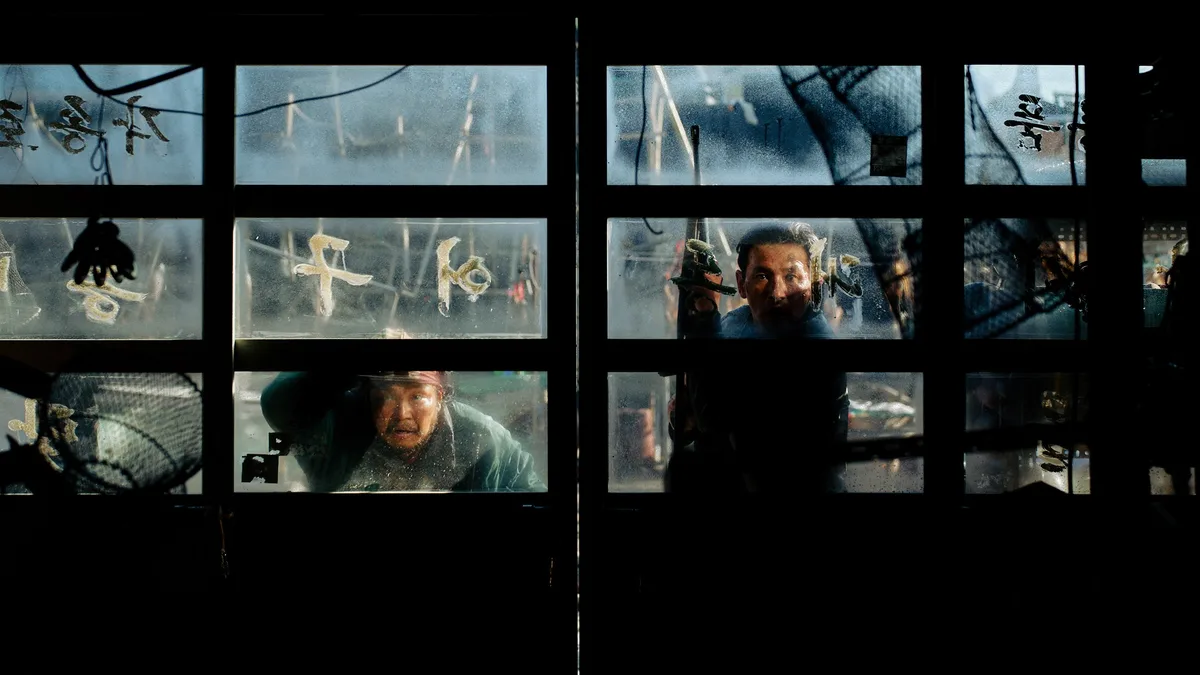
The marketing for Hope , the new film by the South Korean horror master Na Hong-jin, presents it on an epic, otherworldly scale.
It’s the most expensive Korean movie ever made, and the director’s first in more than 10 years, since his widely acclaimed hit, The Wailing ; its sweeping rollout across the United States, which includes special showings on premium-format screens, is also one rarely afforded to international productions.
That approach befits Hope ’s run time (a hefty 156 minutes); its blockbuster plot, about an alien invasion taking place near Korea’s Demilitarized Zone; and its open-endedness—apparently, Na has already written a sequel.
Yet the entire time I was watching it, I had one overriding feeling: Everything could perhaps be a little bit smaller.
Hope ’s first hour, after all, does not really hint at these greater ambitions.
It comes across as simply an extremely robust monster thriller, mixing action, horror, and comedy with aplomb.
The story initially concerns a slightly bumbling police officer, Bum-seok (played by Hwang Jung-min), who is summoned by local hunters to investigate a cow carcass covered in mysterious claw marks.
Bum-seok’s fears of an escaped zoo animal escalate as he returns to the town of Hope Harbor to find that carnage has erupted.
Na has the camera (and his anxious protagonist) navigate piled-up vehicles and trashed houses with jumpy timidity, building tension beautifully as Bum-seok tries to figure out exactly what could have caused such destruction.
Through all of the early action, I was most reminded of solid creature features such as Tremors , Eight Legged Freaks , and Crawl —the kind of delightful Hollywood pablum we don’t get enough of anymore.
Entries in this genre tend to pose the question of what would happen if a few oversize monsters trashed a town with impunity.
Another obvious influence is Bong Joon-ho’s The Host , which is more of a major-disaster flick; it features a massive tentacled kaiju while also playing on fears of blundering bureaucracy and capitalistic overreach—subjects common in Korean cinema.
Hope has similar fun poking at local law enforcement’s shambling initial response to catastrophe: The townspeople (many of them retirement-age) take their defense upon themselves and drive around in pickup trucks holding shotguns. [ Read: Godzilla minus the United States ] But as with any movie of this ilk, the buildup is often more fun than the reveal, and Hope begins to falter as we see more of the beings terrorizing the land.
Recent reports put its budget at nearly $75 million, which is a considerable amount for the South Korean film industry, but is still on the lower end for a project this ambitious.
5News aggregated this summary from the outlet’s public feed. The full article, with all the context, is on www.theatlantic.com — the content belongs to The Atlantic.