A Legendary Flood in Medieval Europe Wasn’t a Single Disaster—It Was 16 of Them
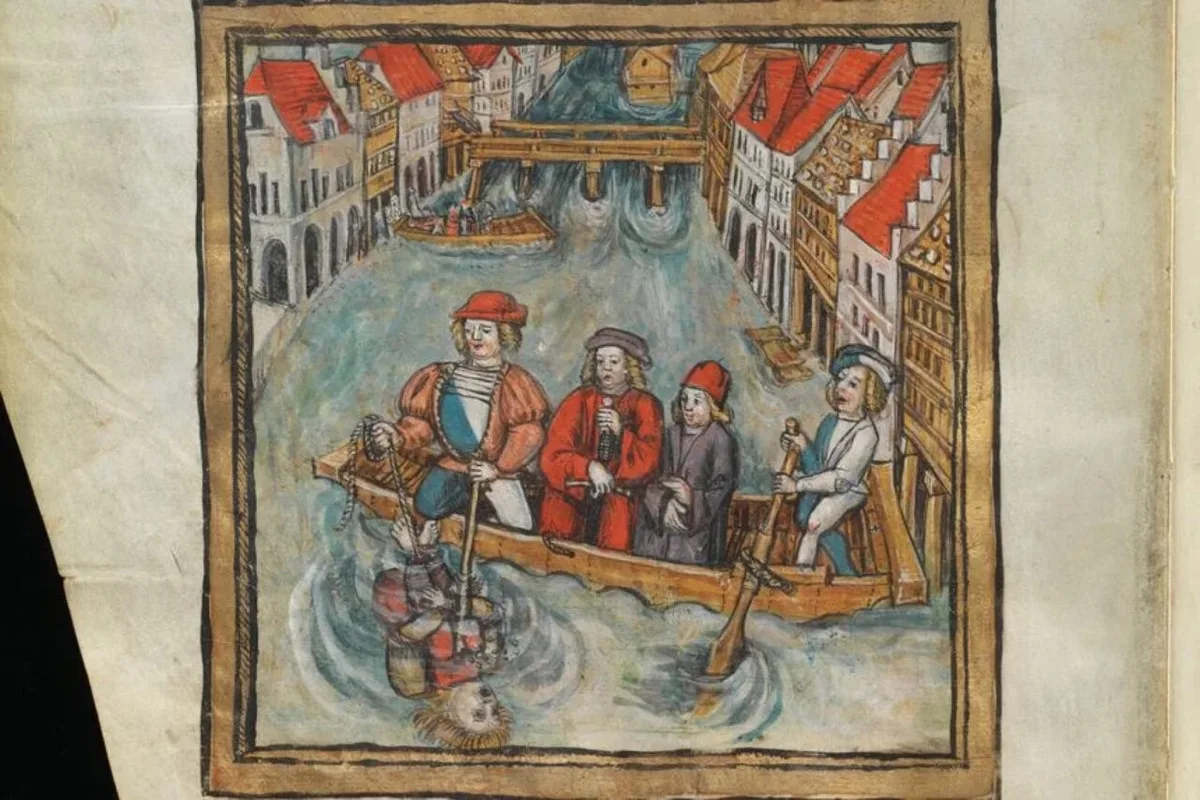
St. Mary Magdalene’s flood of 1342 was among the most catastrophic natural disasters in Medieval Europe. New research sheds further light on why the flood was so damaging—namely, because it followed a succession of floods over a couple of years.
In a Nature paper published yesterday, researchers present a highly detailed record of the flood, as well as the socioeconomic impact that the event had on Medieval European society. They learned that the Magdelena Flood was a part of 16 major flood events across Europe between 1341 and 1343. The continued flooding worsened the cumulative damage inflicted upon humans, buildings, and the natural environment.
“You may ask why we are interested in a series of floods nearly 700 years ago,” Neil Macdonald, the study’s co-author and a geographer at the Unviersity of Liverpool in the U.K., said in a statement . “The opportunity to understand the mechanisms that caused so many extreme flood events within a relatively short timeframe provides important information about how climate can be disrupted and the potential consequences.”
For the study, the team reviewed more than 1,000 sources, including economic and legal documents, historical chronicles, and personal records, in addition to making comparisons with contemporary floods affecting Europe. The researchers found a “cluster” of severe flooding events between 1341 and 1343, with 1342 displaying the highest number of extreme flood events in the last 700 years.
And the entire continent suffered as a result. In the study, the team explained that the floods caused many thousands of direct fatalities and many more caused by food shortages and disease. Major infrastructure was swept away, including an “iconic stone bridge across the Vltava in France, standing since 1172,” the team said. Overflowing water from big rivers like the Rhine and Danube left roads and transportation routes in ruins.
“The repetitive, widespread, and long-lasting flooding in these densely populated areas provoked fear and a feeling of emergency among the European population,” the team wrote. And people—scientists included—tried to make sense of the reason behind the flood, according to the paper. For instance, Johann von Winterthur, a Swiss historian, recounted that Paris astronomers believed that a specific constellation caused major flooding once every 500 years. In Austria, annalists declared 1342 the year that “four elements had been disturbed all around the world.”
The team, with more modern tools and knowledge in hindsight, doesn’t believe it was a coincidence that there was a concentration of floods at this time. For one, between 1340 and 1341 Europe also witnessed an unusually high number of volcanic eruptions, which can inject aerosols into the air and cause atmospheric disruption.
5News aggregated this summary from the outlet’s public feed. The full article, with all the context, is on gizmodo.com — the content belongs to Gizmodo.