Donald Trump’s Empire of Grift
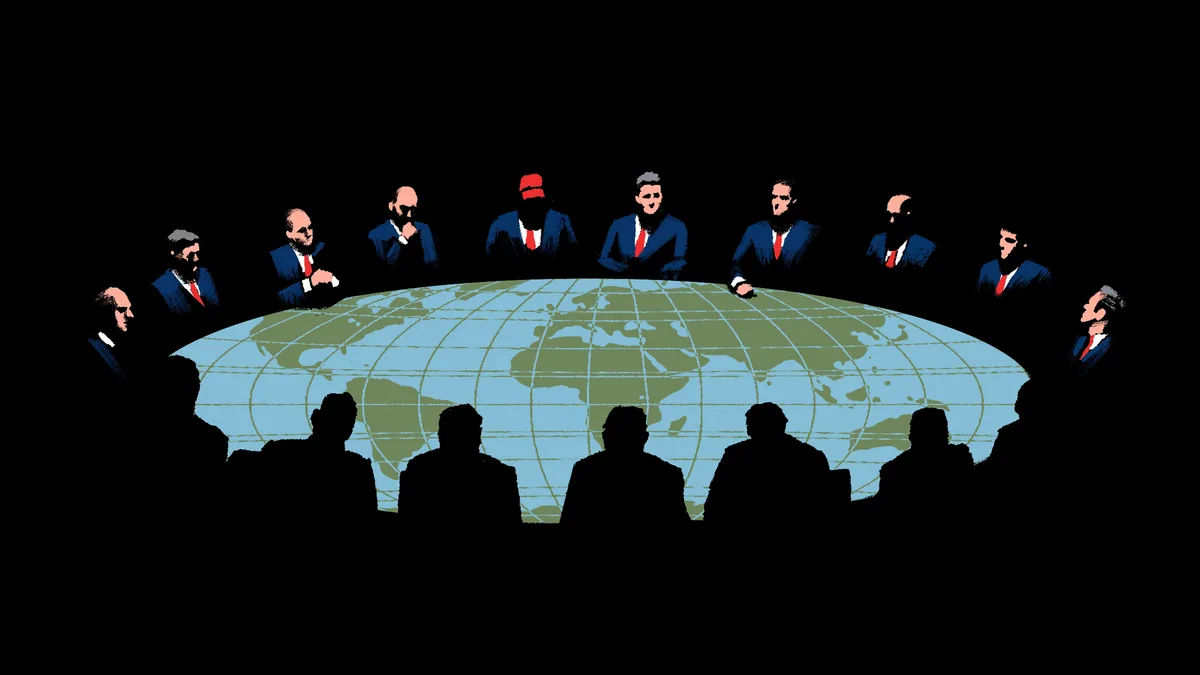
Illustrations by Ben Hickey In the summer of 2025, the government of Brazil suddenly found itself in a deep crisis.
The Trump administration had unexpectedly imposed 50 percent tariffs on the country’s products, threatening everyone from coffee planters to shoe manufacturers.
At the same time, the United States canceled the visas of eight Brazilian supreme-court justices and placed unprecedented financial and travel sanctions on a powerful justice and his family.
Many things about this crisis were novel.
For the first time anyone could remember, an American administration had used tariffs not for economic reasons but as a tool to influence the internal politics of a friendly democracy.
President Trump was publicly fulminating against what he called the “WITCH HUNT” against Jair Bolsonaro, the former president of Brazil, who was then on trial for plotting to carry out a coup after losing an election in 2022.
Some of Bolsonaro’s followers had stormed Brazil’s Parliament and other federal buildings, likely inspired by the actions of Trump supporters on January 6, 2021.
Steve Bannon, who called the Brazilian insurrectionists “freedom fighters,” was one of many MAGA boosters who cheered them on.
When combined with local grievances, the language of American election denial was right at home in Brazil.
The U.S. has used financial sanctions and visa bans in the past—but only to punish dictators, criminals, and people accused of grand-scale international corruption or brutal atrocities.
Brazilian Justice Alexandre de Moraes had never been credibly accused of any of this.
But by the Trump administration’s reckoning, he had two strikes against him: First, de Moraes’s court was trying Bolsonaro; second, he had provoked the ire of Elon Musk, Trump’s largest election donor.
De Moraes “needs to leave,” Musk said, comparing him to Voldemort , after de Moraes threatened to fine X and ordered it to block accounts accused of spreading disinformation.
The crisis was novel in other ways too.
5News aggregated this summary from the outlet’s public feed. The full article, with all the context, is on www.theatlantic.com — the content belongs to The Atlantic.