Sunken WWI and WWII Ships and Subs Are Leaking TNT Pollution Into the Ocean
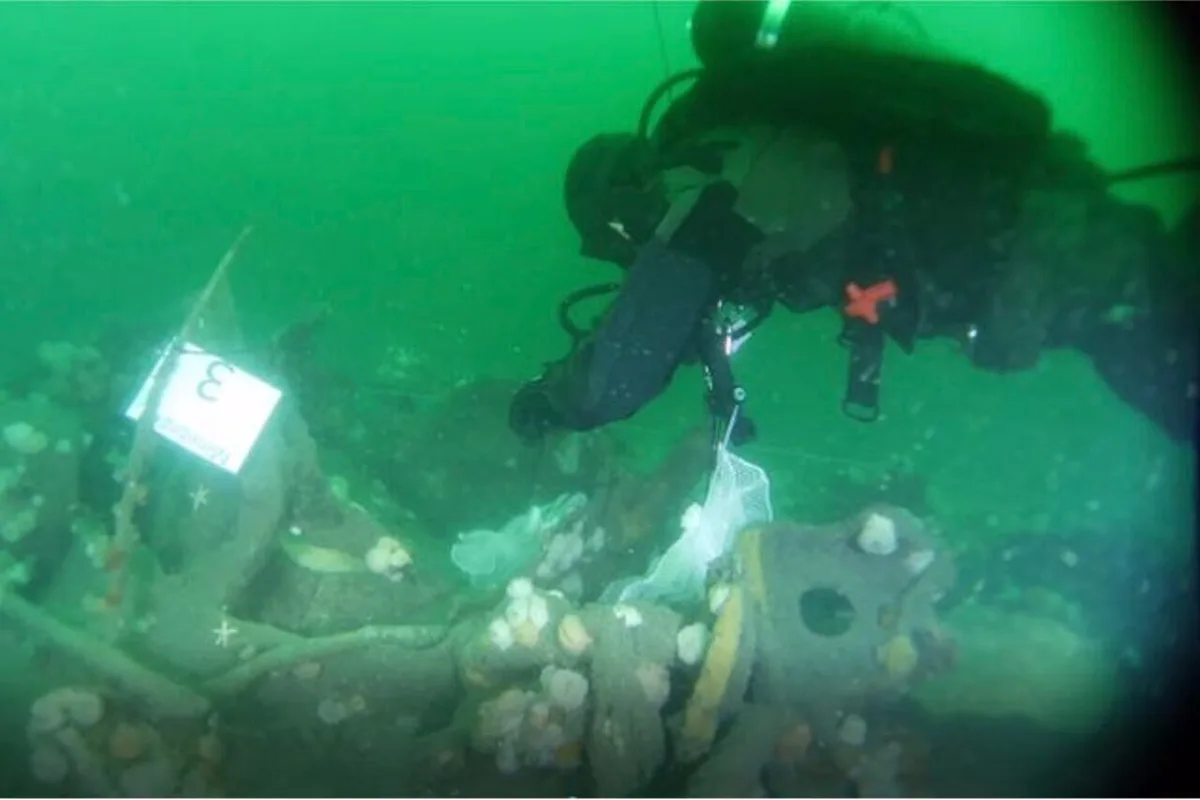
The German Type UC II minelaying submarine UC-30 was armed to do serious damage as it approached Denmark’s Wadden Sea Islands in 1917. The U-boat carried 18 mines, six torpedoes, and a crew of 27 Kaiserliche Marine seamen—all of whom sank to a watery grave when the German sub hit a British mine near the island of Rømø off Denmark’s southeastern coast.
UC-30 remained undiscovered for almost a century. But now, thanks to Aarhus University geoscientist Katrine Juul Andresen and multi-institution team, the Kaiser’s attack sub has joined a catalogue of roughly 1,500 sunken World War I and World War II vessels, as well as thousands more wrecks, mapped off the nation’s coast.
Andresen has been in a race against time to measure toxic leaks from these sunken artifacts to help remediation efforts to stop these wrecks from poisoning local marine food chains—including the many people who rely on North Sea commercial fishing for their sustenance.
For the new study, published this month in the journal Marine Pollution Bulletin, Andresen and colleagues used blue mussels ( Mytilus edulis ) as aquatic canaries in the undersea coal mine and found that leaking munitions are now damaging the enzymatic pathways these species employ to naturally detoxify.
“Pollution is definitely occurring,” Andresen explained in a statement. “We found traces of TNT in the wildlife, the seabed, and the water column.”
“It is likely a relatively localized source of pollution, but it will worsen as the wreck continues to deteriorate and expose more of the explosive material inside the mines,” according to Andresen, who collaborated with marine ecologists at Germany’s Alfred Wegener Institute and elsewhere on the new research.
The most common categories of chemical explosives now resting in these decaying munitions under the North Sea are 2,4,6-trinitrotoluene (TNT), 1,3,5-trinitro-1,3,5-triazine (RDX), and 1,3-dinitrobenzene (DNB). None of them are safe, according to study coauthor Edmund Maser, a toxicologist at the University Medical Center Schleswig-Holstein in Kiel.
“The problem with these ammunition compounds is that they are not only toxic but also carcinogenic,” as Maser told the American Geophysical Union’s Eos last year, after publishing a related study .
Carcinogens bring a higher level of risk compared to lesser toxins that living things can more readily metabolize in small doses. “One single molecule could cause cancer,” Maser said.
Andresen, Maser, and their colleagues found trace amounts of TNT in the seawater surrounding UC-30 at around 72.6 nanograms per liter (72.6 parts per trillion).
5News aggregated this summary from the outlet’s public feed. The full article, with all the context, is on gizmodo.com — the content belongs to Gizmodo.