Morphotonics raises €40M to expand its display tech into data centers
Disrupt 2026: OpenAI, Anthropic, Replit, and more take over 6 industry stages. 25% off tickets now
Disrupt ticket savings of up to $200 + 50% off a second ends Sept 25, 11:59 p.m. PT. REGISTER HERE.
The Netherlands’ ASML is possibly the biggest name in lithography, using its machines to etch patterns onto silicon wafers inside a computer chip factory, known as a “fab.” Fellow Dutch company Morphotonics is smaller and works in a different corner of the same field: nanoimprint lithography, or NIL, a process used to manufacture the displays in AR glasses and other optics. It said it has benefited from ASML’s supply chain and uses many of the same vendors.
Morphotonics has spent 12 years developing that technology, largely under the radar. Now, as demand for smart glasses and other optics surges, the company said Tuesday it has raised €40 million to scale up production and push into a new market: optical components for data centers.The round was backed by 3M Ventures, Innovation Industries, BOM, and Invest-NL. The European Innovation Council (EIC) Fund; Ernij Next, a Dutch family office; and the European Investment Bank (EIB) also participated.
Morphotonics’ NIL work means the startup creates a “stamp” and applies it to photosensitive materials to create various kinds of displays, from augmented reality glasses to privacy screens for cars.
This is useful in creating the waveguide technology used in smart glasses, including the Meta Ray-Ban Display, Even Reality, and Magic Leap. Waveguides are thin pieces of glass or plastic that deflect light along a specific path so that they display an image in front of the wearer’s eyes.
Smart glasses are just one application of Morphotonics’ technology, but it’s currently the most in-demand one. This week, China said sales of smart glasses in the country doubled in the first eight months of this year. In June, the market research firm IDC noted that shipments of smart glasses with displays are expected to reach 12.2 million by 2030 . As that market grows, manufacturers are looking for machines like Morphotonics’ that can produce those displays at scale.
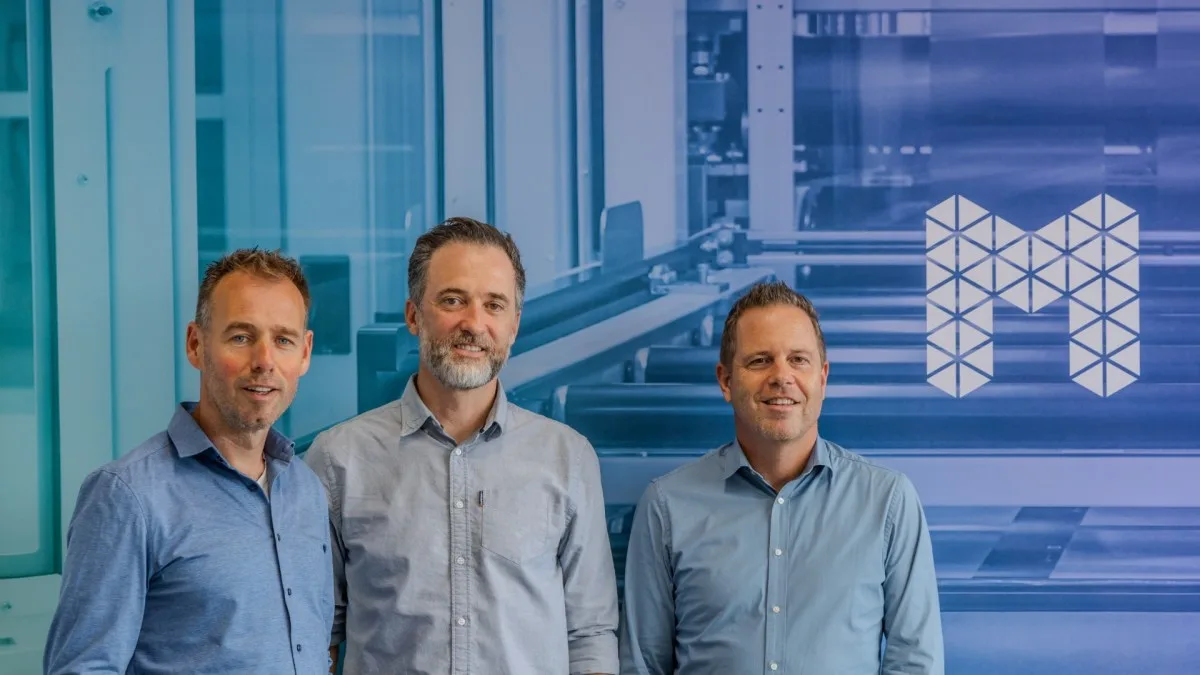
The latest fundraising is part of an extended round that began in 2024, raised in multiple installments. The company has used the money to more than double its headcount to 60 employees, up from roughly 30 in September 2024, when CEO Hugo Da Silva joined. Morphotonics still plans to hire and expects headcount to stabilize around 70 to 75 people.
“Typically, display manufacturers would acquire our equipment as part of the supply chain, and we integrate it into the entire manufacturing process. We teach them the process, we provide the chemicals, and they can manufacture that,” Da Silva said. The company’s manufacturing is heavily concentrated in Asia, with teams in China, Taiwan, South Korea, and the U.S. “Strong local presence is very important,” he said.
Da Silva said the company’s next machine, currently being built, will be capable of producing more than 6 million waveguides a year.
5News aggregated this summary from the outlet’s public feed. The full article, with all the context, is on techcrunch.com — the content belongs to TechCrunch.