Google and the UK think changing flights paths could cut down on climate change
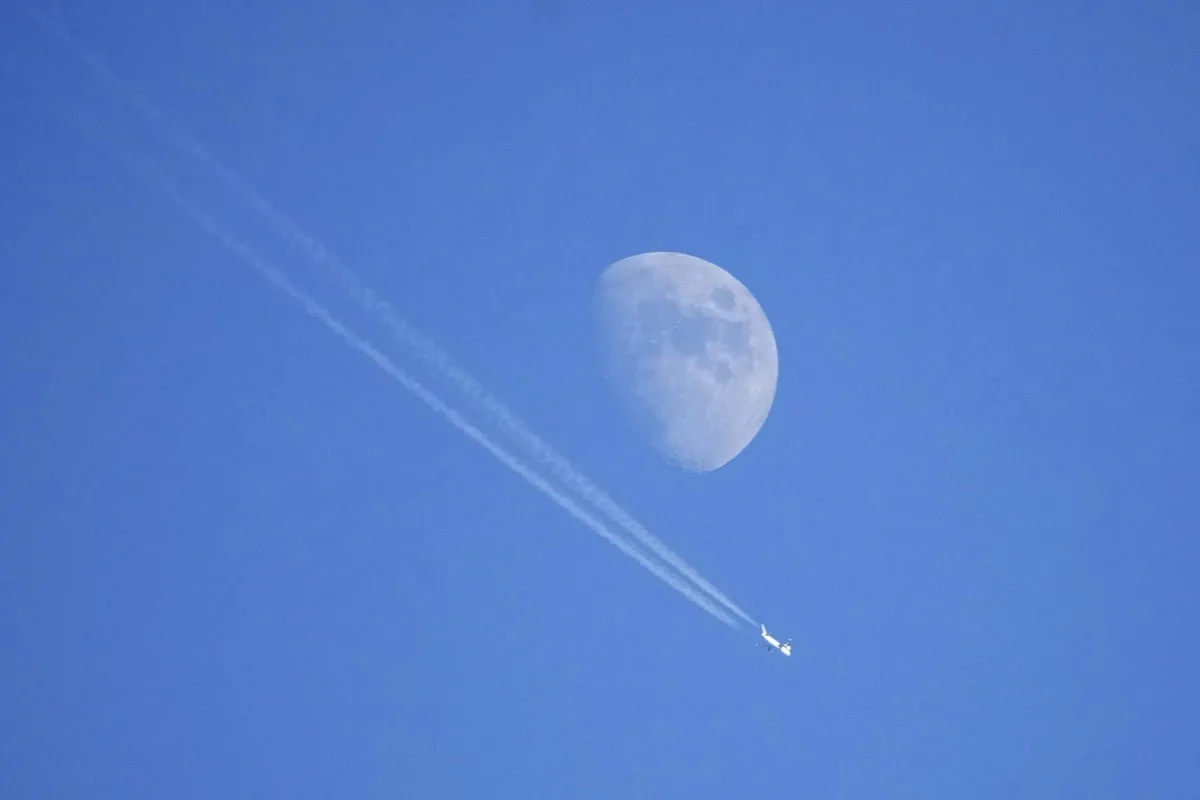
Hundreds of commercial flights will be told to change their paths over the northeastern Atlantic Ocean during the next two winters to show how minor altitude adjustments can reduce aviation’s climate impact.
The British government is backing the landmark airspace-scale trial, launched Tuesday, to avoid creating condensation trails, or contrails.
Google UK is contributing its artificial intelligence-powered forecasts to identify the contrail regions.
When airplanes fly through cold and humid areas, ice crystals can form around the soot particles emitted from the engine, creating clouds that trap heat and warm the planet .
The Shanwick Oceanic Control Area in the eastern half of the North Atlantic corridor, the location of the trial, is a busy gateway for air traffic between Europe and North America.
It’s also a hot spot for where contrails form.
The 30-month research program known as Operation Blue Skies includes test periods this winter and next, when air traffic controllers will tell some flights to deviate up to 2,000 feet (610 meters) to avoid areas where contrails are likely to form.
These will be minor altitude adjustments within standard flight operations, coordinated through established air traffic control communication channels, according to the British government.
There will be about 20 to 40 test days per winter, when there is less air traffic.
Around 10,000 flights are expected to pass through the Shanwick airspace during the testing.
Hundreds of those flights would deviate their routes.
That 1 % to 5% would be enough to demonstrate a statistically significant reduction in contrail formation on an airspace-scale, said Paul Hodgson, Google’s technical lead for Operation Blue Skies.
Individual airlines have tested shifting altitudes to avoid contrail regions.
Earlier this year, Google and American Airlines announced that the airline significantly reduced the climate impact of some flights using Google’s AI-based forecasting tool to help prevent contrails.
5News aggregated this summary from the outlet’s public feed. The full article, with all the context, is on fortune.com — the content belongs to Fortune.