On this day in space! Oct. 15, 1997: NASA launches Cassini-Hugyens probe on 7-year voyage to Saturn
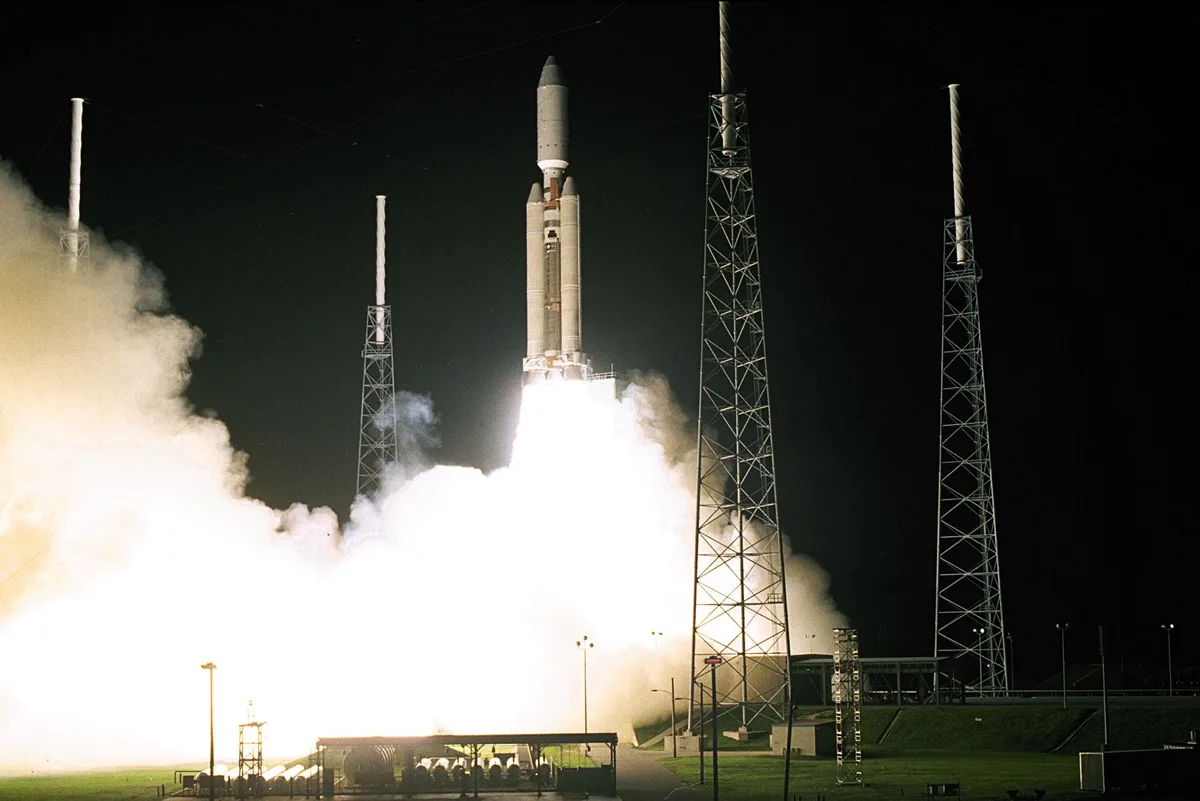
On Oct.
15, 1997, NASA launched the Cassini spacecraft on a mission to explore Saturn and its moons.
It lifted off aboard a Titan 4B rocket from Cape Canaveral Air Force Station in Florida.
It took almost seven years for the Cassini spacecraft to reach Saturn , with the spacecraft entering orbit around the ringed planet in 2004.
Another smaller spacecraft called Huygens hitched a ride with Cassini, and it landed on Saturn's moon Titan in 2005.
Cassini spent 13 years studying the Saturn system up close, and the mission lasted about 20 years before coming to an epic grand finale on Sept.
15, 2017 .
Running low on fuel, NASA chose to steer Cassini straight into Saturn's atmosphere, where the spacecraft was destroyed .
NASA's Cassini spacecraft lifts off on Oct.
15, 1997, atop a Titan IVB rocket. (Image credit: NASA) Why it mattered NASA's Cassini mission to Saturn (which carried the European Space Agency's Huygens lander to Titan) was a flagship planetary mission like no other ever when it first launched toward the ringed planet.
The $3.26 billion Cassini spacecraft became the first probe ever to orbit Saturn when it arrived in 2004.
It revealed Saturn's rings as active and dynamic structures, as intricate and complex as they are beautiful to observe.
And it delivered Huygens to Titan, then followed up with a series of Titan flybys that revealed the cloudy moon could have liquid hydrocarbon rain, rivers, lakes and seas.
Perhaps the most exciting discoveries were the most surprising.
5News aggregated this summary from the outlet’s public feed. The full article, with all the context, is on www.space.com — the content belongs to Space.com.