US navy veterans and military health experts express concern over USS Abraham Lincoln sailors
Prolonged deployment is coupled with reports of water shortages, plumbing issues and attempts to jump overboard
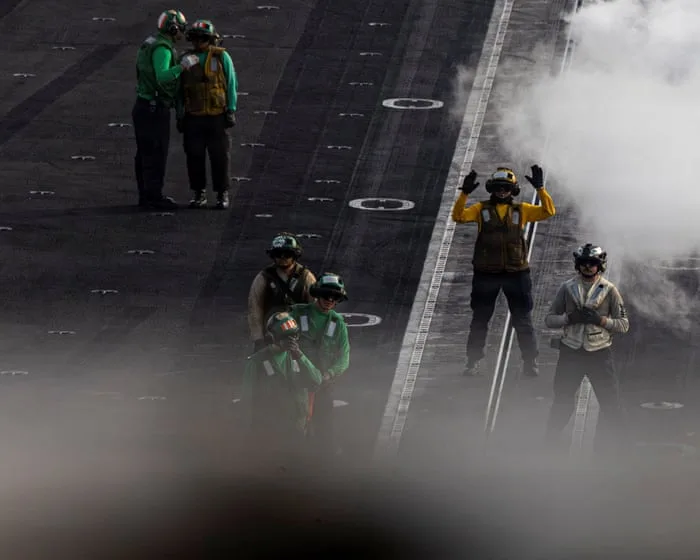
US navy veterans and military health experts are expressing concerns about the strain on sailors aboard the USS Abraham Lincoln, which has spent nearly nine months at sea supporting US operations in the Middle East, amid reports of poor living conditions and worsening mental health among its crew.
The San Diego-based aircraft carrier left port on 21 November, originally bound for the Pacific, but was redirected to the Middle East as the US-Israel war with Iran began. It has now spent more than 250 consecutive days at sea without a significant port visit, with its deployment repeatedly extended.
On Thursday, the Wall Street Journal reported that the US military was preparing to replace the Lincoln with the USS George Washington, as concerns mount over the conditions aboard the Lincoln.
Reports by the Navy Times and Stars and Stripes this week described shortages of supplies and water as well as plumbing problems, low morale and deteriorating mental health among the Lincoln’s roughly 5,000 sailors, and further reported that there had been multiple attempts by sailors to jump overboard. The reports prompted several Democratic lawmakers to demand answers from the Pentagon.
In response to the reports, a navy official told the Guardian this week that they were aware that “extended deployments place a significant strain on our service members and their families, and we are grateful for the resilience and sacrifices they make” and said that the health and wellbeing of every Lincoln sailor was a priority.
“Based on information available to the command, we have not identified an increase in reported suicidal ideation or suicide attempts aboard the ship,” they said, adding that religious, medical and mental health professionals were available as part of a “comprehensive support network” that included “onboard deployment-resilience counselors and chaplains”.
The official recognized that the war had disrupted traditional supply hubs, but added that “current reports from the ship confirm continuous access to clean water, functional AC and healthy meal options”.
On Thursday, Pete Hegseth claimed that the conditions aboard the Lincoln had been “completely misrepresented”.
“We make sure that every ship, every crew, every captain has everything we can provide them at every single moment,” the US defense secretary told reporters . “Some deployments are longer than others, and I have more respect and gratitude for those sailors than anybody.”
Military experts said on Friday that prolonged deployments, particularly without coming ashore, can place increased strain on both the crew and the ship itself, and noted that extensions can also take a psychological toll by leaving sailors uncertain about when they will return home.
Armen Kurdian, a retired US navy captain, who served aboard the Lincoln in 2005, described the carrier as a “giant floating city” with about 5,000 people aboard.
“You’re feeding people 15,000 meals per day, you’ve got TV stations, communications,” he said.
5News aggregated this summary from the outlet’s public feed. The full article, with all the context, is on www.theguardian.com — the content belongs to The Guardian US.