This hamster has a Strava and runs more than you. It’s not as cute as it sounds.
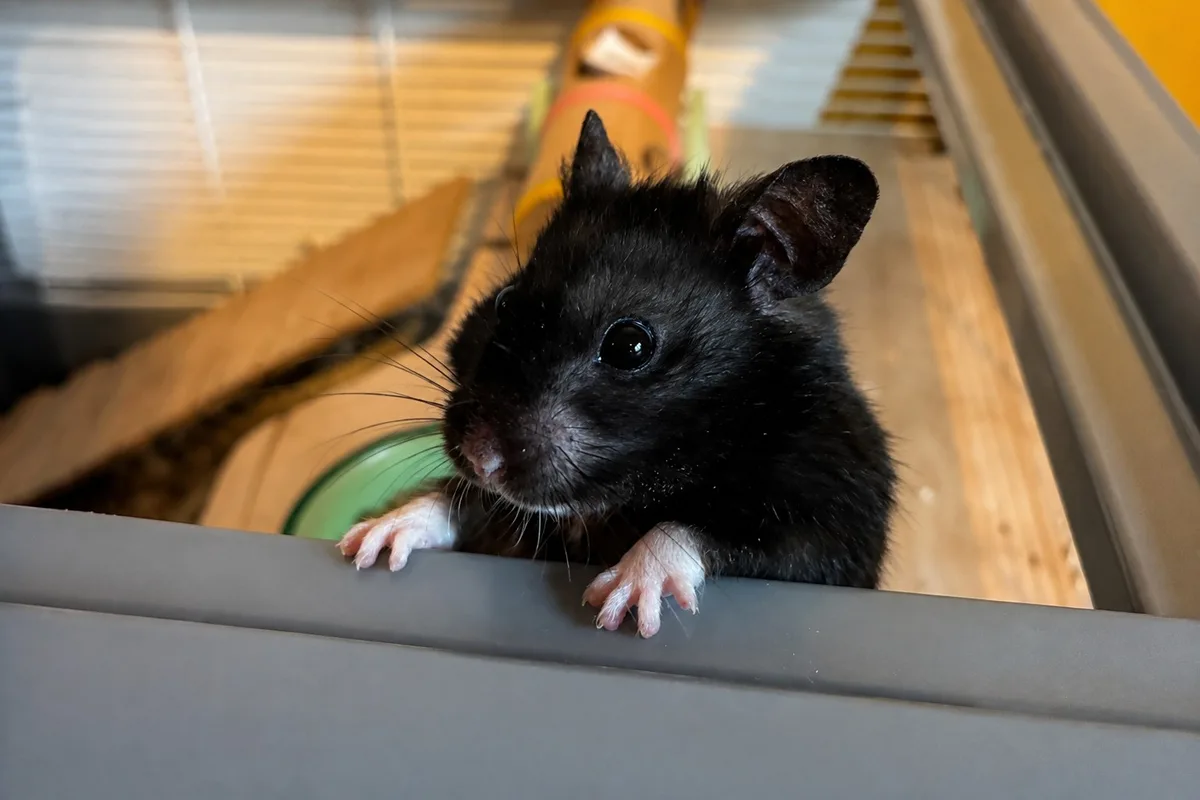
Mollie the hamster logs about six miles a night on his wheel, via the Strava app. | Courtesy of Mollie’s owner, Thijs Mollie, a 10-month-old pet hamster in the Netherlands, probably runs a lot more than you .
We know this because, a few weeks ago, a Dutch physicist named Thijs — who owns Mollie — rigged up the rescued hamster’s running wheel to Strava, a popular app that runners use to log their miles.
Thijs found that Mollie typically runs around six miles every night.
“He’s beating me,” Thijs told the CBC.
“Almost 70 kilometres a week, which I think many people doing marathon training would be happy to hit.” The internet loves a quirky animal story, and this one has gotten plenty of attention on Reddit and X .
Mollie even got a recent profile in Runner’s World , and he now has over 9,000 followers on Strava.
Mollie’s Strava updates are headlined with cute puns like “No Rest for the Whiskered,” and “The Fast and the Furriest.” I get why so many people are cheering on Mollie and his commitment to going the distance: Hamsters are adorable, and the idea of one logging miles on Strava is extra charming.
But the light-hearted virality of the story masks a fundamental problem with owning small pets like hamsters.
Mollie evolved to run in an open and diverse ecosystem, but he lives in a small cage and doesn’t have much to do besides circle endlessly in a simple wheel.
Big problems with small pets Most pet hamsters are Syrian hamsters, native to that country’s Aleppinian plateau — steppe terrain in the northern part of the country.
In the wild, they regularly traverse the landscape to forage for food, consuming a wide sampling of seeds, fruits, insects, and green vegetation.
They store their haul in their cheeks while journeying back to their two-foot deep burrows.
But, as pets, they’re largely fed a monotonous diet of grain pellets and are confined to tiny cages where they can’t engage in their natural behaviors, like building proper burrows, traveling for food, and exploring their turf.
Confining a dog or cat in a kennel for all or most of their lives would no doubt be a severe form of cruelty, yet we’ve normalized doing so for small animals whom we’re less likely to view as capable of suffering , even though there’s no scientific basis for that assumption.
5News aggregated this summary from the outlet’s public feed. The full article, with all the context, is on www.vox.com — the content belongs to Vox.