Seattle Has 9 Times More Coyotes Than Nearby Wilderness. Here’s Why
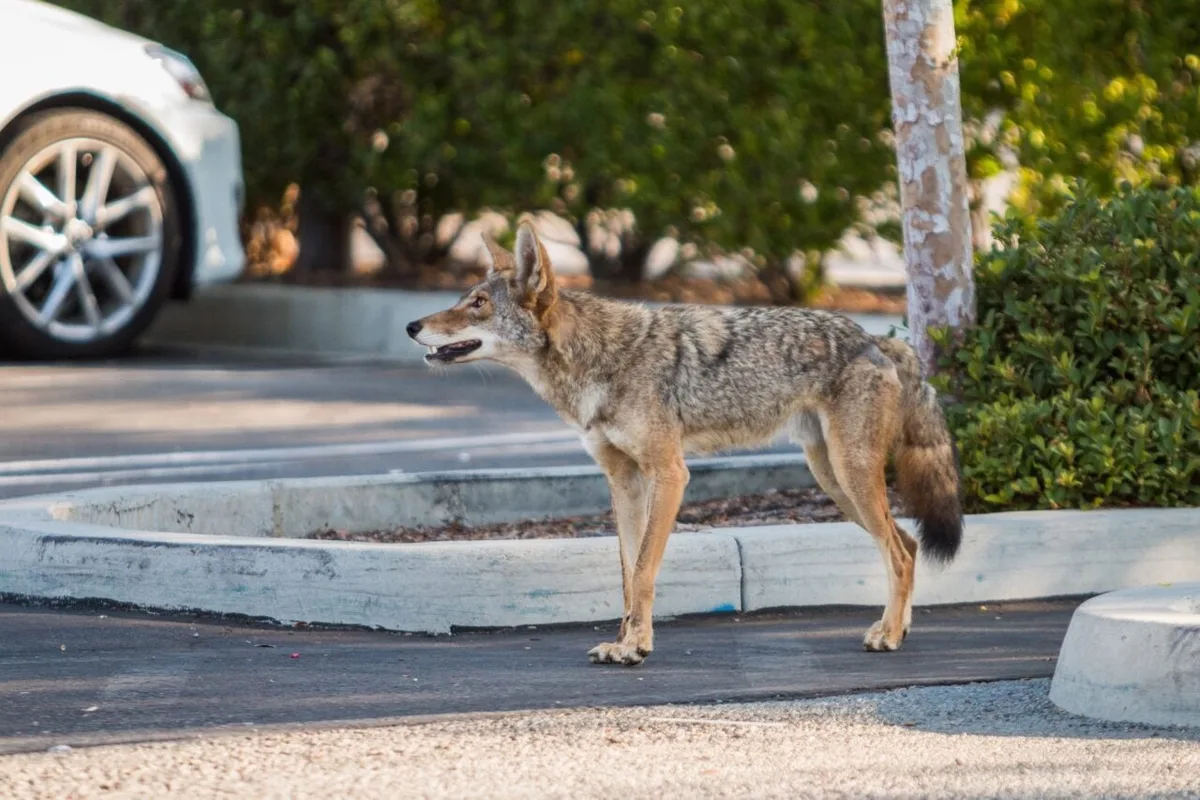
The North American coyote ( Canis latrans ) is sick and tired of chasing its prey endlessly through the wilderness, whether snaking around the desert southwest, skulking into the forests of the Pacific coast, or doing any more hard work ever again. A recently published image of a real coyote eating an actual roadrunner has prompted a certain establishment newspaper, The New York Times, to claim that the “Looney Tunes” version of the coyote’s plight is a “lie” and not “real.”
But, as any good scientist knows, anecdotes are not data. (But, for the record, here’s a countervailing video posted by CBS Local News of a roadrunner escaping from a coyote.) In reality, coyotes in record numbers have abandoned the chase over the past century, choosing instead to seek easier meals by relocating to major metropolitan areas across North America. Denver, Colorado, is reportedly home to over 1,000 coyotes. Chicago, Illinois, is home to roughly 4,000. And in sunny Los Angeles, California, the coyote population within the city limits now outnumbers its wild country cousins by a factor of seven. But this ratio doesn’t hold a candle to Seattle, according to a new study.
“We observed a ninefold increase in coyote density in Seattle compared to more natural areas of the state,” wildlife ecologist Laura Prugh said in a statement.
“That might surprise people who think of coyotes as afraid of humans, but I think it just shows how ideal the urban setting is for coyotes,” Prugh added. “Coyotes are here to stay in cities, and it is up to us to learn how to live with them.”
Prugh, the new study’s lead author, worked with her co-researchers to assess the density of Seattle’s coyote transplants via scat samples traceable to the same animal. The team collected a total of 842 samples that they traced to 213 coyotes across the city itself and in the wild areas used for comparison, the foothills of Washington’s Cascade Mountains near Winthrop and the rural Colville River Valley outside Chewelah.
“In Seattle, human population density had a negative effect on coyote density,” according to Prugh, a professor of environmental and forest sciences at the University of Washington.
“But when you compare coyote abundance in Seattle to areas with far fewer people, the coyote population was much higher in the city,” she noted.
This dynamic proved to be stronger than many of the other possible factors within urban areas, Prugh’s team found. Other factors they considered, including tree cover, local pollution concentrations, the number of buildings and roads, and income level, did not appear to have a demonstrable effect.
5News aggregated this summary from the outlet’s public feed. The full article, with all the context, is on gizmodo.com — the content belongs to Gizmodo.