Maine Has Changed. Susan Collins Hasn’t.
S enator Susan Collins desperately needed to change the subject.
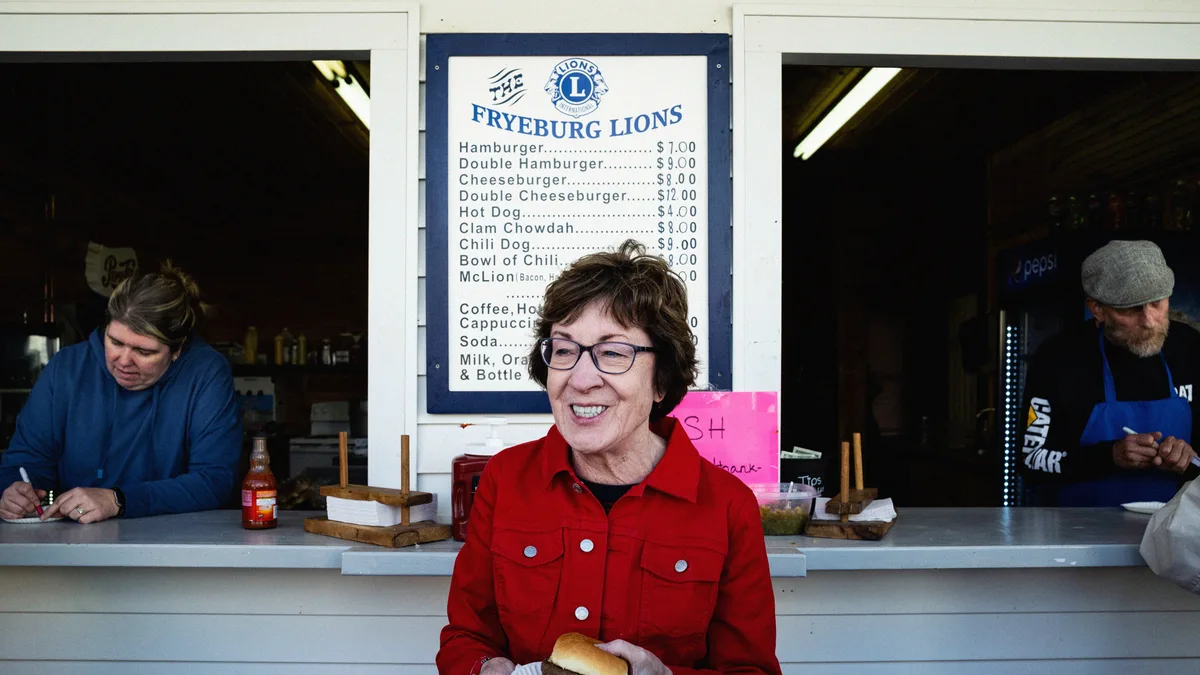
As she stepped around cow manure at the annual Fryeburg Fair, a reporter was asking her about President Trump’s musing that he might campaign in Maine during the closing weeks of the election—an invitation that Collins, trying once again to save her seat, almost certainly had not extended to a man with an approval rating of 32 percent in the state.
A campaign staffer tried to cut off the questioning, but the nearly 74-year-old Collins has not won five Senate elections through luck alone, and she quickly found a way out of the tricky Trump talk.
“I do have some important news today,” she declared to the assembled scribblers.
Collins went on to announce that she had persuaded the Trump administration to speed up the release of $38 million in home heating assistance for Maine.
Nevermind that her office had already publicized the news earlier that day, or that none of the journalists with Collins reported for local publications.
This was either Collins at her senatorial savviest, or a stodgy politician reaching for a tattered playbook.
As temperatures plunge, the cost of heating oil is as potent a political issue in Maine as the price of gas is everywhere else.
Collins has built her reelection campaign on the idea that she alone, as the chair of the Senate’s powerful appropriations committee and the lone Republican elected to Congress in all of New England, can deliver for Maine.
She has boasted of bringing home billions for her sparsely populated state over the years.
At a debate this month, Collins crowed that she had secured an exemption for road salt—another crucial supply during Maine’s perennial winter freeze—from the tariffs that Trump has slapped on Canadian goods. (“We can’t eat road salt,” her Democratic opponent, Troy Jackson, retorted.) This strategy has worked for Collins before.
In 2020, she defied polls forecasting her defeat and won reelection by nearly nine points over a well-funded Democratic opponent even as Joe Biden carried Maine that year by a similar margin.
The contours of that campaign were largely the same as the one Collins is currently waging: Democrats tried to tie her to an unpopular Trump, denounced her claims to be independent, and assailed her vote to confirm Justice Brett Kavanaugh as a potential death knell for Roe v.
Wade .
5News aggregated this summary from the outlet’s public feed. The full article, with all the context, is on www.theatlantic.com — the content belongs to The Atlantic.