Has there ever been a mountain taller than Everest?
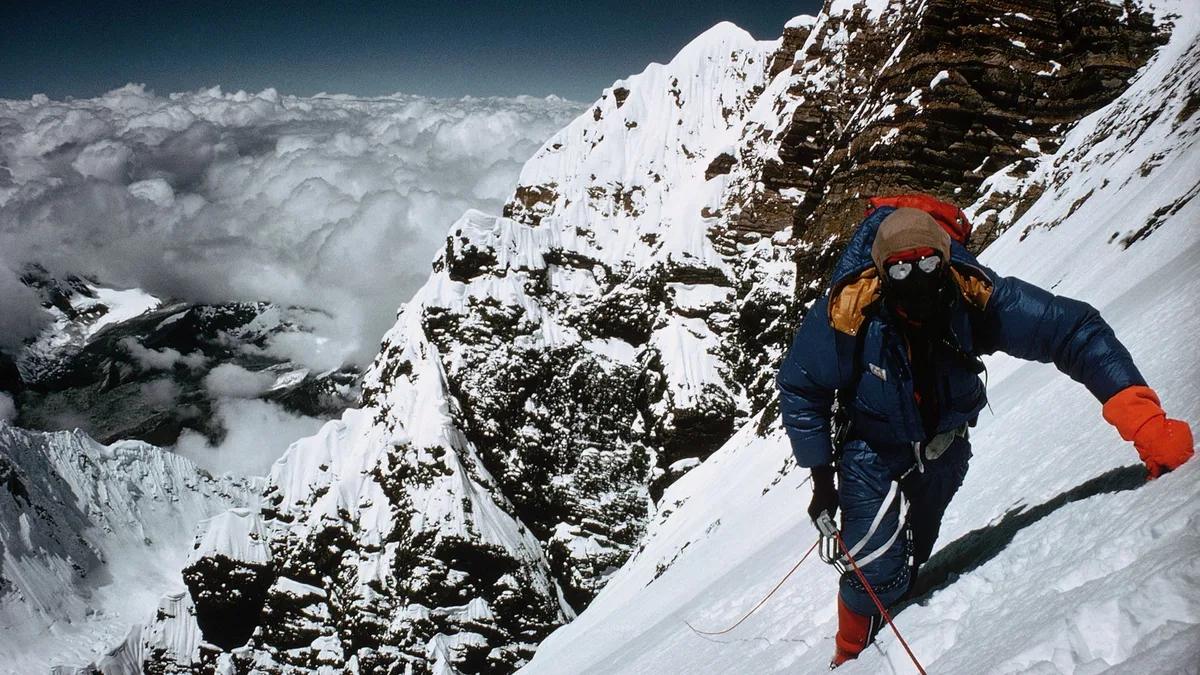
Sometimes, it takes a great struggle to build towering peaks.
And what more thunderous event is there than the clashing of continental plates? Geological pileups have birthed some of the largest and tallest mountains on the planet, including Mount Everest and its Himalayan neighbors.
But has there ever been a peak taller than Mount Everest, which stands 29,032 feet (8,849 meters) above sea level? The answer is still a mystery, but there are some geological clues about where the tallest peaks would have been in the ancient past, experts told Live Science.
Earth's lost mountains Geologists don't have the level of detail required to pinpoint an exact highest peak hundreds of millions of years ago.
"We're never going to get that granularity, unfortunately," Alan Collins , a professor of geology at Adelaide University in Australia, told Live Science.
However, clues in residual sediments lodged inside Earth's crust hint at the lost grandeur of primordial snowcaps and summits.
Scientists study these crusts to understand how deep they went, which can reveal how tall ancient mountains might have been.
Mountains are really just parts of the continental crust that have been thrust upward as tectonic plates slowly crash together.
This crust is very heavy, and there is much more to it than what you see on the surface; even the most spectacularly tall peaks, like Everest, are anchored in deep crust.
Just as crust gets thrust up to form mountain peaks, it also gets pushed deep under the surface.
Both Collins and Ziyi Zhu , a geochemist at Curtin University in Australia, compared mountains to icebergs, in the sense that only a bit pokes above the surface.
"We can argue or speculate that [the biggest mountain] was in a place where there were deep roots in the crust," Zhu told Live Science.
Geologists estimate that the Himalayas, for example, have a crustal column that goes down as far as 50 miles (80 kilometers).
Compare that to Everest's elevation of about 29,000 feet (9,000 m ), and the world's tallest mountain at most represents only 14% of the rock slab it's part of.
5News aggregated this summary from the outlet’s public feed. The full article, with all the context, is on www.livescience.com — the content belongs to Live Science.