Why a Divided BRICS Poses No Challenge to America
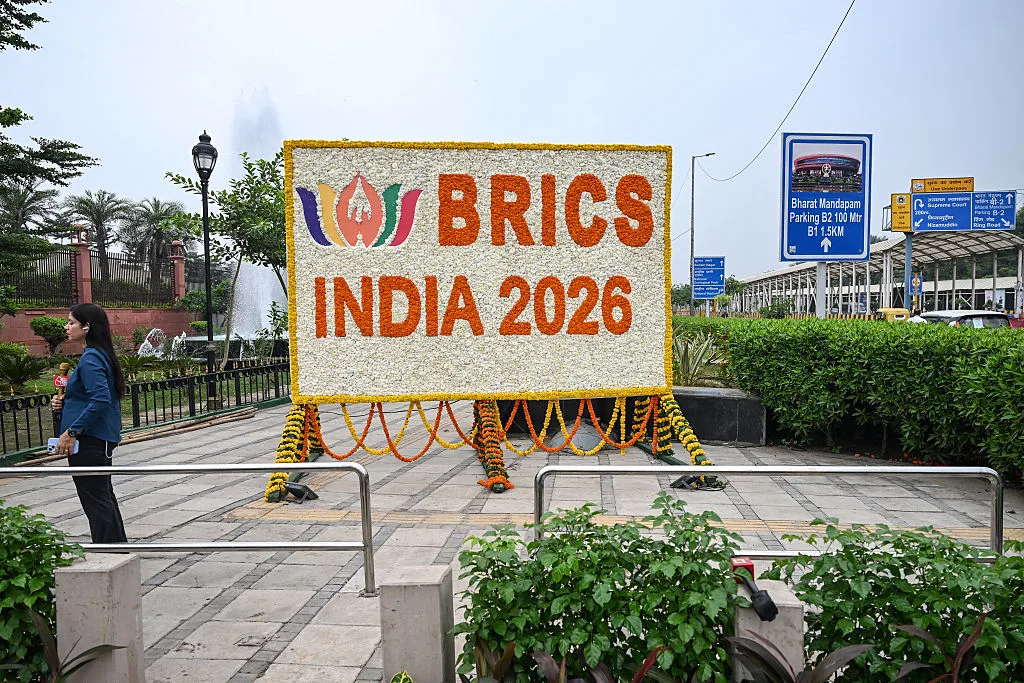
A journalist reports from the venue of the upcoming BRICS Summit at the Bharat Mandapam in New Delhi on September 11, 2026. —Arun SANKAR-AFP via Getty Images When the leaders of BRICS, the bloc of emerging economies, gather in New Delhi on Saturday for their 18th summit , they will have plenty to talk about.
The group began with Brazil, Russia, India and China, then added South Africa in 2010.
It has since expanded to include 11 countries.
The leaders and diplomats of BRICS member states are meeting in New Delhi to consider how their combined political and economic muscle might be used to build an alternative to the American-led global order.
In some ways, President Donald Trump’s refusal to allow America play its traditional postwar leadership role has created new opportunities for the bloc.
Yet its ambitions remain constrained by an inconvenient fact: India, China, Russia and Brazil do not align particularly well.
Here are the dynamics to watch this weekend.
India, the host, wants the summit to accomplish as much as possible without antagonizing the United States.
India continues to value the stability of its relationship with Washington , particularly as a counterbalance to China’s expanding influence in Asia and beyond.
India, along with Brazil, has also resisted Russian and Chinese calls for a common BRICS currency and new lending to sanctions-hit Russia.
For its part, China is seeking to extend its global influence.
For President Xi Jinping, this summit is another stage in an international roadshow that has included a leading role at this year’s Shanghai Cooperation Organization gathering in Kyrgyzstan, a visit to Egypt to help mediate the ongoing war in the Middle East and, later this month, a state visit to the White House.
In Delhi, Xi hopes to present China as a stable, predictable alternative to American influence.
He will also seek to erode the dollar’s continuing dominance as the world’s principal reserve currency by promoting more channels for nondollar lending, the wider use of the renminbi to settle trade, and progress toward linking digital payment systems, an effort India has long resisted.
5News aggregated this summary from the outlet’s public feed. The full article, with all the context, is on time.com — the content belongs to TIME.