We Were Wildly Off About Pre-European Indigenous Populations in Australia
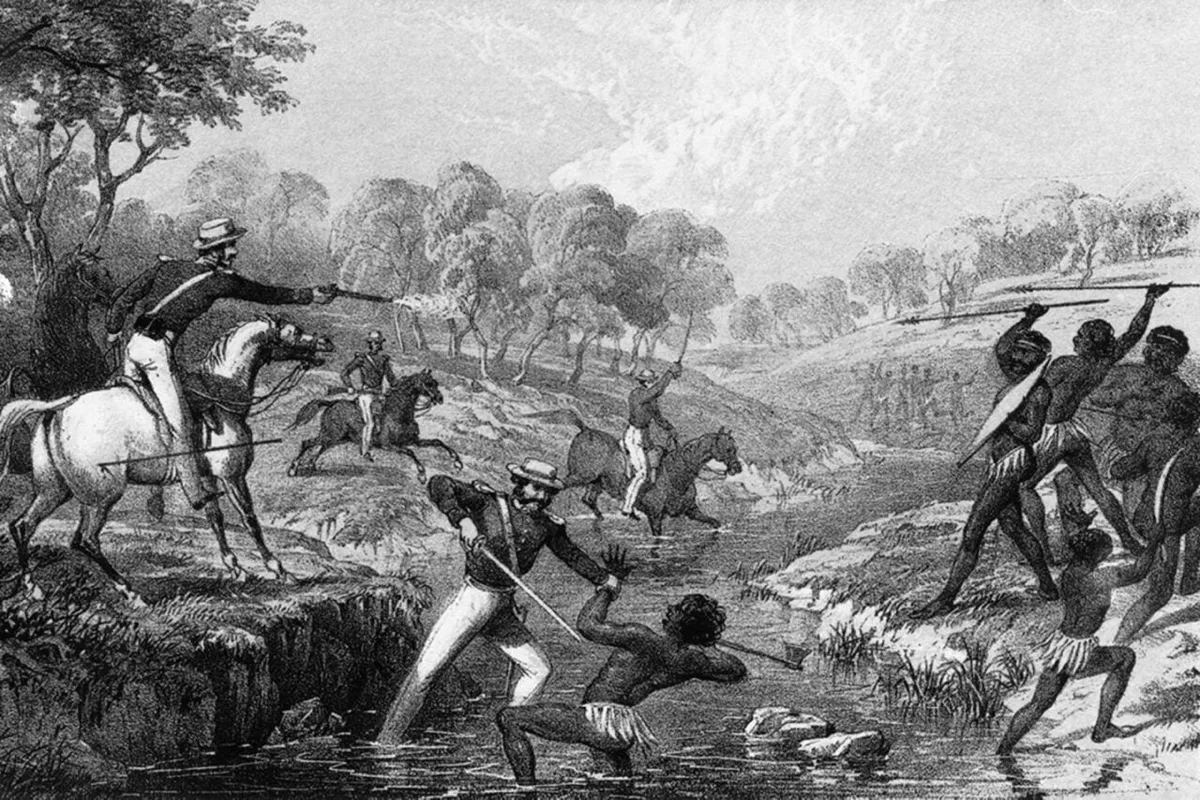
For the past century or so, the consensus was that before the British invasion of 1788, there were about 300,000 Indigenous people in Australia. It turns out that this number was a wild underestimate—there were, in fact, more than two million people.
According to the team’s column for The Conversation, the old estimate was “largely on observations made after disease, dispossession, and violence had already devastated Indigenous communities.” In a paper published yesterday in Nature Human Behaviour , the team explained how using three methods independent of colonial-era headcounts indicated a median population of 2.22 million Indigenous people in 1788. The findings suggest that Indigenous population losses following British colonization occurred on a much larger scale than previously believed.
“Understanding the size of Indigenous populations in Australia before European invasion in 1788 is essential to truth-telling and reconciliation,” Corey Bradshaw, the study’s co-author and an ecologist at Flinders University in Australia, said in a statement .
In its column, the team pointed out the many flaws in previous estimates of Indigenous populations in Australia. To start, the first comprehensive census of Indigenous Australians didn’t occur until 1971. Earlier colonial records were primarily based on the number of people showing up to “blanket distributions and ration depots, living on missions and reserves, or working on pastoral stations.”
People of mixed ancestry were often excluded. And this is even before we start considering how pathogens —smallpox, measles, influenza, and tuberculosis—introduced by British colonists devastated the Indigenous population. Then again, are we really surprised?
“If you’re a frontier farmer, a colonialist that came out to a new area, and you were trying to remove people from ‘your’ land, you’re not going to write extensively about how many people you killed to do that,” Bradshaw told The Guardian . “If there’s a systematic desire to take land [fewer people means a] better justification for imperialism.”
For the latest investigation, the team took three different approaches, evaluating radiocarbon dates of archaeological samples, genetic reconstruction, and environmental modelling of the carrying capacity of pre-colonial Australian lands. They landed on a median estimate of 2.22 million people, which equates to about 0.29 people per square kilometer. This number is “modest” and consistent with observed densities of Indigenous populations observed after colonial impacts, the team wrote in its column.
The implications of the new estimates are quite grim. Demographic modelling revealed that by 1861—73 years after British arrival—Indigenous populations experienced a 93% decrease, or around 2.06 million deaths in total. The researchers noted that this number is also an estimate, and the range of total deaths is between 700,000 and 4.2 million. Not that this is any better.
5News aggregated this summary from the outlet’s public feed. The full article, with all the context, is on gizmodo.com — the content belongs to Gizmodo.