‘If you take your foot off the pedal at all, you will start to stall’: Women in C-suite roles have stagnated, and the reasons go beyond the pipeline
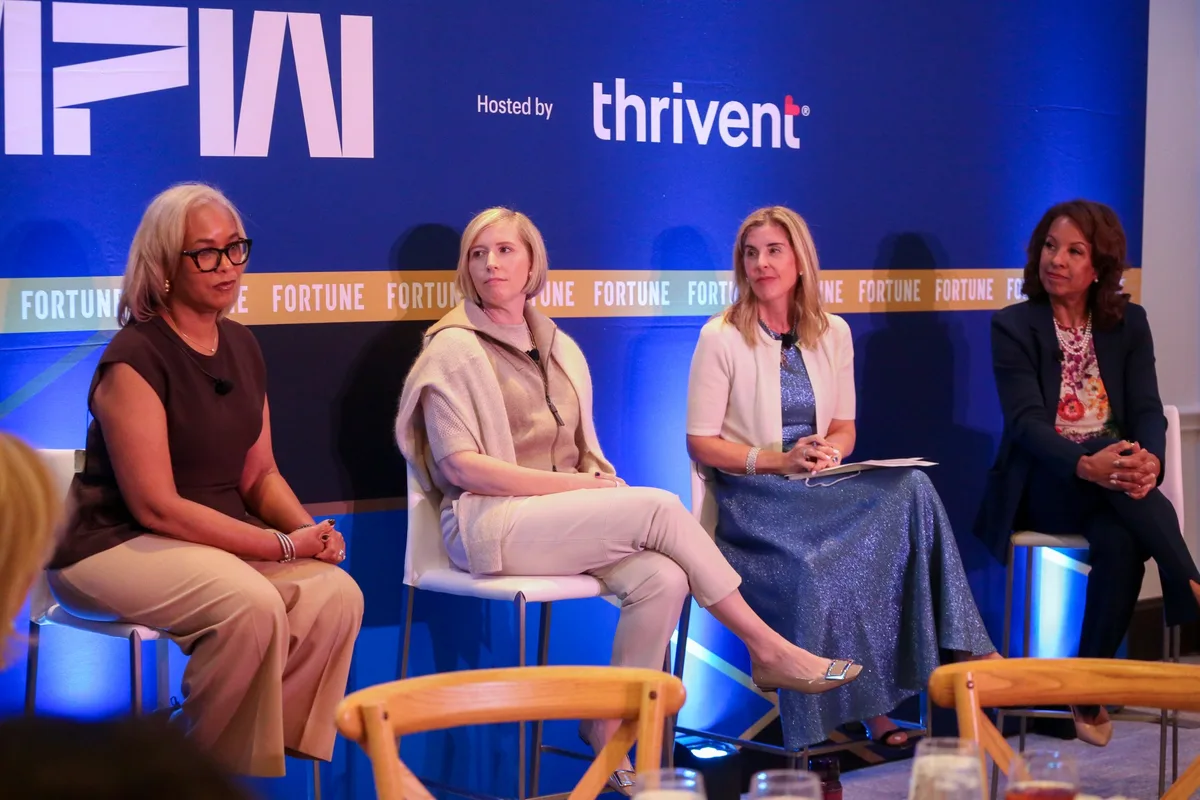
The rate of women being promoted into senior executive roles is slowing down, and experts warn a shaky labor climate and dearth of professional infrastructure are further exacerbating an already obstruction-filled pipeline for women to become CEOs.
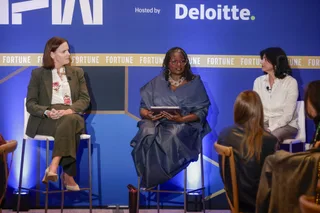
At Fortune ‘s Most Powerful Women Summit in Santa Barbara, California on Monday, Kelly Baker, executive vice president and chief human resource officer at financial services firm Thrivent, explained that there has been less of a focus on developing and recruiting women to join executive leadership.
The slowdown is a byproduct of a frenetic environment that has deprioritized cultivating these leaders.
“I don’t think we can ignore the fact that there is a climate where organizations aren’t quite as focused,” Baker told Fortune Leadership Editor Claire Zillman.
“If you take your foot off the pedal at all, you will start to stall.” The Fortune 500 has 56 companies led by women, or about 11.2% of the list, up from 7.4% six years ago.
However, women’s share of roles in both the C-suite and at the board level has stalled at about 30%, marking the first decline in women’s board representation in more than a decade.
Toni Townes-Whitley, a former Fortune 500 CEO and Nasdaq corporate board member, suggested fewer discussions about workplace diversity has led to less of a spotlight on promoting and developing women leaders, and in an attitude shift toward women’s capabilities.
“We can’t take away an environment where there is a question, almost a recalibration of women in the world, where unfortunately negative rhetoric from lots of different dimensions have women being challenged externally, internally, by the boards,” Townes-Whitley said at the summit.
“That’s a concern, underlined, that’s just not talked about.” To be sure, problems in getting across the last mile before taking the helm of companies are persistent, and are also, in part, a result of women not viewing themselves as leaders.
That’s despite having skillsets and experience that would qualify them for these roles.
Only 36% of women in the workplace have considered becoming a CEO or said they wanted to be a CEO, according to Jenna Fisher, managing director of global leadership advisory firm Russell Reynolds Associates: “We can’t 3D print our candidates.” Hayden Brown, president and CEO of freelance marketplace platform Upwork, was one of those women who didn’t consider taking on the role of top brass, despite her mother running the women’s empowerment program at her workplace.
“I grew up in like the most pro-women household, and yet it took our board chair,, probably 10 years ago, to say to me, ‘You should be a CEO,’” Brown told Zillman.
5News aggregated this summary from the outlet’s public feed. The full article, with all the context, is on fortune.com — the content belongs to Fortune.