Anne Carson’s Point of View
This is an edition of the Books Briefing, our editors’ weekly guide to the best in books.
Sign up for it here.
The literature of ancient Greece and Rome seems to be in vogue.
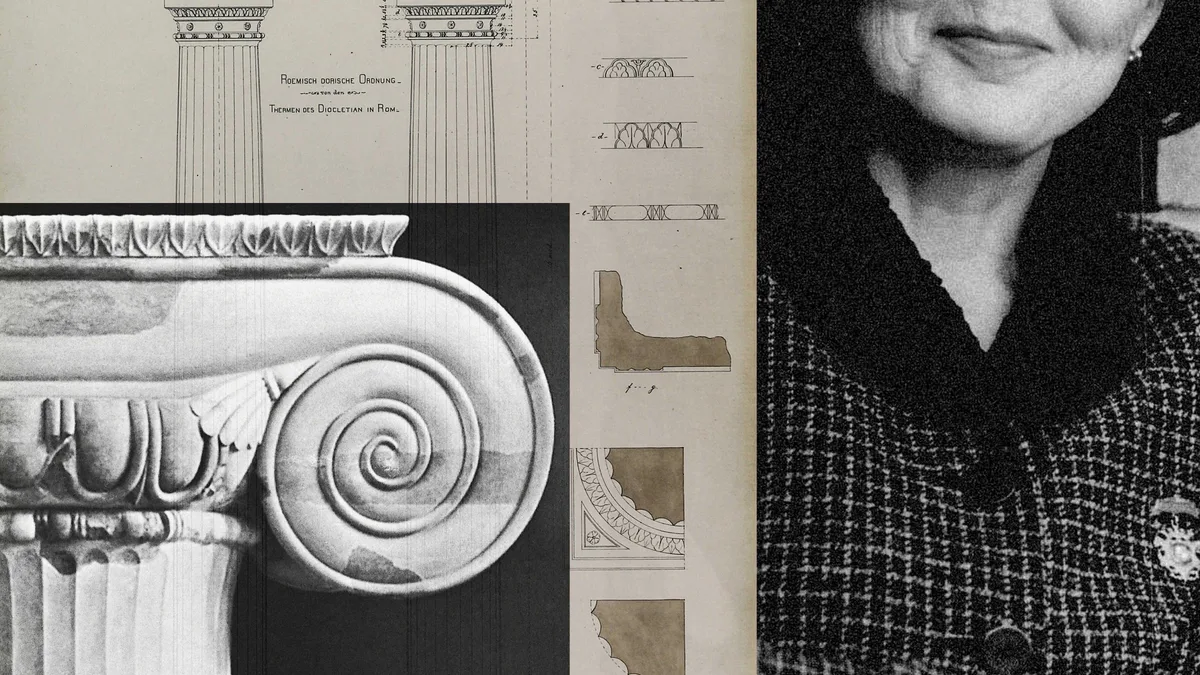
This summer, Christopher Nolan’s The Odyssey turned Homer’s epic poems into best sellers, and yesterday the Nobel Prize was awarded to Anne Carson, a poet who has made a career of repurposing ancient-Greek works.
Perhaps this resurgence has something to do with modern anxieties about the future; people tend to look back to the past in uncertain times.
Although I’m glad to see the classics prominently displayed in bookstores, I’m not convinced that they hold a special kind of wisdom that contemporary writing can’t access.
For evidence, I look to the work of Carson herself.
The poet’s writing updates and remixes ancient verse and mythology, but she does not believe that the past is a manual for the present.
As my colleague Walt Hunter explained this week in The Atlantic , “Rather than lulling us with history’s familiarity, she seduces us with its strangeness.” First, here are five new stories from The Atlantic ’s Books section: The year Anne Carson changed my life “Puffins,” a poem by Ange Mlinko “Something Like People,” a poem by Alexandra Petri “The Guardians,” a short story by Sebastian Junger Zombie originalism Take If Not, Winter , which is both a straightforward translation of the surviving poetry of Sappho and a playful, inventive collection of verse.
Carson’s lines evoke the electric current of a marriage bed, the pleasure of beholding a girl’s delicate features, the pulse-quickening touch of the god Eros.
These emotions are not lost to time—a reader might know, for example, what it means for a beloved’s voice to put “the heart in my chest on wings”—but there’s still a chasm between Sappho’s experiences and my own.
I struggle to imagine the ancient poet’s relationships or daily concerns; similarly, if she could miraculously show up in my time, Sappho likely wouldn’t understand my job, my hobbies, or my marriage. (I imagine she’d be confused about why I describe myself with a name for people from her island: lesbian .) Carson’s 2010 book, Nox , accordion-printed on a single sheet of paper, mourns her brother’s death in part by employing the work of the Roman poet Catullus, who also suffered the death of a brother.
Carson doesn’t imply that she and Catullus feel the same things.
Her goal, instead, is to place herself in a tradition that “connects her to Catullus and a community of mourners as old as human history, one that we all belong to or will eventually join,” as I wrote last year .
5News aggregated this summary from the outlet’s public feed. The full article, with all the context, is on www.theatlantic.com — the content belongs to The Atlantic.