Scientists Uncover Hidden Ocean Signal That Makes Hurricanes Explode in Strength
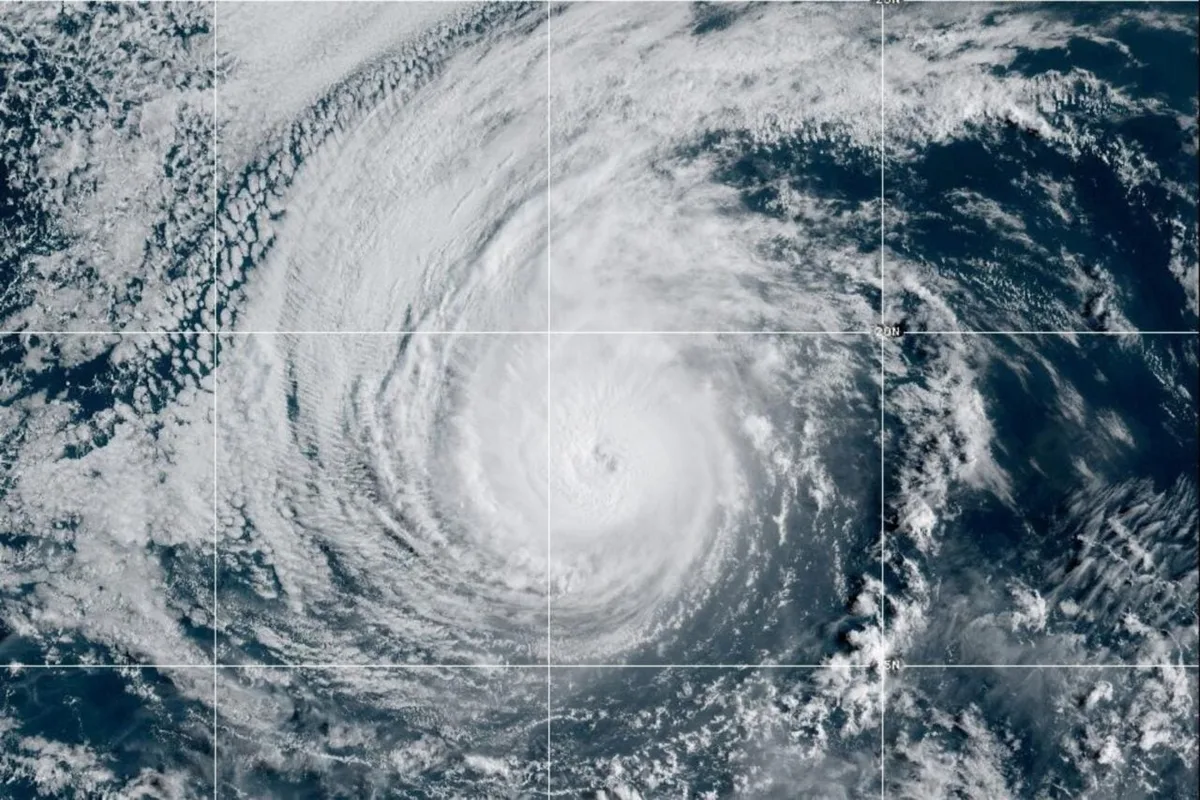
Hurricane Karina, a Category 4 cyclone currently churning over the eastern Pacific Ocean, was merely a tropical storm until Sunday. That day, it rapidly intensified , becoming a major hurricane in a matter of hours.
Fortunately, forecasters do not expect Karina to make direct landfall. But research has shown that climate change is increasing the risk of rapidly intensifying cyclones while also causing storms to reach their maximum strength closer to land. This poses a major risk to coastal communities, as rapid intensification is notoriously difficult to forecast. That’s largely because it’s influenced by complex interactions between the ocean, the atmosphere, and the center of the cyclone that models struggle to capture at once.
A new study, however, has uncovered one factor that could serve as an early warning sign of rapid intensification. The findings, published Monday in the journal Proceedings of the National Academy of Sciences, show that horizontal sea-surface temperature gradients (SSTGs) play a key role in cyclone intensification and may be able to help forecasters determine whether a storm is likely to rapidly intensify.
“We do not see SSTGs as a standalone predictor, but rather as an additional oceanic signal that could complement existing forecasting tools and is not yet well represented in many operational systems,” co-author Zhengguang Zhang of the Ocean University of China told Gizmodo in an email.
Warm ocean water is the main source of energy for tropical cyclones. In general, the higher the sea surface temperatures beneath a storm, the more likely it is to organize and strengthen.
“In this sense, the ocean acts as the fuel reservoir for a tropical cyclone,” Zhang explained. “If the ocean surface cools substantially as the storm passes, that energy supply is reduced, which can slow or limit further intensification.”
The ocean is highly stratified, with cold, dense water lying beneath warm, less-dense water near the surface. The powerful winds of tropical cyclones mix up these layers, which cools the surface and decreases the amount of energy available to the storm. In this way, cyclones moderate their own intensification, but whether horizontal temperature gradients at the surface influence intensification has not been well understood.
“A sea surface temperature gradient simply describes how quickly ocean temperature changes over a horizontal distance,” Zhang explained. “For example, if relatively warm and cold water are separated over only a few kilometers, the temperature gradient is strong. If temperature changes only slightly over the same distance, the gradient is weak.”
He and his colleagues analyzed data on tropical cyclones that occurred around the world between 2003 and 2022.
5News aggregated this summary from the outlet’s public feed. The full article, with all the context, is on gizmodo.com — the content belongs to Gizmodo.