The George W. Bush Administration’s Lesson for the Trump Era
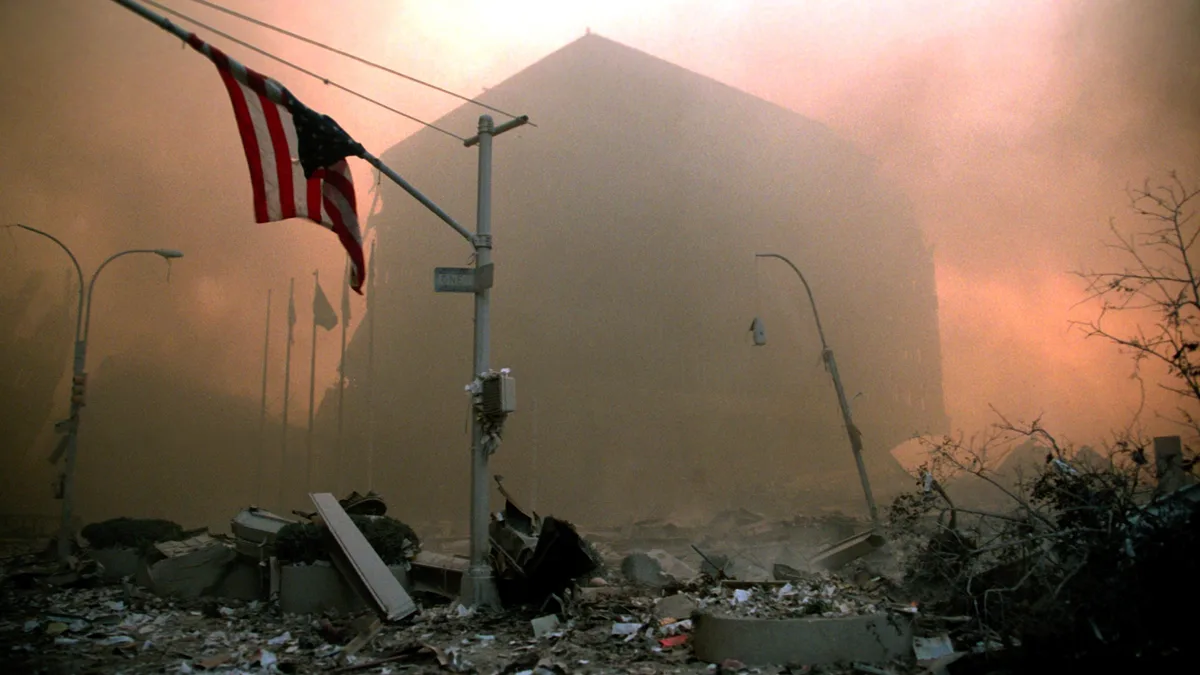
Prosecutors trying to finally convict Khalid Sheikh Mohammed, the alleged mastermind of the September 11 attacks, got some good news and some bad news last month.
The good news is that a judge set a date for Mohammed’s trial in a military court.
The bad news is that the trial won’t begin until June 2028—oh, and the judge also threw out a confession Mohammed made in 2007.
The problem is how the U.S. government obtained the confession.
Mohammed was captured on March 1, 2003, in Pakistan.
He was then held in a series of secret CIA “black sites,” allegedly including spots in Afghanistan, Jordan, Poland, and Romania, before being brought to the U.S. prison at Guantánamo Bay in 2006.
Throughout his imprisonment, he was subject to what U.S. officials called “enhanced interrogation techniques”—or, in plain English, torture.
Lieutenant Colonel Michael Schrama, the judge, reportedly concluded that “the prosecution has failed to prove by a preponderance of the evidence that Mr.
Mohammad’s statements to the F.B.I. were voluntarily given.” A quarter century has passed since the attacks, long enough that Americans born after 9/11 are themselves adults—some have even died in conflicts that are part of the war on terror.
The failure to convict Mohammed by now is an open wound and an embarrassment, one that shows how the government cutting corners and breaking rules can actually end up making the pursuit of justice harder and slower.
It’s also a reminder that the consequences of those decisions may not be apparent for years.
Both of these are valuable lessons for the Donald Trump era.
Few serious doubts have been raised that Mohammed was a central planner of the attacks.
The 9/11 Commission , which had access to material from some of his interrogations but did not directly question him (and preceded his 2007 confession), nevertheless was able to confidently label him “the principal architect of the 9/11 attacks.” Proving this beyond a reasonable doubt in court is a different matter. (Mohammed and other defendants previously agreed to plead guilty in exchange for the government declining to seek the death penalty, but the plea deal was revoked in 2024 by then–Defense Secretary Lloyd Austin under political pressure.) Some of the slowness to get the case to trial is a result of the adversarial structure of American law, which rightly sacrifices speed to protect the rights of the accused.
5News aggregated this summary from the outlet’s public feed. The full article, with all the context, is on www.theatlantic.com — the content belongs to The Atlantic.