Trump Breaks a Lot of American Traditions. He’s Keeping This Awful One.
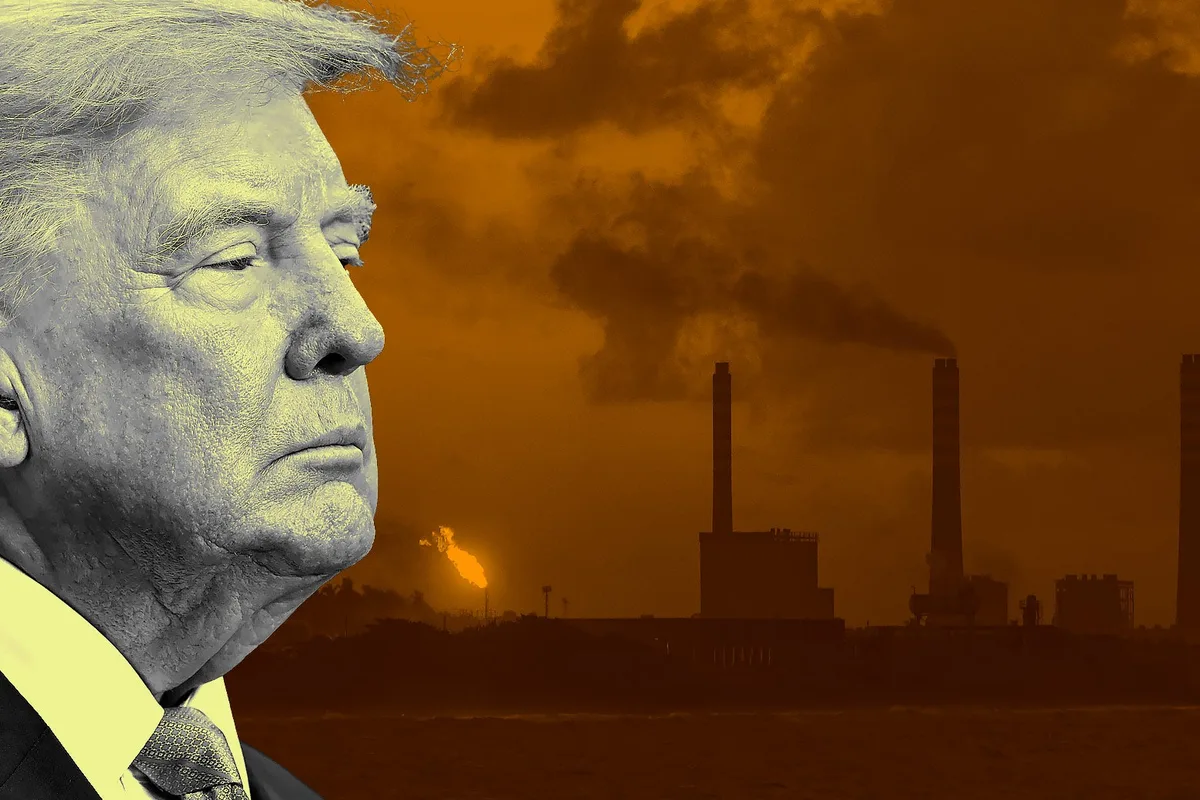
On Friday, Donald Trump announced an agreement that would effectively let the U.S. take over a chunk of Venezuela’s oil reserves. The move, which the president called “THE BIGGEST OIL DEAL IN WORLD HISTORY,” is a particularly brazen resource grab from a nation he now effectively controls. Here’s what you need to know.
Trump may have been angling to take Venezuelan oil from the start. Last year, he dispatched U.S. warships to the Caribbean, allegedly to disrupt drug trafficking operations coming from Venezuela. Then the U.S. imposed a blockade on the South American country to pressure its autocratic leader, Nicolás Maduro. In January, Trump dispatched U.S. Special Forces to abduct Maduro and his wife; the two are currently imprisoned in New York on drug trafficking charges. (The overnight operation reportedly killed at least 80 people in Venezuela, including soldiers and civilians, while injuring several U.S. service members.)
Yes, Trump did claim some humanitarian motives: “We want peace, liberty, and justice for the great people of Venezuela,” he said after Maduro’s ouster. But in the next breath, he laid out a very different objective: “We’re going to have our very large United States oil companies, the biggest anywhere in the world, go in, spend billions of dollars, fix the badly broken infrastructure, the oil infrastructure, and start making money for the country,” Trump declared . Recent events suggest the latter goal was closer to Trump’s heart. Many of the problems that plagued Venezuela under Maduro—including a lack of free and fair elections—remain. But on Friday evening, the president announced an agreement that will give the U.S. government and a private company access to a portion of the country’s underground oil reserves.
Trump is spinning this as a major win. But how big a deal is it really?
Trump is once again playing up a vague international agreement as a watershed moment. (Stop me if you’ve heard something similar before.) The deal jointly gives the U.S. government and an unnamed “private business” 100-year rights to around a fifth of Venezuela’s known oil reserves, which are the largest in the world. The U.S. will reportedly get 55 percent of the deal’s effective output, including an ownership stake and rights to buy oil at cost—meaning priced according to the cost of producing it plus a set markup. But some of the specifics may continue to shift. We don’t even have any official text from the agreement yet.
It does! And there are other sketchy aspects, too. Trump’s initial announcement didn’t name the “private business” the U.S. will partner with. But the New York Times, citing people familiar, reports that it’s North American Blue Energy Partners , Venezuela’s second-largest private oil producer. NABEP is controlled by the family of Alejandro Betancourt López, a Venezuelan businessman with a dubious past. He has faced criminal money-laundering probes in Spain and Switzerland (although he hasn’t been charged) and once got Venezuelan government contracts to build power plants despite having no experience doing that kind of work.
5News aggregated this summary from the outlet’s public feed. The full article, with all the context, is on slate.com — the content belongs to Slate.