A convergence of biological risks
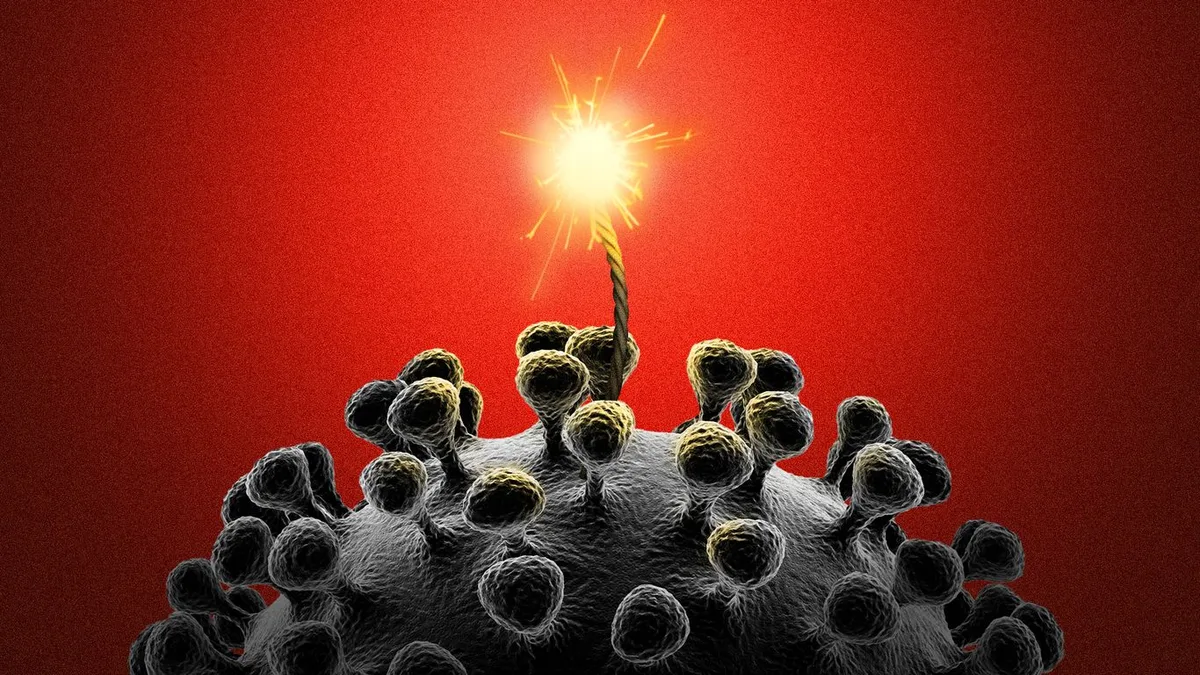
What's the common thread connecting AI advances, biological breakthroughs, a preponderance of high-risk-high-reward research, escalating geopolitical tensions and a hollowed-out U.S. public health sector? They all heighten the risk that one day a lethal human-made pathogen will emerge, either accidentally or intentionally, and we won't be ready for it.
Why it matters: The same advances that make this a pivotal moment for medical innovation are intensifying the risk of catastrophic lab mishaps, though how significant a risk is hotly debated by experts.
"It is a very small tweak from trying to target a disease, and making gene therapies to try to target a disease, to turning a virus into something that can be much more detrimental," said Ashish Jha, the Biden administration's COVID response coordinator.
He has since founded a company that aims to detect emerging biological threats.
The big picture: There are plenty of grim scenarios.
A bad actor could use an AI-enabled bioweapon to cause mass casualties around the world.
The world's largest AI companies have highlighted that risk themselves and called for more guardrails .
But the ways in which the world has become more dangerous since the pandemic may be underappreciated, Jha told Axios.
"The scenario I worry most about is not a nation state deciding to use a biological weapon.
The scenario I worry most about is an accidental release from a deliberate program," he said.
And, in fact, scientific advances may have only made a lab leak more likely, despite fierce political blowback to "gain of function" research.
"Regardless of the science and AI and all that, the number of labs that are out there ... doing this kind of research has gone up, not down," one former senior Trump Health and Human Services official told Axios.
And the rise of AI "takes people with some limited experience and allows them to navigate or do experiments with a greater potential for success," the former official said.
Driving the news: Last week's news that Stanford researchers used AI to create new synthetic viruses from scratch ratcheted up concerns that nefarious actors around the world could be attempting similar feats with more complex organisms.
5News aggregated this summary from the outlet’s public feed. The full article, with all the context, is on www.axios.com — the content belongs to Axios.