Russia's secret plan to supercharge kamikaze drone production
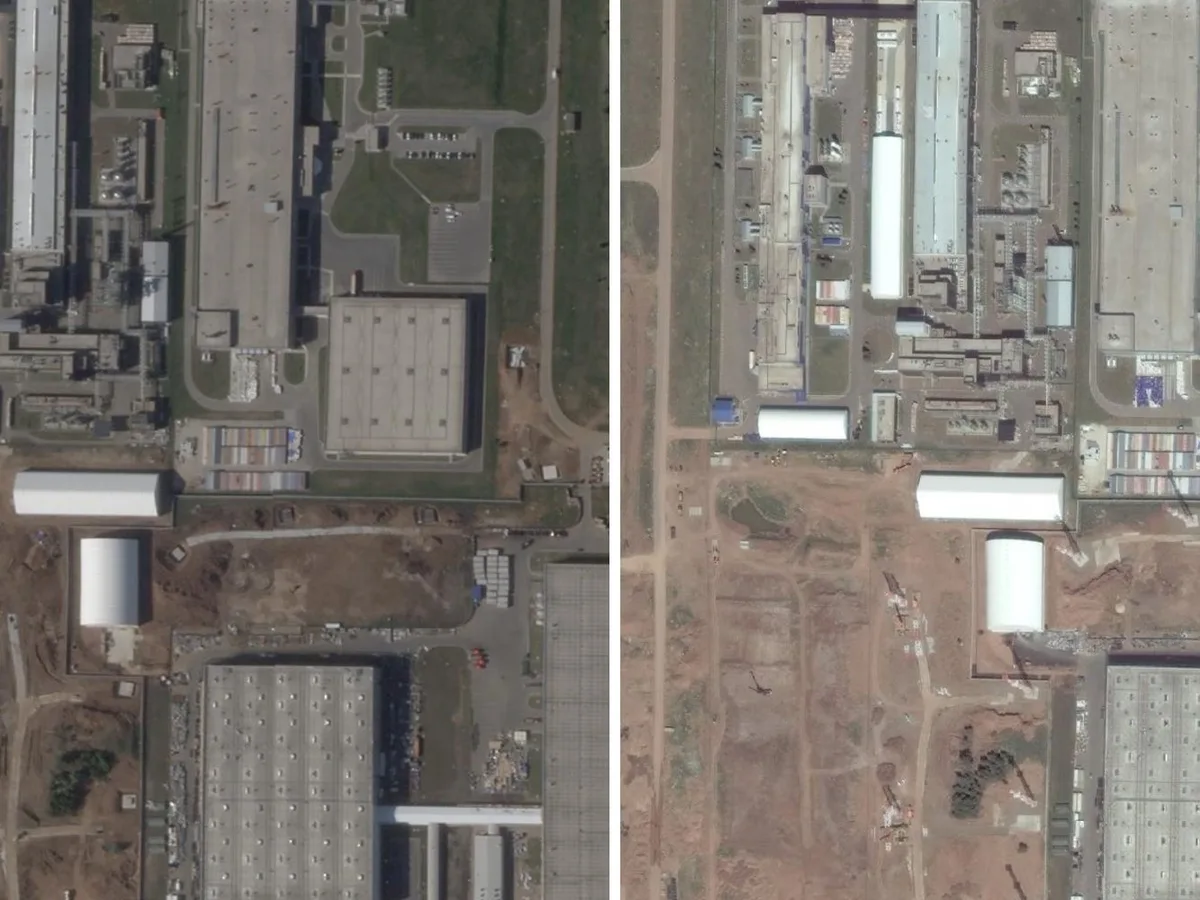
Satellite images captured in May (L) and July (R) show land adjacent to Rosatom's Alabuga-Volokno carbon fiber factory in Tatarstan's Alabuga Special Economic Zone being cleared for the expansion project.
Ukrainian Security and Cooperation Centre Documents show Russia plans to expand carbon fiber production for military drones.
One expert estimates the expansion could add 28,000 drones a year.
POLITICO reports the expansion is aimed at reducing Russia's reliance on Chinese imports.
Moscow is moving to expand its capacity to make tens of thousands of the killer drones it deploys in attacks on Ukrainian cities, according to plans from a Russian state company obtained by POLITICO.
The expansion of state firm Rosatom's Alabuga-Volokno factory in Russia's Tatarstan region would allow Moscow to make an additional 500 tons of military-grade aerospace carbon fiber each year by 2029.
The strong lightweight material is key to building the drone's airframe.
The production increase would translate to an additional 28,000 weaponized drones every year, according to one expert estimate — a 78% increase in production of weapons like the one that struck a passenger train on the Polish border this month and others that have left scores of Ukrainian civilians dead.
Ukraine estimates Russia can currently produce more than 36,000 kamikaze drones , known as "Gerans," annually.
The plans underscore Russia's commitment to weaponized drone technology to power its war machine, which it is increasingly turning against the rest of Europe .
The Alabuga-Volokno factory and its parent company, Rosatom's advanced materials division UMATEX, are sanctioned by the U.K., U.S. and multiple other Western governments.
The factory is a key node in Moscow's military-industrial supply chain and is the same one that received a disguised shipment of 46 tons of carbon-fiber chemicals from a Chinese-state corporation earlier this year, according to internal Rosatom shipping and customs documents reported earlier this month by POLITICO.
Rosatom previously said the firm and its subsidiaries "operate in full compliance" with applicable laws and regulations.
The Chinese embassy in Washington said in a statement that it was unaware of the Russian drone production expansion plans and "strictly controls exports of dual use items in accordance with law." Business, design and structural plans gathered from Russian sources by the Ukrainian Security and Cooperation Centre — a Kyiv-based think tank close to the Ukrainian government — detail the factory's expansion and schematics for its equipment and construction.
5News aggregated this summary from the outlet’s public feed. The full article, with all the context, is on www.businessinsider.com — the content belongs to Business Insider.