Trump says oil companies are ‘making too much money.’ Their own balance sheets agree

When Chevron reported its highest quarterly profit in six years on July 31, 2026, it was just one detail in a larger picture: Analyst firm Wood Mackenzie estimates the global oil and gas industry is on course for a cash windfall of US$495 billion in 2026 .
That’s profit above and beyond what the industry expected before the U.S.-Israel war with Iran began.
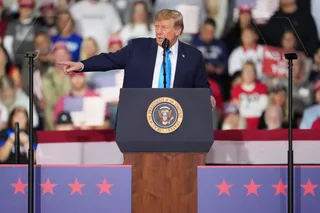
Three separate bills seeking to tax those profits are now in Congress, and President Donald Trump has even said the oil companies are “ making too much money .” As an applied microeconomist , I am often asked how taxes affect economic activity.
Economists have long held a more nuanced view of windfall taxes than either side of the current debate suggests.
Advocates often make overly optimistic revenue projections, and opponents often overstate how much such a tax might discourage investment.
A 1980s U.S. windfall-tax experiment is instructive on both counts.
As customers pay more, oil giants are raking in the cash.
Brandon Bell/Getty Images Other nations have this type of tax In the U.K., a windfall tax on North Sea oil and gas – layered on top of existing levies to produce a combined rate of 78% on profits – is on course to generate an estimated 8 billion pounds in 2026 (about $10.8 billion), roughly double its 2024–25 revenue .
A similar European Union-wide tax imposed as a one-time measure after Russia’s 2022 invasion of Ukraine raised 26.15 billion euros ($30 billion).
Five EU countries are now calling for a second one in response to the Iran war.
How to tax a windfall Many taxes are deliberately designed to change behavior .
But a windfall tax is different: It goes after money that results from a company making the same production decision it was already planning to make before prices rose.
The oil was going to be pumped regardless; the war just made each barrel worth more.
A textbook windfall tax would not fall on all profits, but only on the amount exceeding a baseline level.
5News aggregated this summary from the outlet’s public feed. The full article, with all the context, is on fortune.com — the content belongs to Fortune.