His boss asked if AI could replace human coders. Two weeks later, he and 160 colleagues were laid off in Beijing
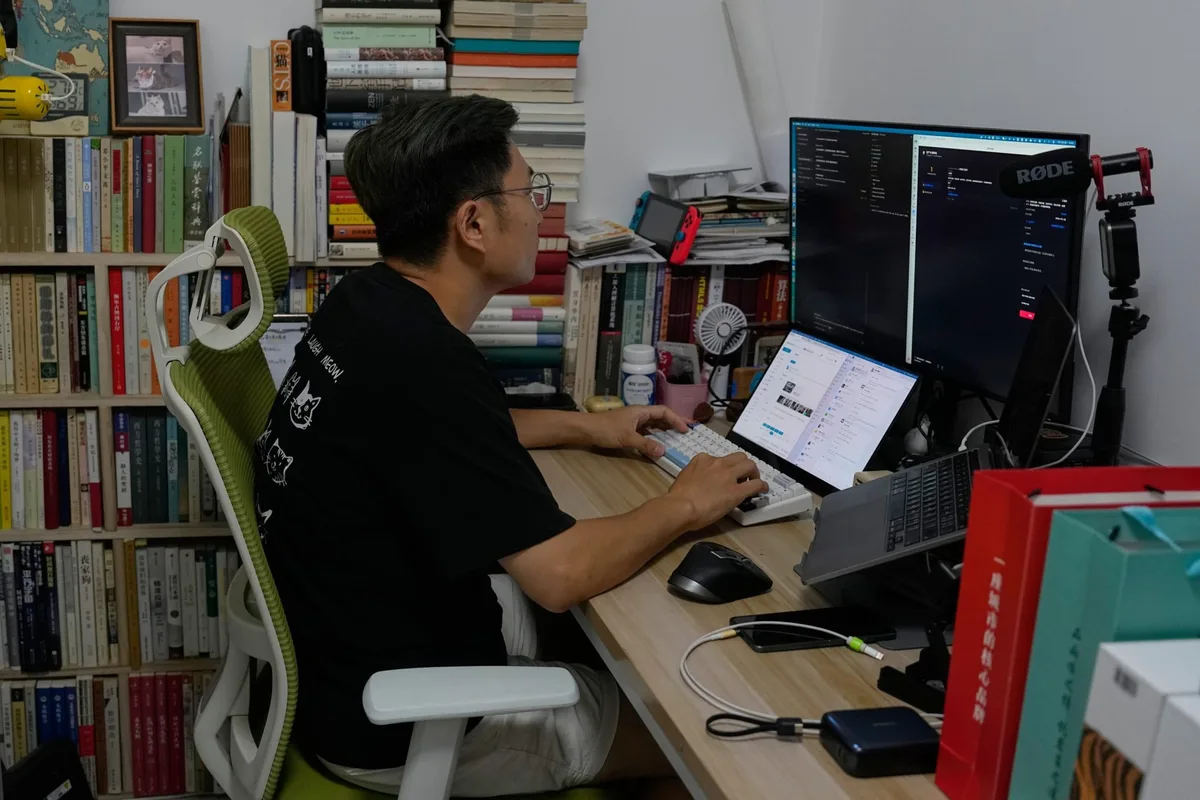
Computer programmer Fei Zhaojun’s boss asked him if artificial intelligence could soon replace humans in coding jobs.
Two weeks later, he was laid off from his job in Beijing, together with about 160 of his colleagues.
It’s an increasingly common scenario as artificial intelligence, supported by government policies, reshapes China’s massive job market.
Some economists believe that might eventually undermine the overall strength of the world’s second largest economy.
Rapid adoption of AI in many fields, from computer programmers to script writing and physical tasks, is pushing people out of their jobs or leaving them afraid that it might.
China is at the vanguard of AI adoption as government policies encourage people and businesses to use AI applications and robotics in all aspects of life, so people like Fei are figuring out how to adapt.
“There appears to be far less anti-AI sentiment in China (than elsewhere).
Most people seem either positive, neutral, or mildly interested in AI,” said Shujing He, a Beijing-based senior analyst at advisory and research firm Plenum.
“Individuals who worry about being replaced, as well as those who have already left traditional workplaces, are often eager to experiment with AI-enabled businesses and independent ventures,” she said.
“The level of interest is striking.” Until recently, Fei had doubted AI could do programming work perfectly, even though his bosses thought it was close enough.
“Mid-level coders’ job are essentially replaceable in most of the cases,” said Fei, 40.
“Even if it is a disaster that leads to replacing all humans, at this stage, you just have to use it as everyone else is using it.” Now he’s making vlog-style short videos during a career break while figuring out what he wants to do next.
He’s not making a living off of his videos, which are about ordinary people’s lives, but hopes that they might help others.
If you can’t beat them, join them Du Qinchun, a part-time translator, has been helping to train an AI model to do translations.
5News aggregated this summary from the outlet’s public feed. The full article, with all the context, is on fortune.com — the content belongs to Fortune.