Ignore the Childish Insults. Trump’s Latest Trade War With Canada Will Hurt Us All.
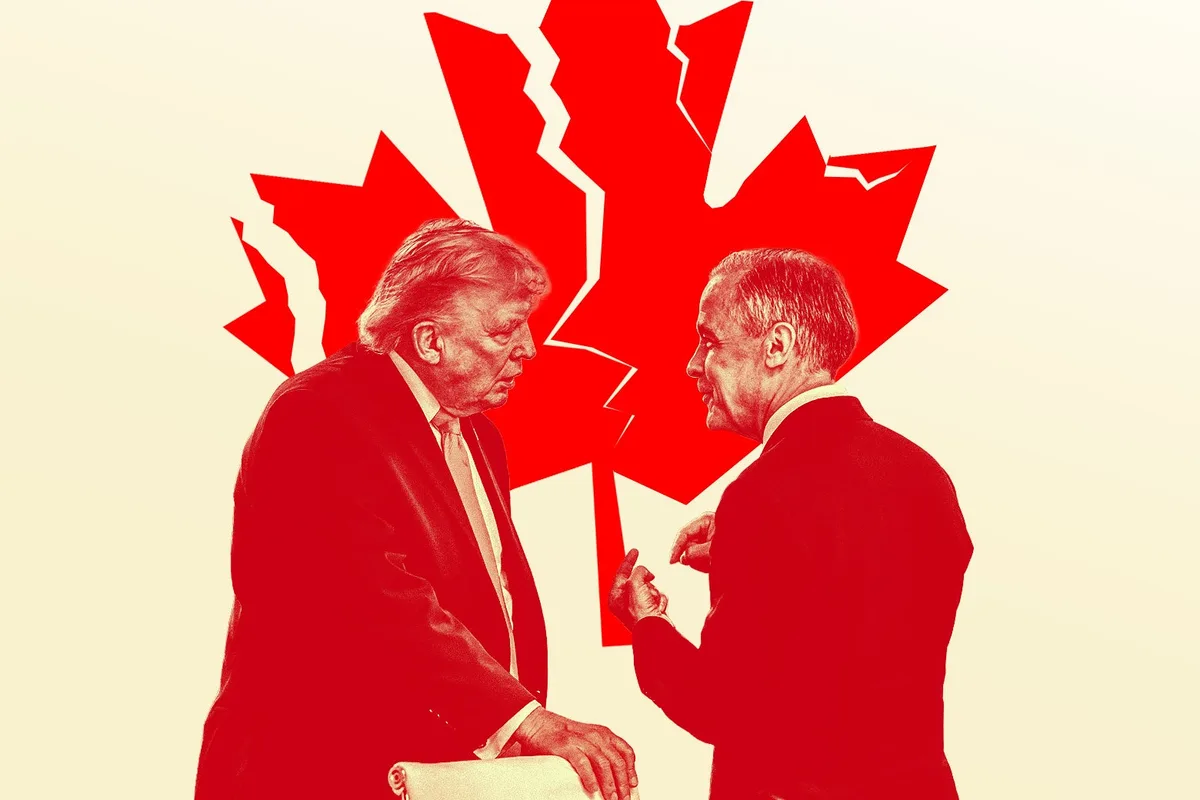
Donald Trump’s trade war with Canada is back on in earnest. But if the first go-rounds last year were tragedy—depressing stocks, spiking prices, and rending hearts in both countries—the latest skirmish is starting to look more like farce. On Tuesday morning, Trump threatened to rechristen Lake Ontario (which straddles the U.S.–Canada border) to “Lake America” amid a tiff with the premier of the Canadian province with which the lake currently shares a name.
Still, even trade wars waged for silly reasons can have real consequences. Today we’ll explain the latest developments, what they mean for your wallet, and their significance for the future of U.S.–Canada relations.
Rewind! Last time you wrote about this , the U.S. and Canada were negotiating new trade terms. What changed?
Good memory. Those talks ramped up last month, after the U.S. declined to renew the USMCA, a trade deal that includes the United States, Mexico, and Canada. Trump actually negotiated that deal in his first term, proclaiming it “ truly fair and reciprocal ,” but he has since demanded changes—hence the new talks with Canada. Those negotiations, though, collapsed late last week ahead of a Trump-imposed deadline. The USMCA remains in force for now, but the aborted talks leave many specifics in flux.
To answer that question, you have to meet a couple of the other dramatis personae in this particular farce. One of them is Canadian Prime Minister Mark Carney, who pulled his negotiators out of Washington on Friday after it became clear that a deal wasn’t in the offing. Carney did so after consulting with a fellow Canuck named Doug Ford, who leads Ontario, the province Trump insulted this morning. You might remember Ford’s younger brother Rob, the hard-drinking, drug-using, right-wing former Toronto mayor who died in 2016. Trump certainly does: On Monday, he referred to Doug as Rob’s “ less charismatic, intelligent, and overall unimpressive brother .” But the elder Ford has clout because Ontario, which borders New York, Pennsylvania, and the Upper Midwest, accounts for the bulk of U.S.-Canadian trade —nearly half a trillion dollars annually as of 2023, which, if Ontario were a country, would make it the U.S.’s third-largest trading partner. Ford, who has called Trump a “dictator,” belongs to a different political party from Carney but has become a major force behind the prime minister’s decision to stand up to the U.S. The unresolved trade issues between the two sides, a list that is almost comical in both its breadth and specificity, suggests why Ford has so much pull. As reported by the New York Times , the hang-ups included U.S. tariffs on Ford F-450s and other heavy trucks produced in Ontario and the province’s ban on American liquor, which its stores stopped stocking last year during an earlier salvo in the trade war. “I deal with many countries, and Canada is easily the most difficult and unreasonable,” Trump groused after the talks collapsed. Ford says Trump can “kiss my ass.”
Insults aside, what does all this mean for what I’m going to be paying for things, and which goods is the trade war hitting?
Both prices and the number of goods affected are set to rise.
5News aggregated this summary from the outlet’s public feed. The full article, with all the context, is on slate.com — the content belongs to Slate.