Drastic water cuts issued for California, Nevada and Arizona from Colorado River
Federal officials announced sharp water cuts for the next two years on Friday for three Western states that rely on the imperiled Colorado River.
Under the Bureau of Reclamation's plan, California, Nevada and Arizona will collectively reduce water use by 1.25 million acre-feet annually during that period, with the possibility of larger cuts depending on conditions.
Arizona will see the biggest cuts, while states upstream — Colorado, Utah, Wyoming and New Mexico — do not face any for now.
Meanwhile, neighboring Mexico will reduce its intake by 250,000 acre-feet under a U.S.-Mexico treaty.
"We've been in this 26-year prolonged drought period," said Andrea Travnicek, the Interior Department's assistant secretary for water and science. "We continue to see a prolonged drought in our future. So continuing to work together as a whole within the basin is going to be extremely important."
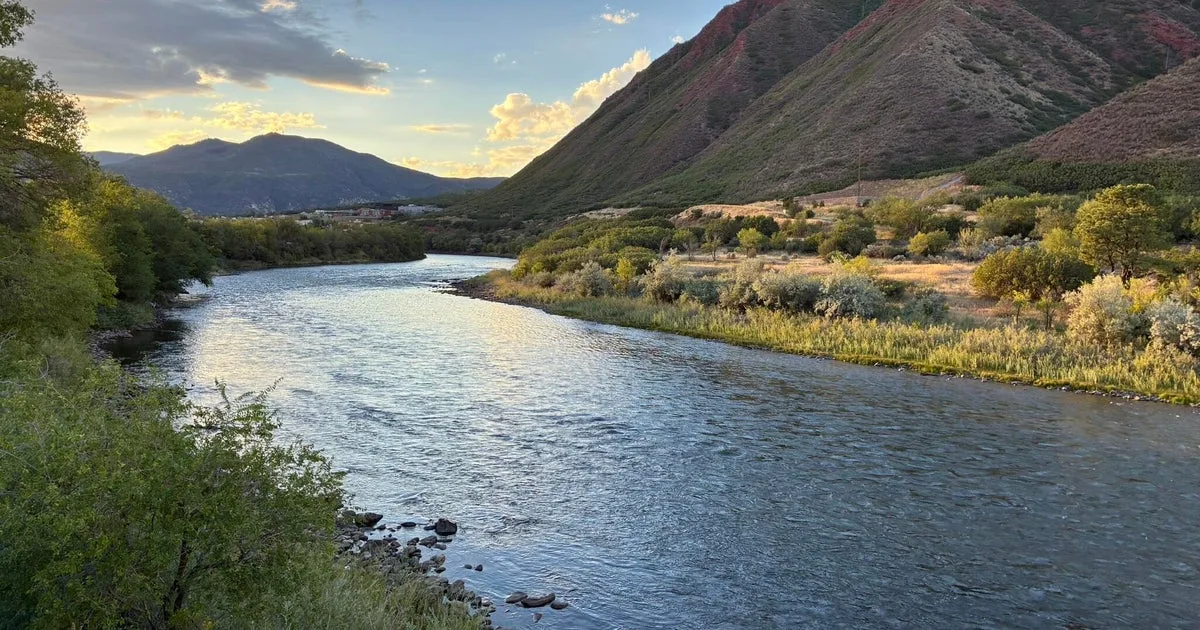
The Colorado River serves as a water supply source to an estimated 35 million to 40 million people, according to the Bureau of Reclamation.
The current rules governing the use of the river's water are set to expire in October, and the seven states have been unable to reach a consensus on sharing it over the long term.
Last winter saw the worst snowpack on record for the Colorado River Basin, adding more stress on farmers, industry, wildlife and hydropower producers, as well as tens of millions of people who rely on the waterway, including in dozens of Native American tribes and in two Mexican states.
Years of overuse combined with drought and rising temperatures due to climate change have depleted the country's two largest reservoirs, which are both fed by the Colorado. Lake Mead recently plummeted to its lowest level since it began filling nine decades ago, and Lake Powell did the same about a week later. Their combined storage is the lowest it has been in nearly seven decades.
If the water in Lake Powell falls just 33 more feet, the reservoir will no longer meet the water levels needed to generate hydroelectric power, meaning the water can't move through the dam into the Colorado River.
Negotiators in Arizona thanked California and Nevada for their collaboration on sharing the cuts.
"For 2027 and 2028, the reductions that are now memorialized here will provide substantial stability for folks," said Tom Buschatzke, Arizona Department of Water Resources director. "We'll continue to negotiate and figure out how we're going to operate over a longer-term period, which is what we all want."
JB Hamby, California's chief Colorado River negotiator, said the plan brings "some badly needed near-term certainty at a moment of extraordinary risk," though he called it "a bridge, not a permanent solution."
Officials in Nevada applauded their collaboration with Arizona and California and said a seven-state consensus remains their preferred path for the river.
5News aggregated this summary from the outlet’s public feed. The full article, with all the context, is on www.cbsnews.com — the content belongs to CBS News.