A roadmap for safeguarding against AI bioweapons
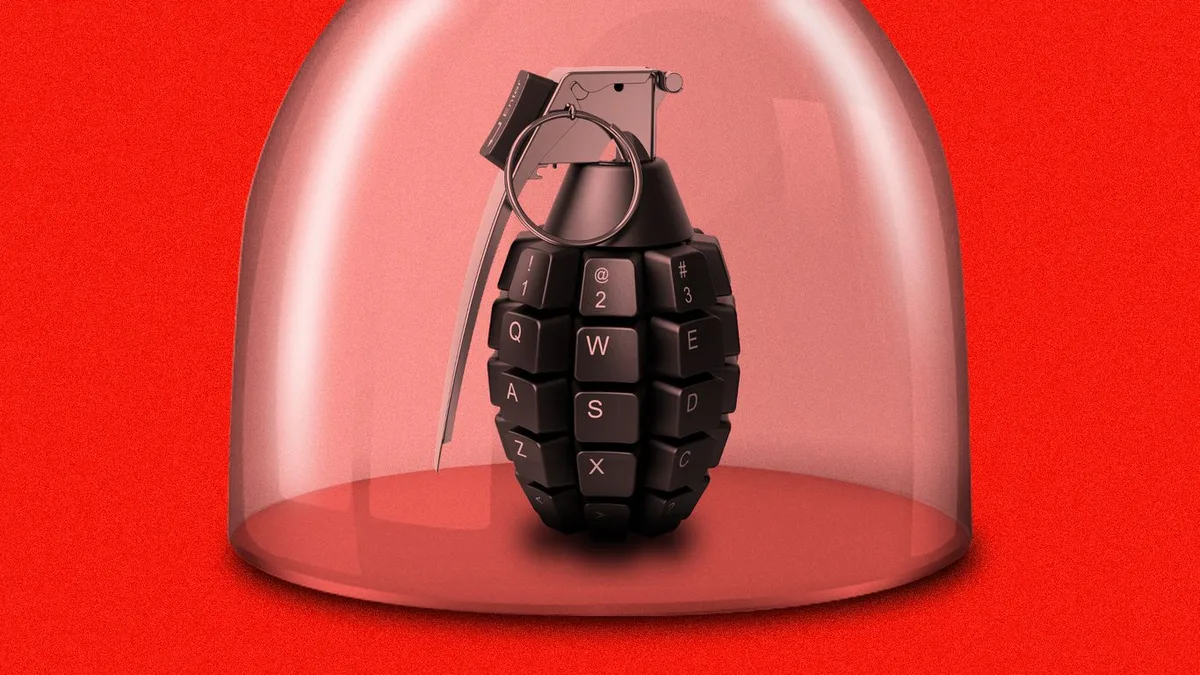
AI-enabled bioweapons are a potentially catastrophic yet manageable risk — if government, the scientific community, the public health sector and leading tech companies can develop appropriate safeguards, a new report argues.
Why it matters: The debate over AI and public safety isn't one that the health care or research communities can ignore.
Driving the news: A RAND report out this week outlines nine mitigation strategies targeting a range of actors who could use AI to design and release a biological weapon.
While there's already considerable debate about government oversight and safeguards around frontier AI companies, RAND calls for more controls and a wide range of cross-industry cooperation.
It recommends protecting the same biological tools and datasets that are contributing to some of today's most exciting medical advances.
And though we all think of public health preparedness as a response to an outbreak, the report frames it as a form of deterrence.
The big picture: The nine measures would prevent a large-scale AI-enabled biological attack by managing access to information that can fall into the wrong hands, disrupting access to the materials needed to make a weapon, proactively detecting signs of misuse and deterring nefarious activity from occurring in the first place.
Part of the problem with AI's rapid advancement is it expands the field of players potentially capable of making a biological weapon, from lone wolves to state-backed actors.
"AI capabilities in biology are advancing really fast, but luckily most dangerous thresholds have not yet been crossed," RAND lead author Steph Guerra told me.
Given the nature of the threat, "we need this layered system of mutually reinforcing approaches." Zoom in: Remember all of that talk about AI helping discover drug candidates? Some of the technology enabling that work could turn dangerous in the wrong hands, Guerra told me.
A lot of the tools and biological data being generated by pharmaceutical companies and biotechs are proprietary, meaning access is already restricted.
Open-source biological tools and data are more concerning — including those emerging from academia and research institutes.
"Right now, data for biology is freely out there and open because biology ... [is] for discovery and saving lives.
It's not warfare first, which is a good thing," Guerra said.
5News aggregated this summary from the outlet’s public feed. The full article, with all the context, is on www.axios.com — the content belongs to Axios.