Why are RAM prices so high right now?
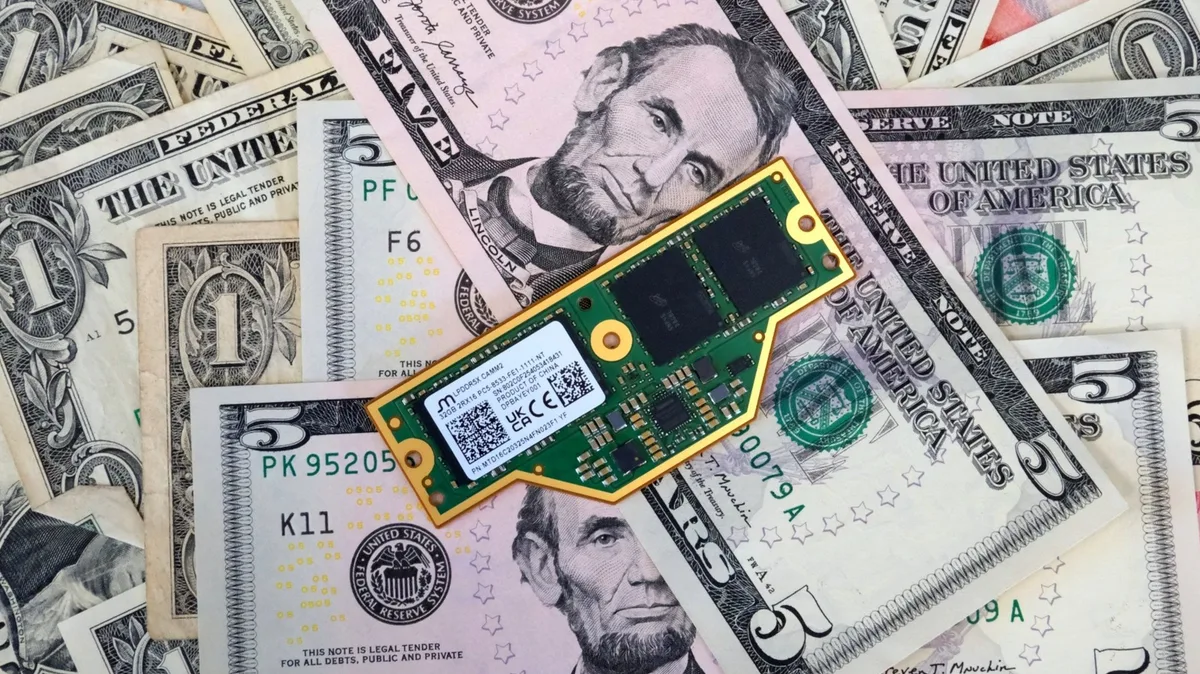
Daniel Cooper for Engadget In the last 18 months, the price of RAM has skyrocketed , and is expected to continue rising for the rest of the year. For something that's gotten cheaper pretty consistently since the '60s, the dramatic spike now is all the more unprecedented. There's a reason everyone's calling this the RAMpocalypse, because what used to be a cheap commodity has become a luxury item. It's why you're left having to pay more for every new phone, PC and tablet from now and for a long while to come.
RAM, or Random Access Memory, is a crucial component of every computer, enabling it to read and execute data effectively. In order to work, your CPU needs a steady supply of information to process, information which is stored on its hard drive. But no matter how fast your hard drive is, it's still not going to be fast enough to feed data to the CPU quickly enough for it to do its job properly. RAM sits between the two, pulling files from storage and holding them ready for the CPU to do its job. The more RAM you have, the more data can sit, coiled like a spring ready to leap into action. If your PC is sluggish, this is why it's often better to invest in more RAM than a faster processor — or at least, it was before all of this kicked off.
There are essentially three companies making the majority of the world's RAM: Samsung, SK Hynix and Micron. Each one operates manufacturing plants worth billions of dollars, executing the sorts of precision engineering that even rocket scientists think is tough. RAM is the catch-all term for the technology, and aside from some hyper-specific uses like CPU caches, DRAM is what you'll find in consumer electronics. DRAM comes in many flavors, including DDR (Double Data Rate) for PCs and Low Power DDR (LPDDR) for mobile devices.
But there's another type of RAM called HBM (High Bandwidth Memory), which is designed for high end computing environments. HBM is more advanced, a lot faster than standard DDR and packs in far more memory than you'd find on a standard stick of DRAM. The speed and capacity advantages HBM has makes it ideal for intensive workloads, which is why it's found in data centers and used for AI training.
It's worth understanding that while DRAM and HBM aren't interchangeable, they are made from the same components. The same silicon wafers underpin both forms of RAM, but they're assembled in a very different way depending on the use case. Sadly, HBM requires a lot more of those resources. In 2024, Micron CEO Sanjay Mehrotra told investors that each unit of HBM "consumes approximately three times the wafer supply" as consumer-level DDR5 RAM. And for now, this is a zero-sum problem: For every single piece of HBM in the world, it's taken the parts and capacity that could have produced three DRAM modules.
Product database PCPartPicker has graphs tracking the prices of RAM over the last 18 months, and they make for sobering viewing. The price for a pair of 16GB DDR5-4800 sticks went from under $100 at the start of 2025 to more than $400 today.
5News aggregated this summary from the outlet’s public feed. The full article, with all the context, is on www.engadget.com — the content belongs to Engadget.