The US Army wants machines that can pull drinking water from the air for fights far from reliable supply lines
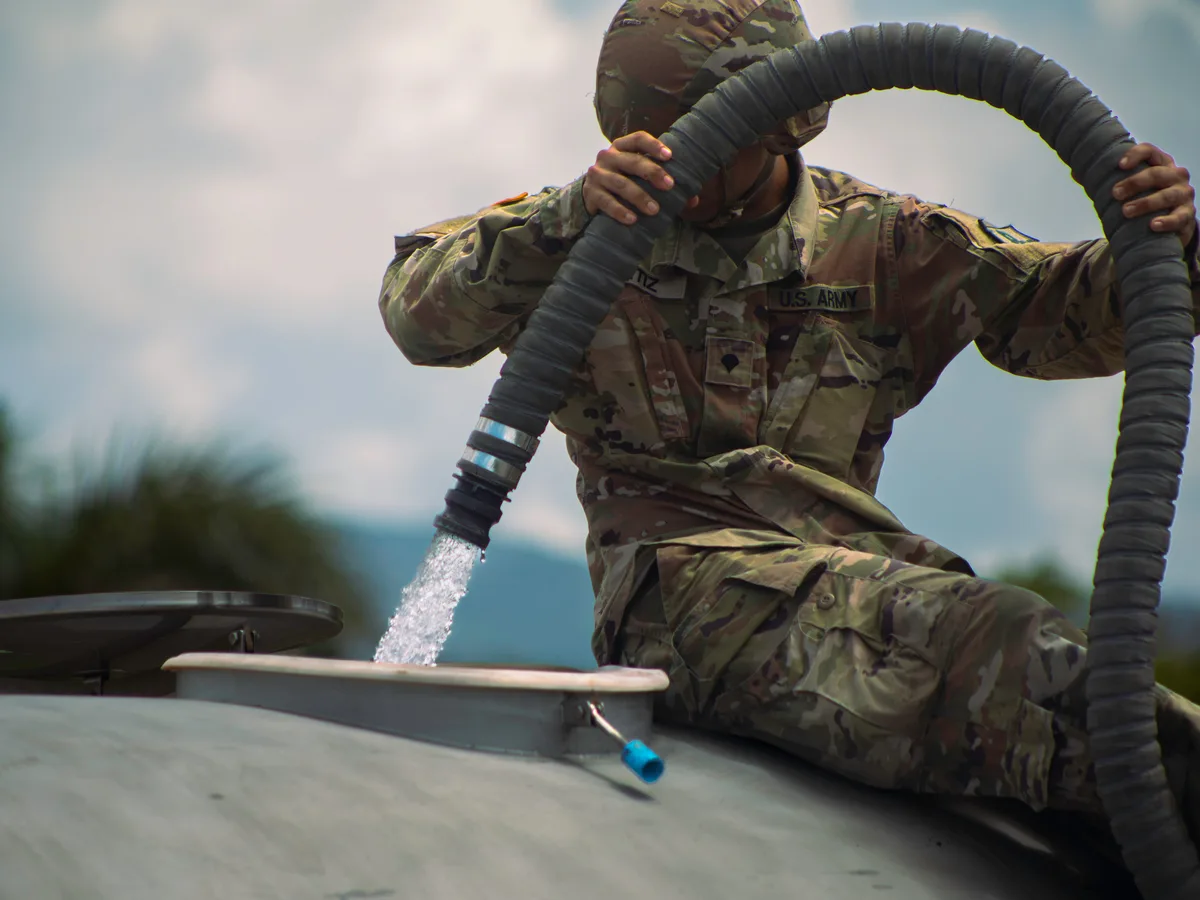
A US Army soldier fills up a portable water tank at Cidra, Puerto Rico, Aug.
18, 2024.
Spc.
Felix Ortiz Rivera/US Army The US Army has awarded a contract worth up to $50 million for water-from-air systems.
Atmospheric water generators could reduce the need to truck water into dangerous areas.
The large machines, however, need ample power and work best in humid climates.
The US Army awarded a nearly $50 million contract for machines that act as giant dehumidifiers, turning air into drinking water for service members who may be operating in remote locations where conventional water resupply could be difficult or dangerous.
An announcement posted to the Pentagon's website this month said Florida-based Genesis Systems had been chosen for research, development, testing, and procurement of WaterCube Atmospheric Water Generation systems "to provide scalable, on-site potable water production in austere and contested environments." According to the company's website, its largest water generator, which appears to be housed in a 20-ft shipping container, produces around 1,000 gallons of water per day in humid weather.
The cubes can be remotely monitored and are already used for emergency relief — the generators were prepositioned for use in 2024 as Hurricane Milton knocked out local utilities for local hospitals, tech news outlet Wired reported.
Smaller versions, which start at $6,500, according to the company's website, come with a smaller footprint.
They can be powered by solar, don't require an online connection, and are marketed toward people looking to make their own water at home or off the grid.
Water is one of the most essential needs for any military sustaining troops in combat.
During the Global War on Terror, pallets of bottled water were trucked or flown to US troops on bases throughout the Middle East, a heavy logistical burden requiring manpower, vehicles, and fuel to move.
Sometimes the military stores water in large "bladders" or tanker trucks, but those taxing approaches still depend on established, reliable logistics networks .
5News aggregated this summary from the outlet’s public feed. The full article, with all the context, is on www.businessinsider.com — the content belongs to Business Insider.