A Reverse Ellis Island
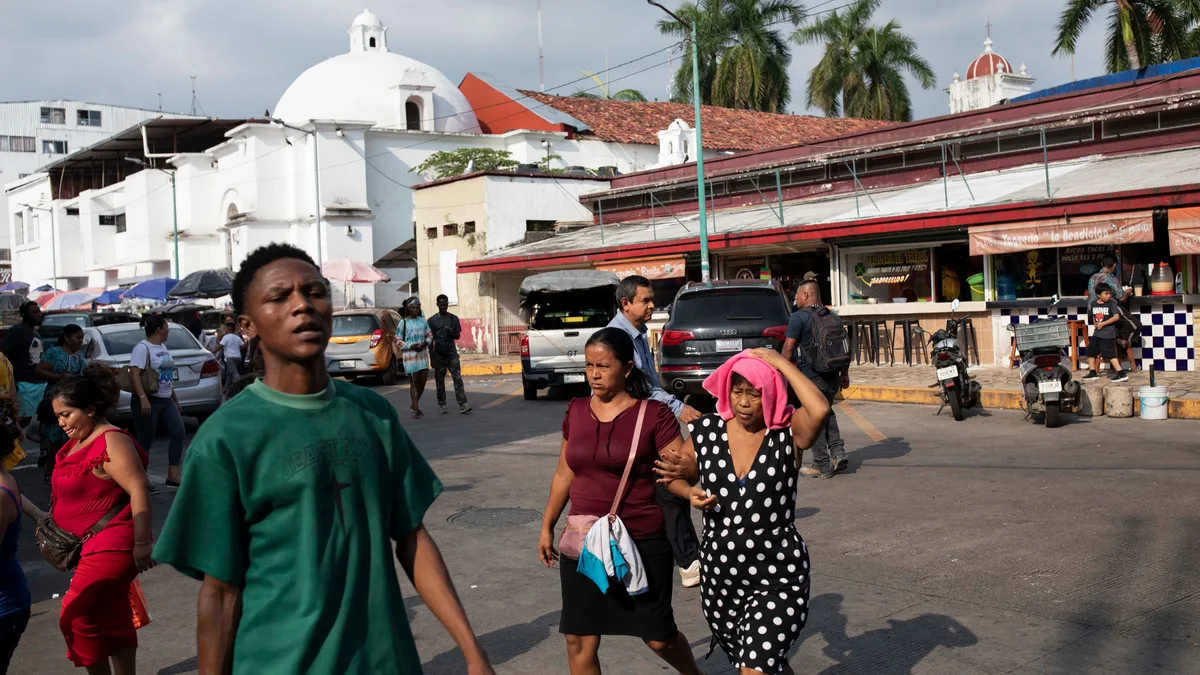
Photographs by Lisette Poole J ulio Borrell knew he was being deported, but after 47 hours on a bus rattling through Mexico, he still had no idea where the United States was sending him.
Through the window, he saw the cities give way to sprawling banana plantations and coffee farms.
The passengers were still wearing whatever clothes they’d had on when they were detained by ICE: shirts splattered with paint from their most recent job, pajama pants, landscaping-company uniforms, bathing suits.
Borrell had lived in Miami for 46 years.
Now he watched as the bus passed a sign for the Guatemala border and then pulled over on the side of the road.
“Where are we?” Borrell asked.
“Tapachula,” a Mexican immigration agent answered.
Borrell hadn’t heard of it.
Neither had anyone else on the bus.
The deportees weren’t from here.
They weren’t even from Mexico.
They were Cuban, Venezuelan, Nicaraguan, and Haitian—many of them elderly, some stripped of their green card after spending most of their life in the United States.
The Trump administration, unable or unwilling to send them to their home country, had bused them 2,000 miles, from the U.S. border to a small city where they don’t have legal status.
It’s a practice that started last year without any announcement and has quietly grown since then.
5News aggregated this summary from the outlet’s public feed. The full article, with all the context, is on www.theatlantic.com — the content belongs to The Atlantic.