The Kennedy Center’s Purgatory
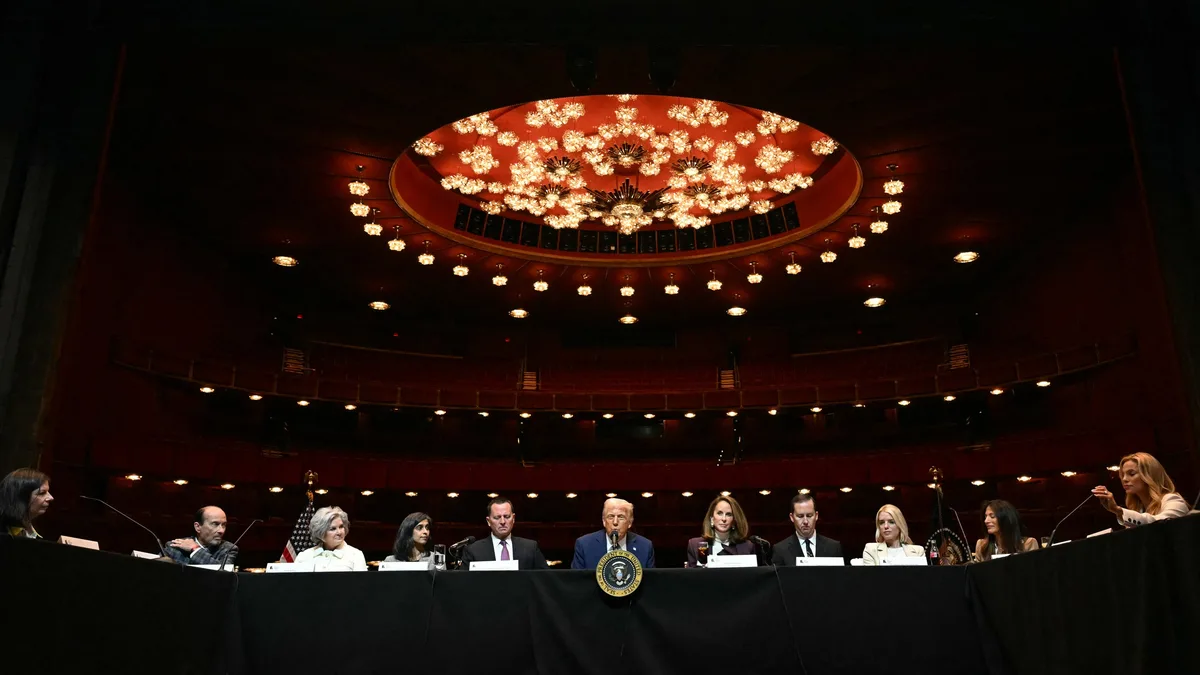
To put the legal fight over the Kennedy Center in operatic terms, it has become more than a little Wagnerian.
After another hearing this week about another attempt to add Donald Trump’s name to its marble facade, the fate of the national cultural center remains grim and unresolved, and no finale is in sight.
What could deliver a resolution? That’s still not clear, in part because the defendant in a long-running lawsuit—the Kennedy Center’s board of trustees—keeps making decisions that drag out the ordeal.
A judge can restrain the board but has no power to remake it.
Congress can remake it, but only through legislative action, which Trump can veto.
And meanwhile, his board remains in place—able to make new decisions that invite new challenges that send the parties back to the same judge.
In December, Trump’s allies on the Kennedy Center board—billionaires, White House aides, Fox News personalities, and other figures associated with Trump world—voted to add the president’s name to the building, and in March, they signed off on his plan to shut down the center for renovations.
But by May, both actions had hit a wall: In a lawsuit filed by a Democratic member of Congress, Joyce Beatty, who serves as one of the board’s ex officio members, U.S.
District Judge Christopher Cooper concluded that the board had exceeded its authority by renaming the Kennedy Center.
He also found that its decision to close the center was likely a breach of the trustees’ fiduciary duties, describing that vote as “ill-informed and seemingly preordained.” So they revoted this summer to close down, and they okayed a different plan to get Trump’s name back on the center’s exterior—in three places, actually, even though the relevant federal statute states that “no additional memorials or plaques in the nature of memorials shall be designated or installed in the public areas” of the complex.
Whatever the merits of the renovation plan, the Kennedy Center is plainly in crisis.
Trump’s takeover drove away artists, donors, and audiences; staff purges have stripped it of institutional memory.
There is a reasonable argument that because its brand has become so repellent, the Kennedy Center might as well close temporarily so that tenants such as the National Symphony Orchestra can have a shot at recovery beyond its walls.
But the ongoing litigation has exposed other concerns about the institution’s leadership, who include an executive team led by Matt Floca—whose expertise is in facilities, not arts management—and a board, the chair of which is Trump himself.
5News aggregated this summary from the outlet’s public feed. The full article, with all the context, is on www.theatlantic.com — the content belongs to The Atlantic.