Alphabet’s Ruth Porat brings a pragmatic optimism to the AI race—and a warning about the possible downsides
In today’s CEO Daily: Dispatches from the Most Powerful Women Summit The big leadership story: More than half of all U.S. work hours might be automated by 2035 The markets: More frantic selling in Asia as chip stocks nosedive Plus: All the news and watercooler chat from Fortune .
Good morning from Santa Barbara, where we’re on Day 2 of the Fortune Most Powerful Women Summit.
We’re talking with leaders here about leadership, healthcare, geopolitics, media trends, trust, the next era of wealth—and of course AI.
Here are a few highlights from conversations so far.
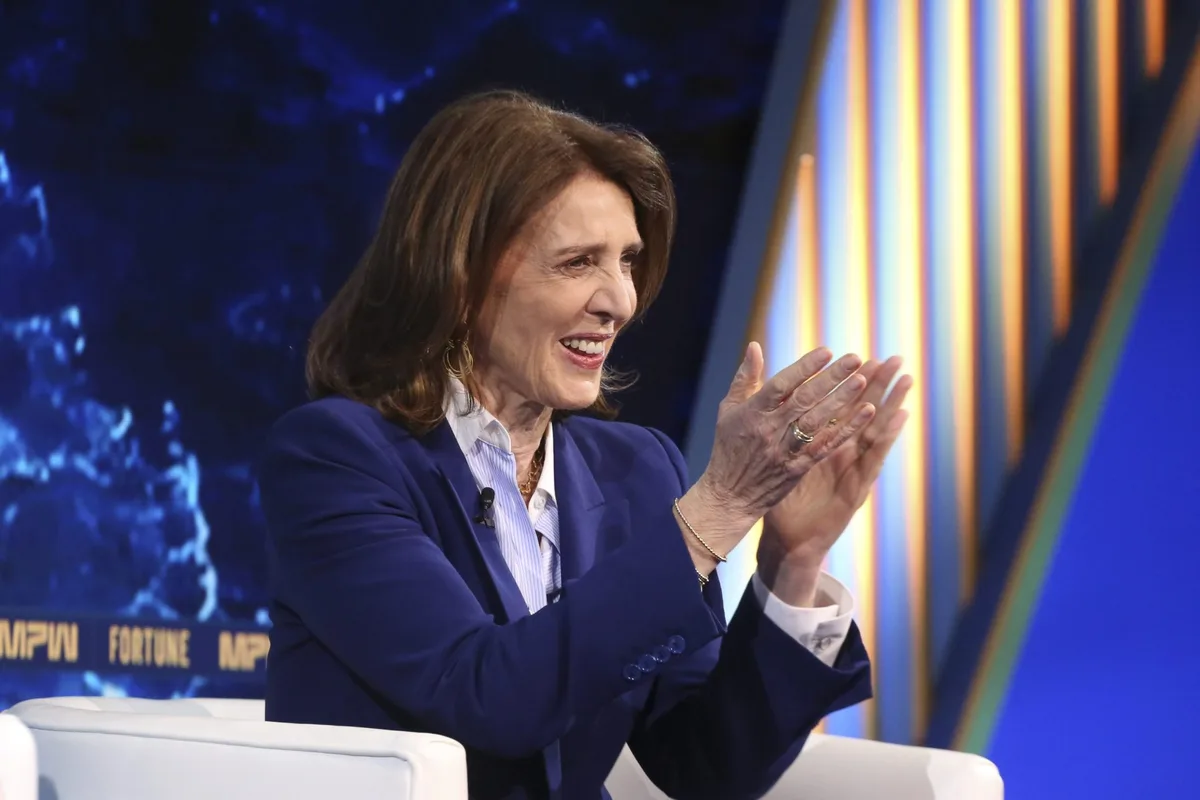
On AI: Ruth Porat, president and chief investment officer of Google and Alphabet , brought a pragmatic optimism to a conversation dominated by guys who don’t get out much.
Porat represents one of the biggest players in the AI race and told Fortune editor-in-chief Alyson Shontell that Alphabet will spend about $200 billion this year to build out capacity and even more in 2027, saying “we do see this as an opportunity that extends for quite some time.” But Porat, who’s No.
11 on this year’s Fortune Most Powerful Women list, is more Main Street than Silicon Valley when it comes to AI’s impact.
One reason may be that she came to Google in 2015 from Wall Street, bringing rigor, transparency, and discipline to a company that had moved beyond search and advertising into sprawling bets on robots, autonomous vehicles, solar-powered drones, wearables, and a bunch of other stuff.
She talked about investing in skilled trades, energy capacity, and trust around AI.
As she told the MPW audience: “If we don’t collectively fortify the downside risk (of AI), we will not have the opportunity to capture the upside.” On wealth: About $124 trillion in wealth is set to be passed down by 2048, with much of that money going to women, from both their partners and their parents.
I spoke with three leaders about how those trends are shaping philanthropy, investing, entrepreneurship, and overall spending.
Yet, as Deloitte U.S. federal health sector leader Beth Meagher pointed out , the opportunities from this shift risk getting lost amid our focus on frontier models and geopolitics.
“This shift is something that I think we have a tremendous opportunity to lead from the front of,” she said.
Morgan Stanley managing director Seema Hingorani sees the opportunity, too.
5News aggregated this summary from the outlet’s public feed. The full article, with all the context, is on fortune.com — the content belongs to Fortune.