Can Intel Save the Suffocating Gaming Handheld Scene?
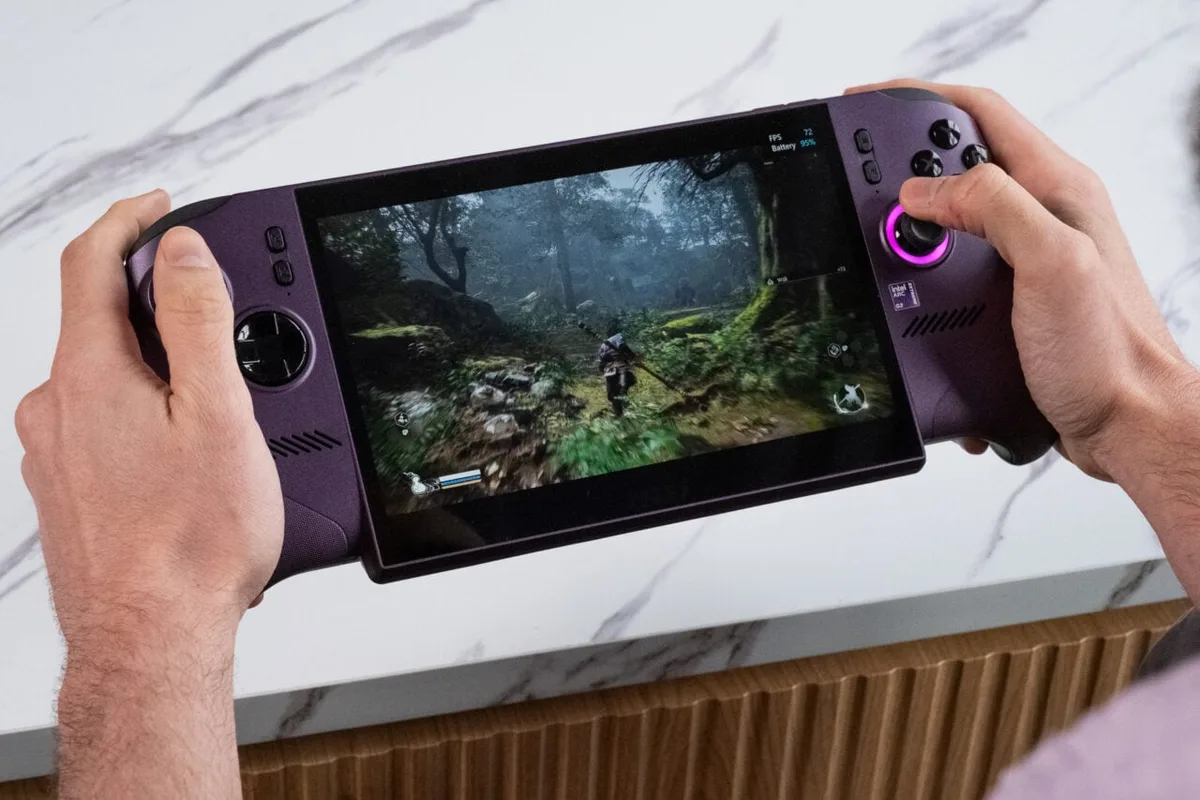
The obscene cost of memory has neutered most of the enthusiasm for the burgeoning handheld PC space. Intel may prove our best hope for lower-cost gaming platforms, though it may require dialing back handheld performance by an upsetting degree.
On Sunday, the mostly reliable leaker Jaykihn suggested on X that Intel is developing a lower-end handheld chip built for more budget-centric gaming devices.
Intel’s current handheld chip, the Arc G3 and G3 Extreme , deliver today’s best performance in a portable package. The “Extreme” chip demands an even higher cost. The MSI Claw 8 EX AI+ that features the G3 Extreme costs a staggering $1,800.
This supposed lower-end Intel processor would be much, much less powerful. Jaykihn suggests this unnamed chip would contain four P (performance) cores and four low-power E (efficiency) cores. The Arc G3 makes use of two P cores, eight E cores, and an extra four more low-power E cores. The G3’s integrated GPU includes a whopping 10 Xe3 cores, while the Extreme version has 12 Xe3 cores. This unannounced chip would supposedly slash the number of GPU cores to just four.
This core configuration is equivalent to the lower-end Panther Lake chips like the Core Ultra 7 355. Still, these chips wouldn’t merely be built for lower-powered handhelds. They would be expressly designed for purpose-built budget devices. Any new Intel handheld chip may have enough horsepower to run older AAA games and indie titles. Depending on how well gamers make use of upscalers like Intel’s own XeSS , it may be enough to power some modern titles at low settings. Otherwise, such low-end devices may be better off for game streaming .
This supposed Intel processor would still be built on the same Panther Lake microarchitecture that Intel’s been shoving into every laptop under the sun in 2026. Despite their initial promise, few of the laptops with these chips have been anywhere close to affordable. The recent launch of Wildcat Lake , another cut-down version of Panther Lake, has allowed for a few more reasonably priced PCs. This reduced Arc G3 chip may try to do the same with handhelds.
No matter what, Intel’s problem is still going to be price. The Steam Deck OLED now starts at $790 after price hikes . That cost is nowhere worth four-year-old hardware that’s struggling to keep up with current-gen games. If a handheld meets or can barely beat Steam Deck performance, then in an ideal world it should cost less than Valve’s beloved mobile gaming machine. That’s a hard bargain considering the ever-inflating cost of memory. For instance, last year’s Lenovo Legion Go S with a cut-down AMD chip started life at $600. It now costs $990 on Best Buy .
What will truly set Intel apart is if it can do more with less. It needs to push more software to make up for limited hardware. It may have that on the back burner with a “frame extrapolation” model that improves frame rates without increasing the feeling of latency. No matter what, budget devices will be a compromise. The only way to help handhelds survive is to outlast the RAM pricing crunch, even if players may be screwed for years to come.
5News aggregated this summary from the outlet’s public feed. The full article, with all the context, is on gizmodo.com — the content belongs to Gizmodo.