Chinese pottery discovered in Great Zimbabwe reveals medieval African empire's vast connections spanning thousands of miles
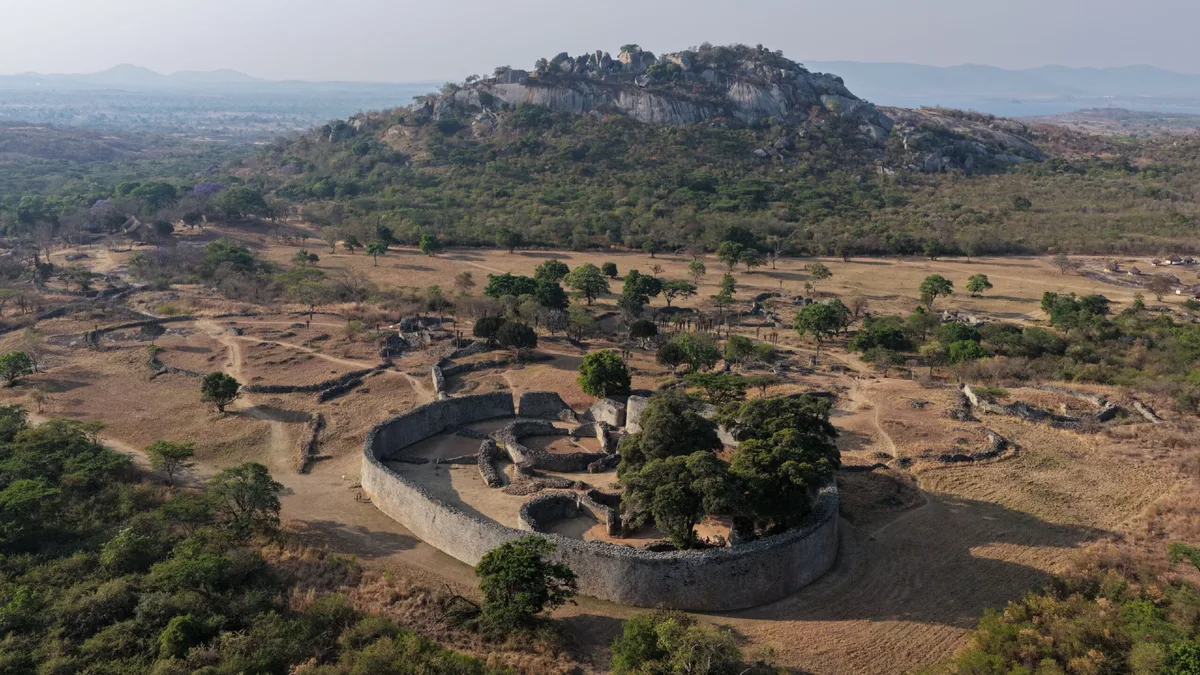
Archaeologists digging in the medieval city of Great Zimbabwe have discovered pieces of jade-green Chinese pottery, suggesting that the enigmatic empire had long-distance connections with East Asia more than 1,000 years ago.
Great Zimbabwe , located in the southeastern part of modern-day Zimbabwe, was the capital of an ancient empire that arose in southeastern Africa in around A.D.
1000.
Little is known about this precolonial empire because its people did not leave a written history, but new archaeological excavations are shining a light on the enormous scale of the centuries-old civilization known for its intricate metalworking and ritual stone carvings.
In the new PBS documentary " Secrets of the Dead: Africa's Golden City ," filmmakers followed a team of archaeologists from the field to the laboratory to try to answer questions surrounding the origins of the understudied civilization, its ritual and trade activities and why it disappeared after 500 years.
"When I was growing up, I was surrounded by symbols of Great Zimbabwe," University of Oxford archaeologist Shadreck Chirikure , who is leading the new excavations at the site, said in the documentary.
"It was only when I started studying archaeology at university that I started realizing that there was this very big debate around who built Great Zimbabwe." Archaeologist Shadreck Chirikure excavates the hillside at Great Zimbabwe. (Image credit: Secrets of the Dead / PBS) The site was first excavated in the late 19th century and quickly looted by British colonists for its ivory, metal and gold artifacts.
These colonists insisted that Africans hadn't built Great Zimbabwe, instead claiming it arose from the Phoenicians, a people originally from the Mediterranean; they used that inaccuracy to justify taking all the artifacts to England, according to the documentary.
Today, many Great Zimbabwean artifacts are held in the collection of the Pitt Rivers Museum at the University of Oxford.
But excavations are showing that Great Zimbabwe was a highly connected African kingdom that flourished from the 11th century until at least the 15th century, when the population may have gotten too large for the dry, over-farmed land to feed.
Archaeologists have already discovered glass artifacts at Great Zimbabwe that came from Southeast Asia, India and the Middle East via boat.
"From India or Sri Lanka to Great Zimbabwe, it's at least 8,000 kilometers [5,000 miles]," Chirikure told Live Science.
Merchants sailed the Indian Ocean using winds kicked up by monsoon cycles.
Archaeologist Munyaradzi Manyanga walks toward the Great Zimbabwe National Monument.
5News aggregated this summary from the outlet’s public feed. The full article, with all the context, is on www.livescience.com — the content belongs to Live Science.