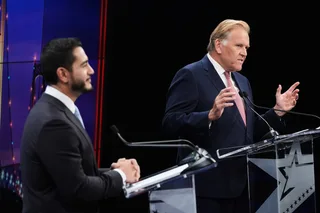
Michigan Senate candidates battle over their records on 9/11 at 25-year mark
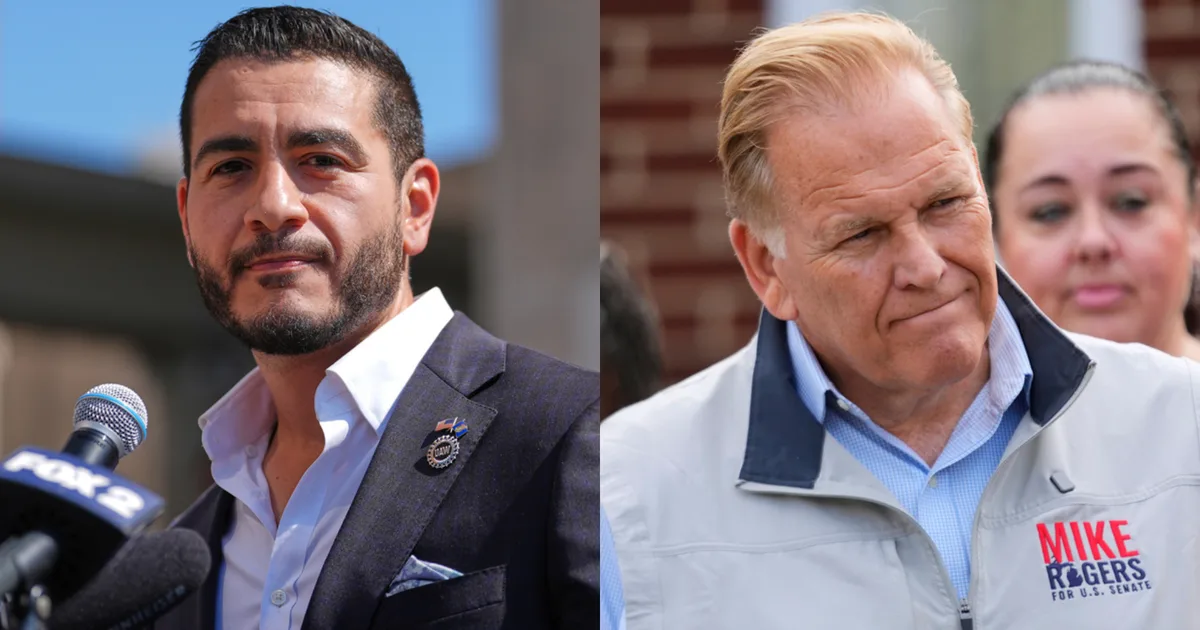
Lansing, Mich. — Speaking to a room full of college students, many of whom weren't alive during the 9/11 attacks, Michigan Democratic Senate nominee Abdul El-Sayed started with a moment of silence to commemorate the 25th year since the terrorist attacks.
He then looked to hit back politically against his Republican opponent, Mike Rogers, who has ramped up criticism of El-Sayed this week due to his ties to left-wing streamer Hasan Piker , who in 2019 said that "America deserved 9/11."
On Friday, El-Sayed, who campaigned with Piker during the Democratic primary and has since distanced himself from the streamer, criticized votes Rogers took as a congressman against benefits for 9/11 survivors and first responders.
Rogers, who represented Michigan in the House from 2001 to 2015, backed financial support for 9/11 victims in the immediate aftermath of the attacks. But he voted against the 2010 James Zadroga Act , which provided medical treatment and financial aid to first responders and survivors of the Sept. 11, 2001, terrorist attacks. At the time, he pushed for the aid to be funded annually and warned that the bill "jeopardizes the financial health of the United States," The Hill reported at the time .
"Rather than vote to make sure that the brave first responders who ran into the rubble that day to save lives, rather to make sure that they had healthcare, he voted not once but twice against giving them healthcare," El-Sayed said during a town hall Friday.
Rogers responded to the criticism of his voting record, saying in a post on X that the "insinuation that I do not support the victims or their families is patently false," while noting that he advocated for an annual $150 million appropriation to support the needs of 9/11 survivors and victims' families.
Meanwhile, Piker's comments on 9/11 have drawn stiff criticism, including from Michigan Republicans who are looking to tie him to El-Sayed in a race that could decide control of the Senate. In August, El-Sayed called Piker's comments about 9/11 "dumb." In 2019, Piker said his comments were inappropriate, and that he "should've used more precise and better use of the language there."
El-Sayed's own comments on the attacks — and the military conflicts that the U.S. launched in response — have also faced scrutiny . He said in 2021 that "9/11 scarred our country in profound ways, but what we did after 9/11 scarred millions of other people."
Republicans have argued those comments show El-Sayed is too extreme, and he was referenced numerous times by speakers at this week's Republican midterm convention in Dallas.
"The Democrats are the party of hatred. They're the party that despises America and the people who built it. They're the party that can find sympathy for the terrorists who perpetrated 9/11," Vice President JD Vance said during his remarks.
During his own speech in Dallas on Thursday, Rogers framed the contest as one about the "soul of our country," suggesting El-Sayed would be "searching for excuses" when "radical Islamic terrorists threaten Americans."
"Together, [El-Sayed and Piker] attack America. They excuse extremism.
5News aggregated this summary from the outlet’s public feed. The full article, with all the context, is on www.cbsnews.com — the content belongs to CBS News Politics.