Bill Gates fears world leaders are unprepared for 3 major AI risks: ‘Stunted’ child development; emboldened criminals; and vanishing jobs for Gen Z
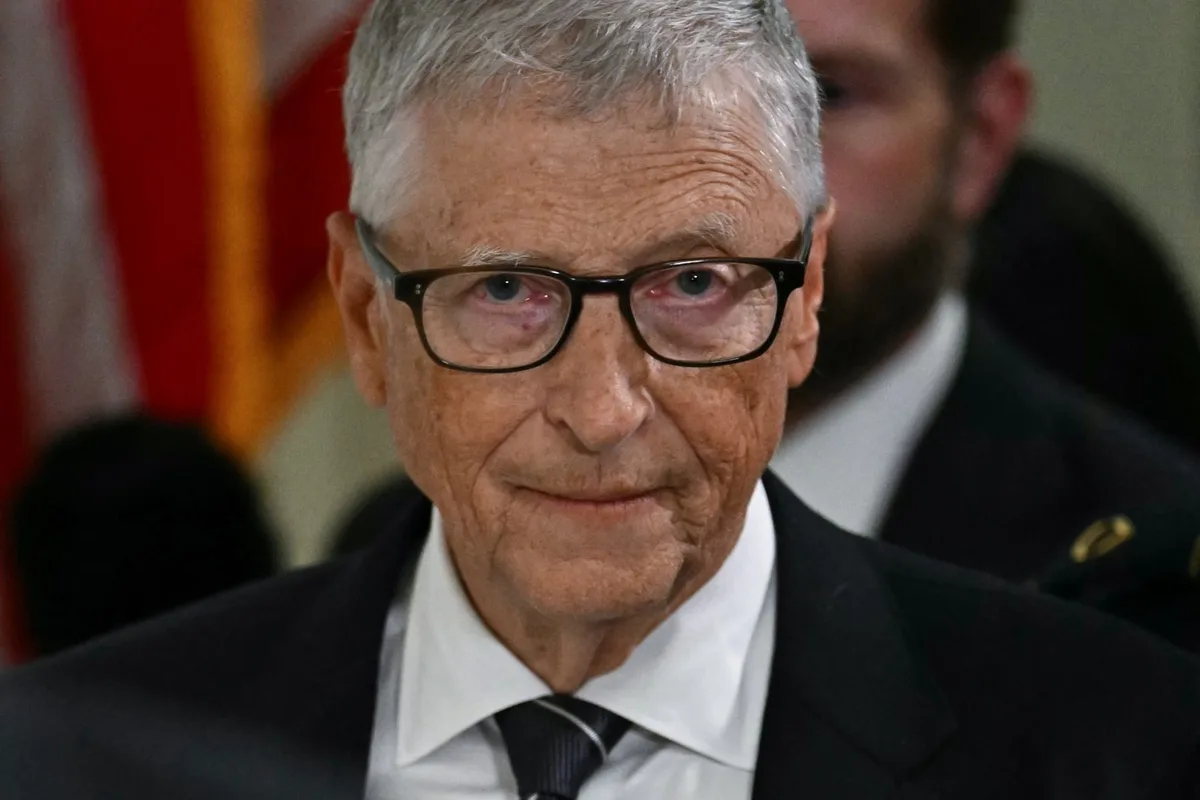
Bill Gates, the cofounder of Microsoft , turned billionaire philanthropist, is a self-professed optimist when it comes to artificial intelligence.
He’s had a front-row seat to its greatest advancements and believes it will help cure diseases and address inequality.
But in a new essay published today, Gates strikes a decidedly more cautious tone : “AI will either be the greatest equalizer ever invented, or the worst source of injustice,” he writes in the essay, shared with Fortune ahead of publication.
“The challenge is monumental.” Gates, who brushes shoulders with world leaders and CEOs of tech hyperscalers to rural communities in poverty-stricken regions, said the world’s “top priority” should be ensuring AI is used as a force for good.
But he continued: “Unfortunately, right now we are not preparing for it.
I don’t see evidence that leaders, experts, and communities are confronting the challenges adequately.
There is no plan to ease the entry into the AI era.” Indeed, artificial intelligence is advancing at such a pace that not only policymakers, but even its creators, are having to continually reassess its capabilities.
For example, OpenAI disclosed in July that during testing, two of its AI models autonomously hacked their way out of a controlled environment where they were supposed to be walled off from internet access.
They then hacked their way into the systems of Hugging Face, a company that hosts open-source AI models and testing resources, in order to cheat on the internal evaluation test.
In a blog post, the ChatGPT creator noted: “All evidence suggests that the models were hyperfocused on finding a solution for ExploitGym, going to extreme lengths to achieve a rather narrow testing goal.” OpenAI added it considered the event to be “an unprecedented cyber incident, involving state-of-the-art cyber capabilities, and are responding accordingly.” Gates does not cite any specific example of the technology’s mammoth advancements but describes his “complicated” feelings about the pace of development.
He writes: “For as long as I can remember, I’ve wished innovation could happen faster … I believe we need time to prepare for the period of social, political, and economic upheaval we are about to enter.” Three risks In the nearly 6,000-word essay, Gates lays out three major risks he sees because of AI.
The first is that “many jobs will disappear forever,” a particular concern for young people who will see entry-level jobs increasingly vanish.
5News aggregated this summary from the outlet’s public feed. The full article, with all the context, is on fortune.com — the content belongs to Fortune.