Exhausted health workers in Congo struggle to keep up as Ebola outpaces contact tracing
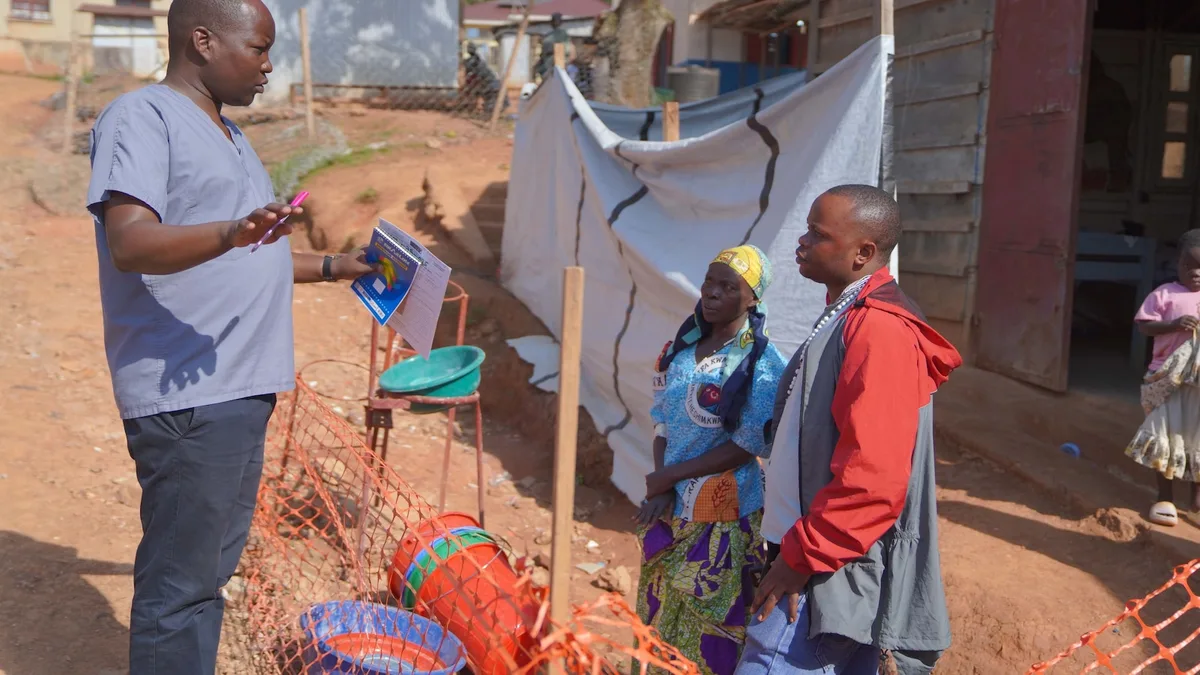
Gédéon Banga Ngbape and his team of community health workers are laboring tirelessly in eastern Congo to track the country’s fastest-growing Ebola outbreak
NIZI, Congo -- Every day, community health worker Gédéon Banga Ngbape and his team fan out across communities in eastern Congo looking for people who may have crossed paths with the country’s fastest-growing Ebola outbreak in history.
The workers investigate dozens of alerts, search for those exposed to suspected or confirmed cases and try to get anyone showing symptoms into care before the virus spreads further.
But the surveillance system is increasingly failing to keep pace with the virus. Between 60% and 70% of new Ebola cases are being detected among people who were not already being monitored as contacts, meaning health workers may only discover infections after patients become sick and have had opportunities to expose others.
“If surveillance does not work well, the entire response suffers,” Ngbape said. “Surveillance is the engine of a response.”
The outbreak has killed over 2,200 people out of more than 4,700 cases, according to the latest government figures. This death toll has been reached almost three times faster than in the 2014-16 Ebola outbreak in West Africa — the worst in history. That outbreak claimed over 11,000 lives.
“We are chasing the virus; the virus is ahead of us,” said WHO regional director for Africa, Dr. Mohamed Yakub Janabi, this week.
U.N. humanitarian chief Tom Fletcher on Friday announced an additional $30.5 million in emergency funding to help tackle the Ebola outbreak.
In Nizi, Ngbape’s surveillance teams say they receive an average of 60 to 70 alerts a day. They move through communities to investigate suspected infections, follow people who have been in contact with suspected or confirmed cases and direct those showing possible symptoms to health facilities.
“I leave in the morning at 8 and return around 11 p.m., sometimes midnight,” Ngbape said. “I still have to follow up and plan the next activities. I feel really tired, but what matters to me is always being of service to the community.”
He did not say how many days a week he works or how often he is able to take time off.
Community health workers who go door to door face risks of their own. Ana Ndroy Kasime, a community health worker in Nizi, said she visits homes to educate residents about Ebola and reports suspected cases to health officials. But she said workers like her lack basic protective supplies.
“When we go door to door, we don’t have protective equipment, like boots, disinfectant and other supplies, even though we are at risk,” Kasime said. “We buy disinfectant with our own money.”
The current outbreak, caused by the rare Bundibugyo Ebola virus, is unfolding in some of the most challenging conditions imaginable. There are no approved vaccines or treatments for the Bundibugyo virus, though trials are underway. Strikes by some unpaid health workers , threats by rebel groups, anger from long-traumatized communities and misinformation asserting that Ebola isn’t real have significantly hindered the response.
5News aggregated this summary from the outlet’s public feed. The full article, with all the context, is on abcnews.go.com — the content belongs to ABC News International.