Your boss’s monitoring app didn’t just watch you — it shared your data to Facebook and a Russian search engine
College administrators read an adjunct professor’s comments to students on personal essays.
Managers told a pharmacist to spend less time with patients after tracking the number and length of her appointments.
Scanners on a warehouse conveyor belt monitored the pace of workers to ensure they inspected hundreds of items per hour.
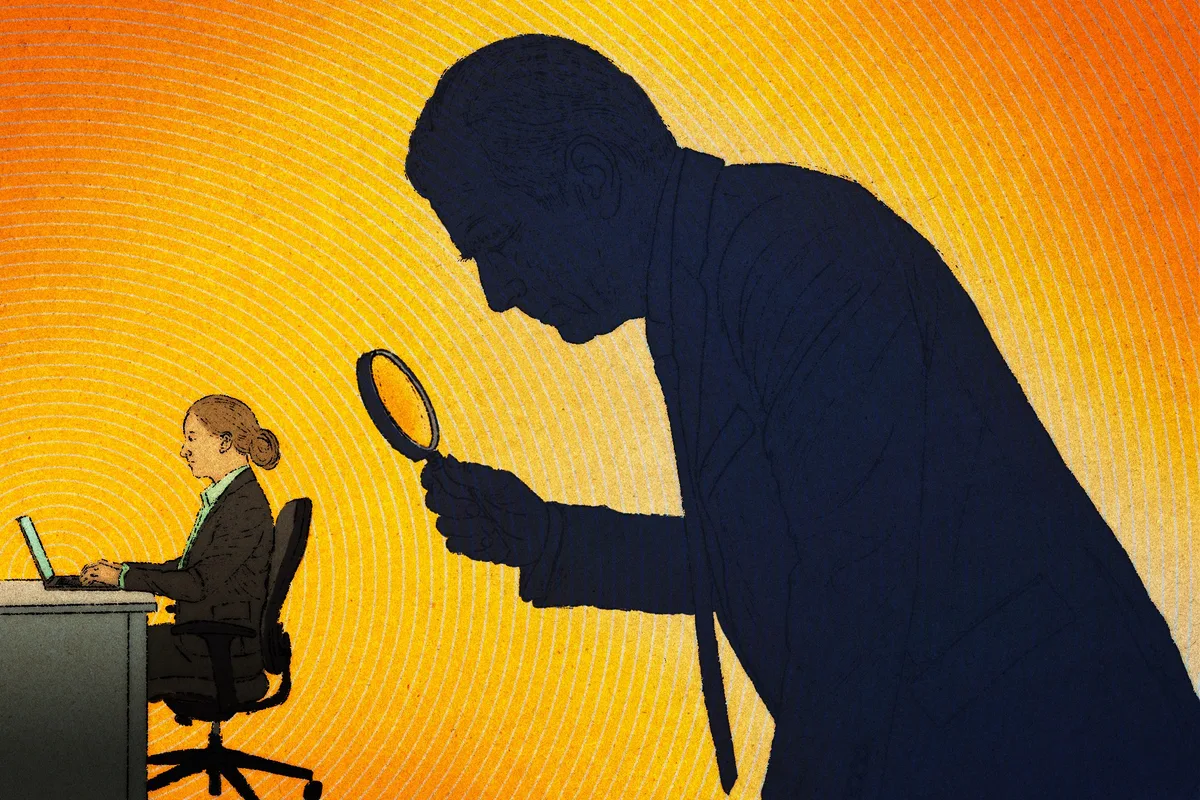
Thousands of employers are keeping tabs on the whereabouts, productivity and communications of workers with technology that was adopted widely during the coronavirus pandemic.
A vast array of digital tools still are being used to track locations, collect data on task completion rates, and access work-issued smartphone and laptop cameras, raising concerns about how much privacy employees have relinquished, even in their own homes.
Employers have always monitored workers, but recent advances in artificial intelligence and data science enable them to create extensive data sets or “dossiers” that can be used to punish workers or attempt to predict employee behavior, said Wilneida Negrón, director of research and policy at Coworker, a nonprofit that helps workers organize to improve working conditions.
“Oftentimes, the workers with the least amount of power in the labor markets tend to be testing grounds for some of the more intrusive forms of data collection,” Negrón said.
Some of the most common workplace monitoring programs have shared names, email addresses and other personal worker data with hundreds of outside data brokers and technology companies without clearly disclosing the practice, according to an investigation by Vanderbilt University, Northeastern University and the University of California at Berkeley .
That investigation tested this firsthand: researchers signed up as an employer, deployed nine widely used monitoring platforms — including Hubstaff, Deputy and Time Doctor 2 — then logged in as a worker to capture what the apps actually sent out.
Every single platform shared identifying worker data, including names and emails, with outside companies, producing 121 documented instances involving Facebook, Google, Microsoft and the ad-tech firm AppLovin .
Separately, the nine apps sent workers’ online activity — IP addresses, device information, browsing data — to 145 third-party domains, among them Yandex, the Russian search company.
A third of the platforms could track a worker’s precise location even when the app was running in the background or the employee was off the clock, and three of the nine required access to a phone’s motion sensors just to clock in.
Data privacy experts and workers who say they’ve been closely monitored spoke with The Associated Press about what they see as the risks of employer surveillance and the steps employees can take to protect their personal information.
5News aggregated this summary from the outlet’s public feed. The full article, with all the context, is on fortune.com — the content belongs to Fortune.