Saudi Arabia built the East-West pipeline in the 1980s in case Iran closed Hormuz. Tehran-backed militias still blasted it, sending oil prices up
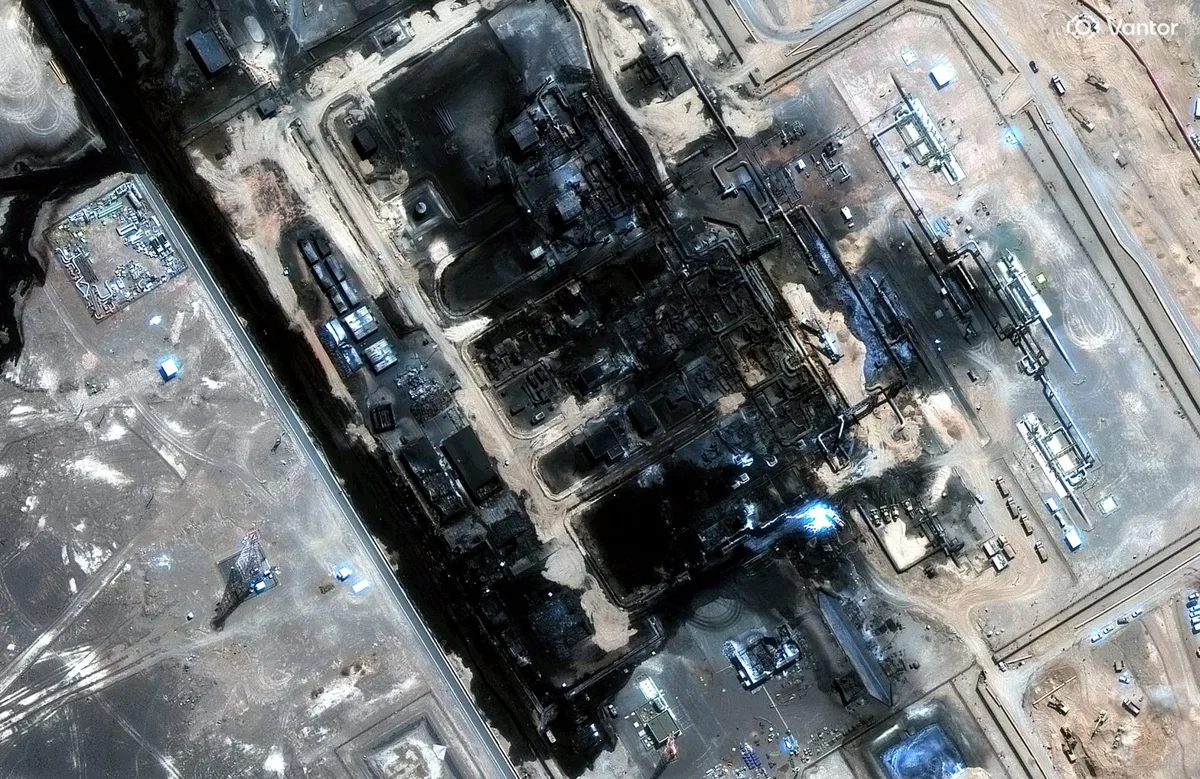
Saudi Arabia’s closure of a major oil pipeline after a recent attack is raising fears that global energy markets in crisis because of the war with Iran could face even starker shortages, pushing prices higher for fuel and other essentials.
The largest oil producer in the Middle East closed its East-West pipeline on Friday after the attack, which it blamed on drones from Iranian-backed militias in Iraq.
Two regional officials told The Associated Press that repairs could take three to five weeks.
The pipeline is crucial to getting some crude out of the Middle East by shipping it to the Red Sea rather than through the Strait of Hormuz , the narrow waterway through which roughly a fifth of the world’s oil supply passed before the U.S. and Israel attacked Iran in February.
Yemen’s Iran-backed Houthi rebels have seized islands along key Red Sea shipping routes, further threatening Saudi exports.
And while several limited alternatives remain, including trickles of tanker traffic in Hormuz, experts warn more supply shocks and higher prices straining households could pile up.
Brent crude, the international standard, traded at more than $105 a barrel Monday.
Here’s what we know: What is the East-West pipeline? Saudi Arabia’s East-West pipeline stretches some 1,200 kilometers (746 miles) across the desert nation — carrying oil from a processing facility near the Persian Gulf westward to the Red Sea.
There, crude is typically loaded onto tankers that head north towards Europe via the Suez Canal or south through the Bab el-Mandeb Strait, on the way to Asia.
The pipeline was built in the 1980s amid fears that Tehran would disrupt shipping through Hormuz during the Iran-Iraq war.
And for the first six months of the current war, it was crucial to keeping at least some oil flowing out of the Middle East while most tanker traffic in Hormuz remained at a standstill.
Rystad Energy said Monday that an average 2.6 million to 4 million barrels of oil a day moved through the pipeline and out of the Red Sea port of Yanbu since late August — a volume it said is now at risk of “disappearing from the market.” Four million barrels per day is about 4% of the global oil supply, according to the International Energy Agency.
Saudi Arabia produced nearly 10 million barrels of oil a day in September 2025, but was down to 6 million barrels per day in August, the IEA said.
Janiv Shah, vice president of oil markets for Rystad Energy, noted the recent jump in Brent prices proves the market is already responding to “a significant loss of supply.” Saudi inventories could sustain exports in the coming days, but that could “change quickly,” Shah added.
5News aggregated this summary from the outlet’s public feed. The full article, with all the context, is on fortune.com — the content belongs to Fortune.