Mark Cuban wants to solve wealth inequality by making employers choose between paying higher taxes or giving every member of staff company stock
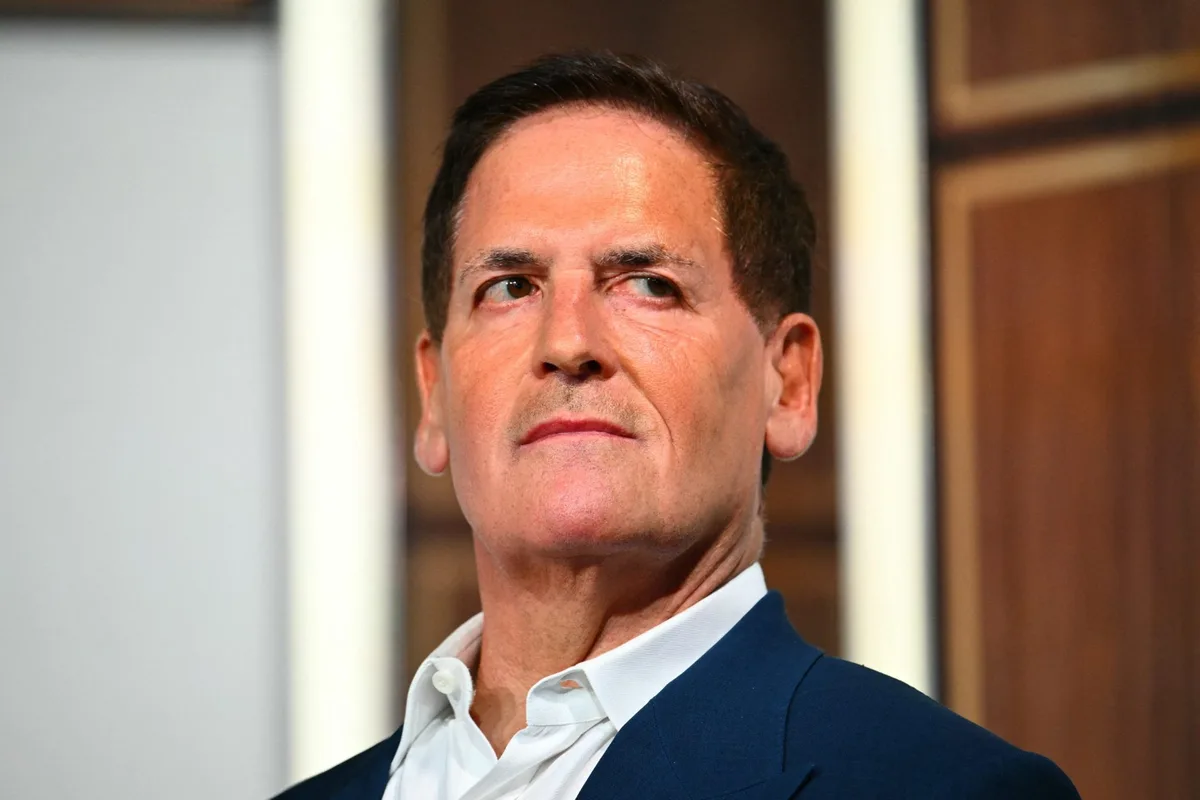
For a man reportedly worth more than $10 billion , entrepreneur Mark Cuban spends a lot of time talking about wealth inequality—and how to distribute it more evenly.
The ‘Shark Tank’ star has long shared suggestions—and has enacted his plans—to better balance income throughout the U.S. economy.
One of Cuban’s ideas was to give employees company stock: he told a recent episode of the ‘What It Takes’ podcast that he awarded 330 employees at his media company , Broadcast.com, stock ahead of Yahoo’s $5.7 billion acquisition of the company in 1999.
Three hundred of those employees became millionaires as a result , he said.
Cuban also awarded equity and cash bonuses to employees of his first IT consulting company, MicroSolutions.
But the famed investor has now taken the suggestion a step further: If founders and CEOs don’t seek to share the wealth generated by their companies with their employees, they should be forced to give back to society by paying higher corporate taxes.
Writing on X, the cofounder of online pharmacy Cost Plus Drugs, was asked what his plan would be to reduce wealth inequality across the country.
He responded: “Increase the taxes of any company that doesn’t offer equity to every employee on a pro rata basis to non-founder executives.
If they get rich from the market, so do they.
“It’s exactly what I have done for employees in companies I have started.
Most wealthy people get that way from selling their companies or taking them public.” While Cuban proposes increased taxes as a motivator to get business leaders to share equity more broadly, a criticism of higher taxes (and tariffs, as consumers have learned the hard way) is that increases to company costs are often passed back to customers and ultimately the public.
This represents a further stretch on budgets of consumers already dealing with above-target inflation, and without the boon of company stock to fall back on.
But Cuban disagrees, sharing his thinking on the social media platform owned by Tesla CEO Elon Musk: “Each entrepreneur decides what margins, gross or net, they are willing to accept.
For competitive or any other reason.” “Some of us realize that even though we might not enjoy paying taxes, and know that maybe 40% of the taxes paid actually get to people who need it, that’s still a value for the community, which can help your business.
5News aggregated this summary from the outlet’s public feed. The full article, with all the context, is on fortune.com — the content belongs to Fortune.