Treasury Secretary Scott Bessent becomes the tip of the spear in the war on Iran and the bond vigilantes as the U.S. readies more financial firepower
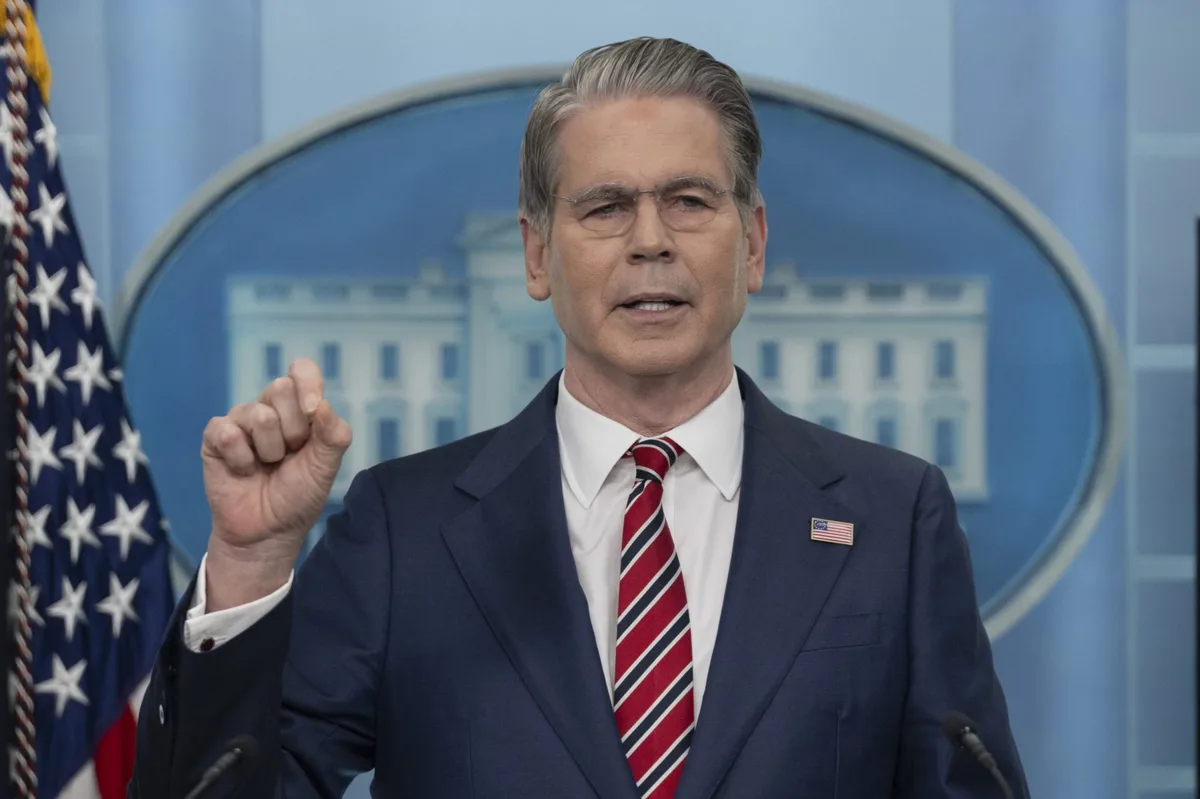
Facing an increasingly aggressive Iran and a slumping bond market, the Trump administration is betting that Treasury Secretary Scott Bessent can use the financial weapons in the government’s arsenal to achieve victory on both fronts.
The idea is to kill two birds with one stone: getting Iran to fully reopen the Strait of Hormuz would lower oil prices and take pressure off the bond market as investors lower inflation expectations.
Still, Bessent faces a tall order in trying to coerce an Iranian government that’s committed to holding on to the strait.
On Monday, Bessent is expected to detail the “economic D-Day” the U.S. will level against Iran, focusing on countries that do business with the regime.
“And any nation that serves as a financial artery of a withering regime should expect to share in its isolation,” Bessent wrote in a Financial Times op-ed .
“To become a sanctuary for terror is to become, in the eyes of the United States, a global pariah.” Sources told Reuters that the Treasury Department will expand its use of secondary sanctions against entities and countries that engage with Iran, threatening to cut off violators from the dollar-based financial system.
Iran has long used front companies to evade U.S. sanctions, and the new measures are expected to add categories of Iran-related conduct, even in a third country, that would be subject to secondary sanctions, Reuters reported.
The sanctions could put a big target on Chinese companies, which buy Iranian oil and handle Iran-linked financial transactions.
That would complicate President Donald Trump’s planned summit with Chinese President Xi Jinping in Washington in late September as both sides work to avoid any escalation in their bilateral trade tension.
Meanwhile, the United Arab Emirates—which has historically offered Iran vital access to global markets—has already declared an embargo on trade and transactions with the Islamic Republic.
Iran’s economy is under extreme pressure from the U.S. naval blockade, which has slashed oil exports that drive the country’s revenue as well as critical imports.
Top Iranian officials have been sounding the alarm on the economic the damage being inflicted , with parliamentary speaker Mohammad Bagher Ghalibaf pushing back against hardliners who reject negotiations with the U.S. and prefer to remain at war.
“No matter how strong we are militarily, if the people are hungry and we do not have financial circulation, economic growth and domestic production, we will not endure,” he said on Friday.
“As someone who has experienced war, we understand the true value of peace.” Bond market war As Bessent takes the lead in the U.S.
5News aggregated this summary from the outlet’s public feed. The full article, with all the context, is on fortune.com — the content belongs to Fortune.