Dolly Parton’s smartest business move was saying no to Elvis Presley
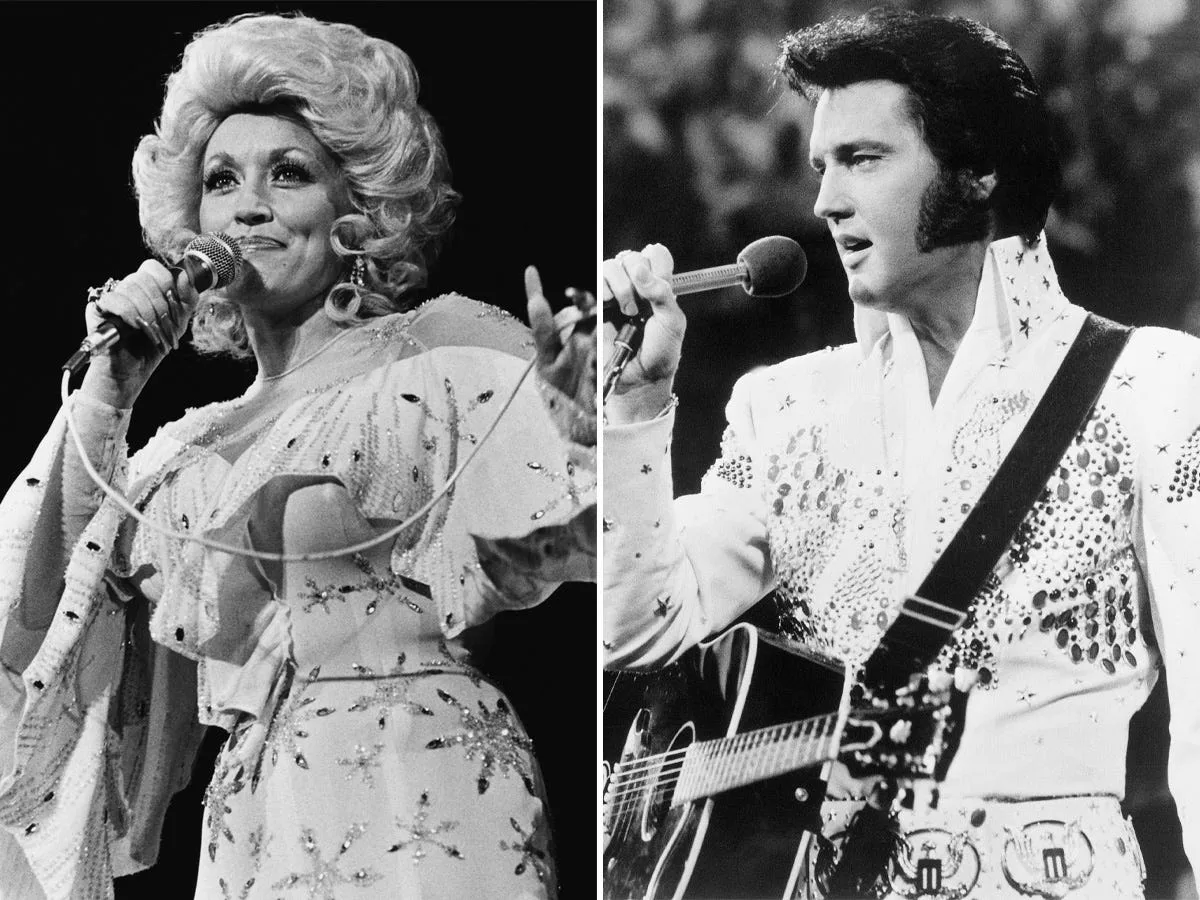
Dolly Parton and Elvis Presley.
George Rose/Bettmann/Getty Images In the 1970s, Elvis Presley wanted to record a cover of Dolly Parton's "I Will Always Love You." Parton declined because Presley asked to split the publishing rights.
The risky move paid off when Whitney Houston's version of the song became a bestselling hit.
In what world does a young, sequined country singer with just a handful of chart-toppers to her name turn down a special request from the King of Rock? In Dollywood , of course.
Dolly Parton , who died on Tuesday, was less than a decade into her career when she released the twangy torch song " I Will Always Love You " in 1974.
It topped Billboard's Hot Country Songs chart for one week, becoming her third No.
1 after "Joshua" in 1971 and "Jolene" earlier that year.
Elvis Presley, meanwhile, was already a musical legend and commercial titan when he took a liking to Parton's tune.
Over the years, Parton has recounted the story several times, saying she was ecstatic when she got the call that Presley wanted to cover "I Will Always Love You." It was the kind of headline-making endorsement that could make a musician's career: If Presley's version became a hit, it could be a major financial windfall for Parton as the sole songwriter.
However, Parton's excitement dissipated when she got another call from Colonel Tom Parker, Presley's manager at the time.
"He said, 'You know that we don't record anything with Elvis unless we have the publishing,'" Parton recently recalled to Howard Stern.
"And I said, 'Well, that's not possible, because that is my most important copyright.
I've got my own publishing company." "He said, 'Well, at least you've got to give us half,'" she continued.
"I said, 'I can't do that.'" Parton stood her ground on not giving up or splitting the publishing rights — meaning the legal ownership and control of Parton's composition, and a good chunk of the song's royalties, too — even though it was personally devastating.
5News aggregated this summary from the outlet’s public feed. The full article, with all the context, is on www.businessinsider.com — the content belongs to Business Insider.