Wall Street’s AI doomsday trade is here: chipmakers sink while hyperscalers gain
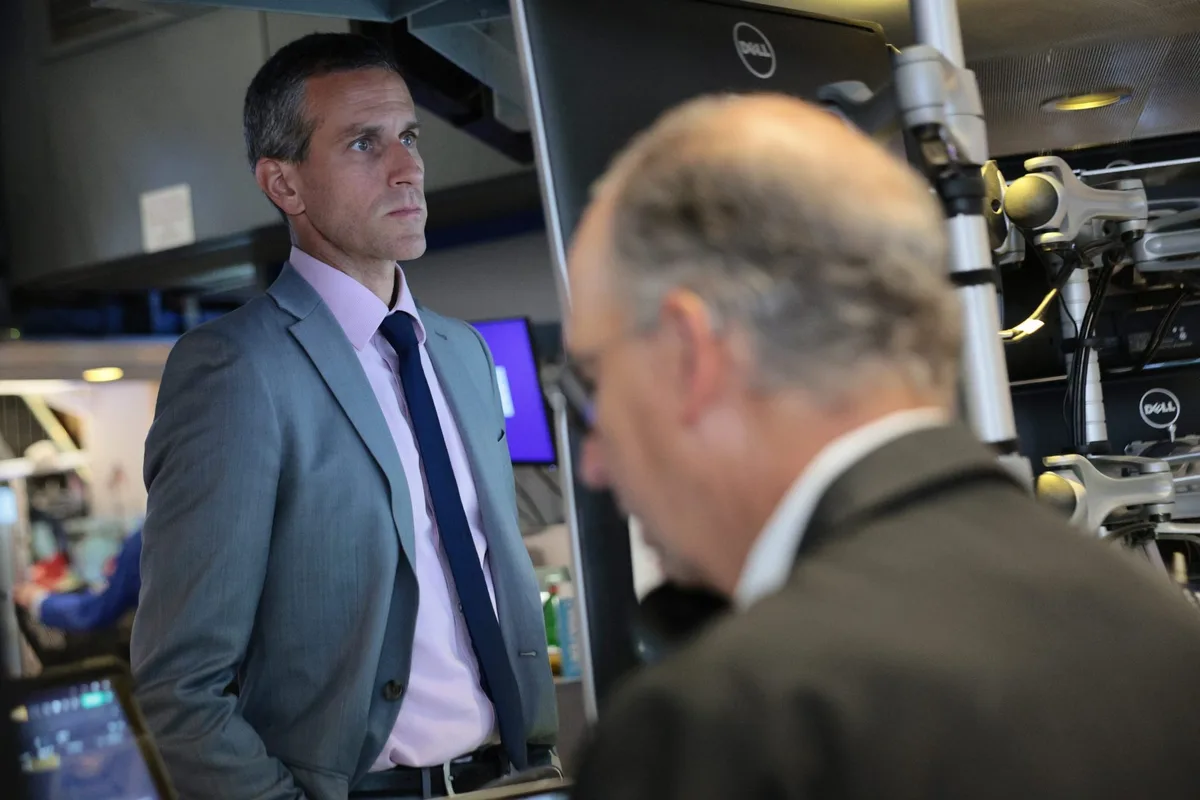
New York and San Francisco finally connected on Monday, as artificial intelligence’s existential-risk debate hit stocks.
But the market’s reaction was more interesting than simply “sell AI.” Nvidia fell more than 3% Monday morning, while Intel , AMD , and Marvell dropped between 5% and 6%, dragging the Philadelphia Semiconductor Index, a widely used measure of semiconductor stocks, down almost 6%.
Neoclouds and other companies leveraged to relentless data center construction also came under pressure.
Yet two of the biggest spenders in the buildout went the other direction: Alphabet rose almost 2%, Microsoft added 1.6%, and Meta gained roughly 1.4%.
Amazon fell about 1.6%, but held up considerably better than the chipmakers.
That divergence offers a bit of a window into how investors are gaming out something that, until this weekend, had quietly lurked in Wall Street’s risk models: What if the frontier AI race actually slows? On Saturday, Anthropic CEO Dario Amodei called for stronger safety measures and even a slowdown in model development after alarming demonstrations of models’ cyber capabilities.
OpenAI CEO Sam Altman and other AI leaders quickly backed him up.
Some proposals called for government intervention to impose a slowdown.
Gil Luria, head of technology research at D.A.
Davidson, argued that would hurt the companies selling the infrastructure—the picks and shovels of the trade, like Nvidia and CoreWeave—far more than the hyperscalers buying it.
If AI continues improving exponentially, Microsoft , Amazon, and Google will keep building data centers to meet demand, he told Fortune .
But if progress slows, they can simply stop adding capacity and harvest the returns from what they already built.
“They’ll just all stop building data centers and just digest what they have,” Luria predicted.
Revenue and profits could keep rising while capital expenditures fall, sending cash flow higher.
5News aggregated this summary from the outlet’s public feed. The full article, with all the context, is on fortune.com — the content belongs to Fortune.