Is the Supreme Court Going to Let Trump’s New Trade War Fly?
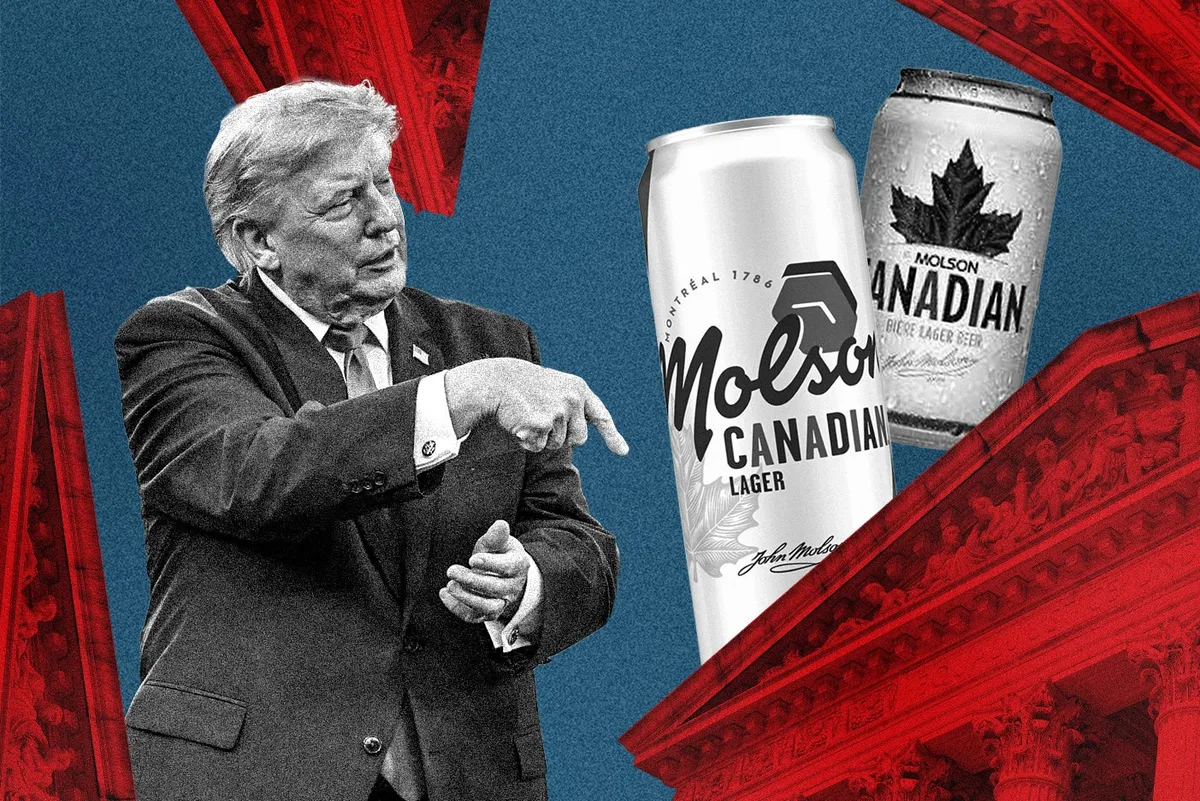
President Donald Trump is back at it with tariffs, announcing over the weekend that the U.S. is imposing a 50 percent tariff on $20 billion worth of Canadian goods ranging from hockey sticks to feathers to building materials. And he’s threatening even more tariffs on Canada’s auto industry come Jan. 1, 2027, claiming that the U.S. has been “carrying” Canada for decades and that our northern neighbors have been ripping Americans off. Just six months ago, the Supreme Court rejected Trump’s 2025 firestorm of tariffs, but now the administration thinks it has identified a new way to try to execute the president’s agenda. In this latest Canada fight, the Trump administration is dusting off a section of trade law that has never actually been used to tariff before. If it sticks, it could immediately allow the president to tariff just about anyone in the world with few guardrails.
The administration has discovered the Tariff Act of 1930, and within it, Section 338 , a little-known statute that allows the president to impose duties of up to 50 percent on any foreign country he finds has discriminated against the U.S., either directly or indirectly. No U.S. president has ever used it to tariff another country until now, so Trump’s application of it new and uncharted legal territory. Marc Busch is worried, as a former adviser to the U.S. Department of Commerce and the U.S. Trade representative. He believes that this new approach faces better legal odds than the tariffs Trump attempted to enact through the International Emergency Economic Powers Act that the Supreme Court shot down last term.
“What Trump may discover, and Canada might just turn out to be the beta test, is that he has the most latitude with Section 338, because it just says ‘discrimination.’ It clearly says ‘tariff.’ It clearly says he doesn’t need to really consult widely. There may or may not be a role for the International Trade Commission,” Busch, the Karl F. Landegger Professor of International Business Diplomacy at Georgetown University, told me. “That’s why the world is going to pay really close attention to the 338s, because this may be the only way he gets closer to the degree of freedom he had under IEEPA.”
You may remember that initially Trump tried to implement his “Liberation Day” tariff agenda through IEEPA, targeting Canada and over 65 other countries and the European Union. Those tariffs faced an onslaught of lawsuits , and by February 2026, the Supreme Court intervened and ruled that the president could not use the act to unilaterally tariff, as that particular law makes no mention of tariffs, duties, taxes, or anything else that would suggest Congress wanted to give the executive tariff power. To date, the Trump administration has refunded about $100 billion to American businesses because of that decision (though consumers have yet to see any of that money).
The president did not simply abandon his tariff agenda, though, instead identifying new ways to tariff under existing federal trade law. In February, Trump claimed that the U.S.
5News aggregated this summary from the outlet’s public feed. The full article, with all the context, is on slate.com — the content belongs to Slate.