US pulls last aircraft carrier in Asia as Trump focuses on Iran, Western Hemisphere
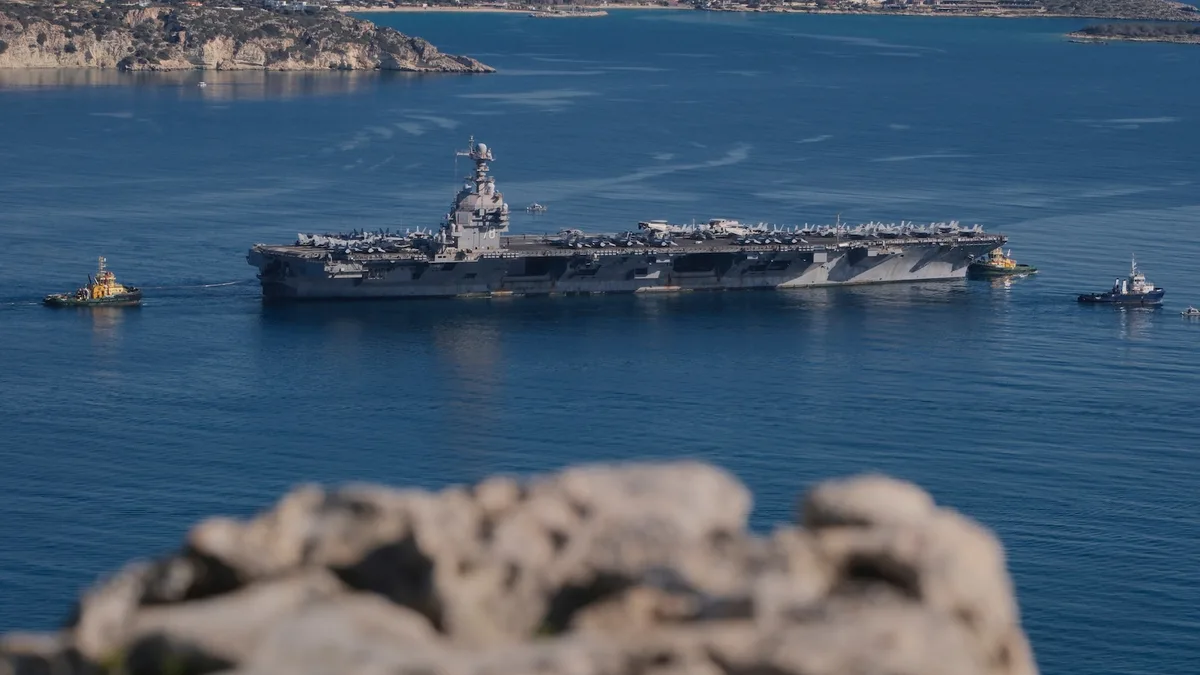
Trump’s war on Iran is stretching the limits of the nation’s aircraft carriers.
WASHINGTON -- President Donald Trump's war against Iran is stretching the limits of U.S. aircraft carriers and leaving the western Pacific without one of the key American warships as China shows more signs of aggression .
The USS George Washington is departing the Pacific and expected to replace the USS Abraham Lincoln in the Middle East amid growing concerns about mental health and supply issues aboard the long-deployed carrier. The Lincoln has had its time at sea extended from its original May return date to support operations against Iran.
The lack of a U.S. carrier in the Pacific may be short-lived if the Navy deploys another in the next couple of months. But it shows how the open-ended operations with Iran are running some American sailors ragged, analysts say, while the Trump administration further retreats from the Asia-Pacific region and focuses on the Western Hemisphere .
“The administration says that the Pacific is supposed to be the most important behind the Western Hemisphere,” said Greg Poling, director of the Southeast Asia Program at the Center for Strategic and International Studies. Instead, the U.S. is "doing the exact opposite" of its previously expressed goal of pulling out of the Middle East.
American allies in the Pacific are unsettled over the unpredictability of the Republican administration , Poling said, while Beijing “is quite happy with U.S. distraction, with the frustration of U.S. allies and partners."
Beijing sees the U.S. military presence in the region as a threat to China’s rise and an obstacle to its ambition to seize Taiwan , the self-governing island it claims as its own. But the United States has argued that the Pacific region is too important economically to lose .
No one expects China to invade Taiwan because an American aircraft carrier has left the region. But the carrier's absence gives the Chinese another opportunity to show its strength, said Bryan Clark, a former Navy submariner who is a defense analyst at the Hudson Institute.
“They’re using this as part of the narrative to demonstrate to the Philippines, to Japan, to Indonesia and others that the U.S. is not the big dog in the western Pacific anymore,” Clark said. “They would just prefer that countries in the region decide that China is the bigger power and the U.S. is not able to guarantee their security anymore.”
China conducted naval exercises this week with Indonesia and recently has shown signs of aggression toward Japan and the Philippines, two key U.S. allies that also have territorial disputes with Beijing.
China carried out military drills this month near the Scarborough Shoal in the South China Sea. Both China and the Philippines have claims over the shoal. Last month, a Chinese guided-missile destroyer conducted a live-fire exercise off Japan’s southernmost island of Okinotori.
Adm. Frank Bradley, head of the U.S. Special Operations Command, has been trying to reassure regional allies of Washington’s commitment. He was in Manila on Thursday, telling his Filipino counterparts that U.S.
5News aggregated this summary from the outlet’s public feed. The full article, with all the context, is on abcnews.go.com — the content belongs to ABC News.