The Latest Empty Threat Against Iran
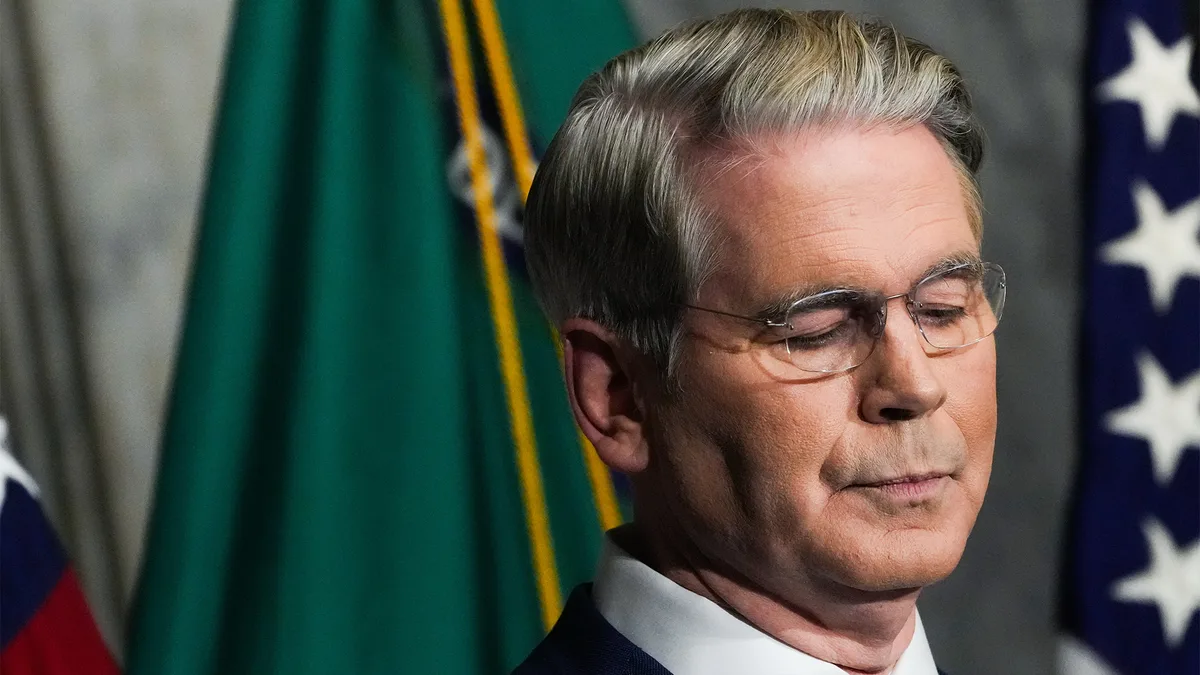
N o sooner had Treasury Secretary Scott Bessent announced the latest tool for achieving what he said would be the “economic asphyxiation” of Iran than he revealed the reason he was reluctant to use it.
Secondary sanctions—penalties on countries, individuals, or entities that do business with Iran—are ready to go, Bessent announced to reporters in the Treasury’s ornate Cash Room yesterday.
But he went out of his way not to name the chief offenders that help Tehran: China and Russia.
So, Bessent was asked, why threaten rather than just do it, particularly after President Trump last week warned of economic warfare “on an unprecedented scale” if Iran doesn’t surrender to U.S. demands? “Why would I want to blow up the global financial system?” Bessent responded, explaining that the administration is offering a bureaucratic grace period before the hammer falls.
Secondary sanctions, he insisted, “are a very powerful tool.” Which is true.
But the administration has repeatedly offered vivid explanations of what its powerful weapons can do, be they military or financial, and then declined to use them.
Remember when Trump threatened to erase Iran as a civilization ? The warnings may be intended to intimidate, but the lack of follow-through instead exposes just how narrow the administration’s options in Iran have become.
The possibilities for ending the war have been steadily closed off.
The list of useful military targets is diminishing, and munitions stockpiles are perilously depleted , while the tools that were supposed to do what missiles could not—sanctions, blockades, financial pressure—have failed to produce the Iranian capitulation Washington promised.
Iran has absorbed enormous damage, both military and economic, without surrendering its capacity to fight.
And the countries that matter most to the financial-pressure campaign, including China and Russia, have shown little inclination to help Washington finish the job.
S oon after Trump took office last year, he announced that he was “restoring maximum pressure” on Iran, directing his administration to tighten sanctions and drive down Iranian oil exports.
Eighteen months later, Bessent is promising what he describes as the “toughest sanctions in history.” Maximum pressure, it appears, has a sequel, much as Trump’s contention last June that Iran’s nuclear facilities had been obliterated was followed in February by a war to destroy Iran’s nuclear capabilities.
Trump, in a Truth Social post last week, hinted at what that sequel to maximum pressure would look like.
5News aggregated this summary from the outlet’s public feed. The full article, with all the context, is on www.theatlantic.com — the content belongs to The Atlantic.