What to know about the trial of former Tiananmen vigil organizers before a verdict
Two activists who organized Hong Kong's annual Tiananmen Square vigil are likely to hear a verdict in their case brought under a China-imposed national security law
HONG KONG -- A verdict is expected Friday in the case of two organizers of an annual Hong Kong vigil to remember the 1989 Tiananmen Square crackdown who are being tried under a China-imposed national security law that has stifled Hong Kong's pro-democracy movement.
Lee Cheuk-yan and Chow Hang-tung, former leaders of the Hong Kong Alliance in Support of Patriotic Democratic Movements of China, were charged in September 2021 with inciting subversion and face a maximum jail term of 10 years if convicted.
The activists pleaded not guilty when their trial opened in January and are expected to appear in court Friday. If convicted by three government-approved judges, they likely will be sentenced at a later date.
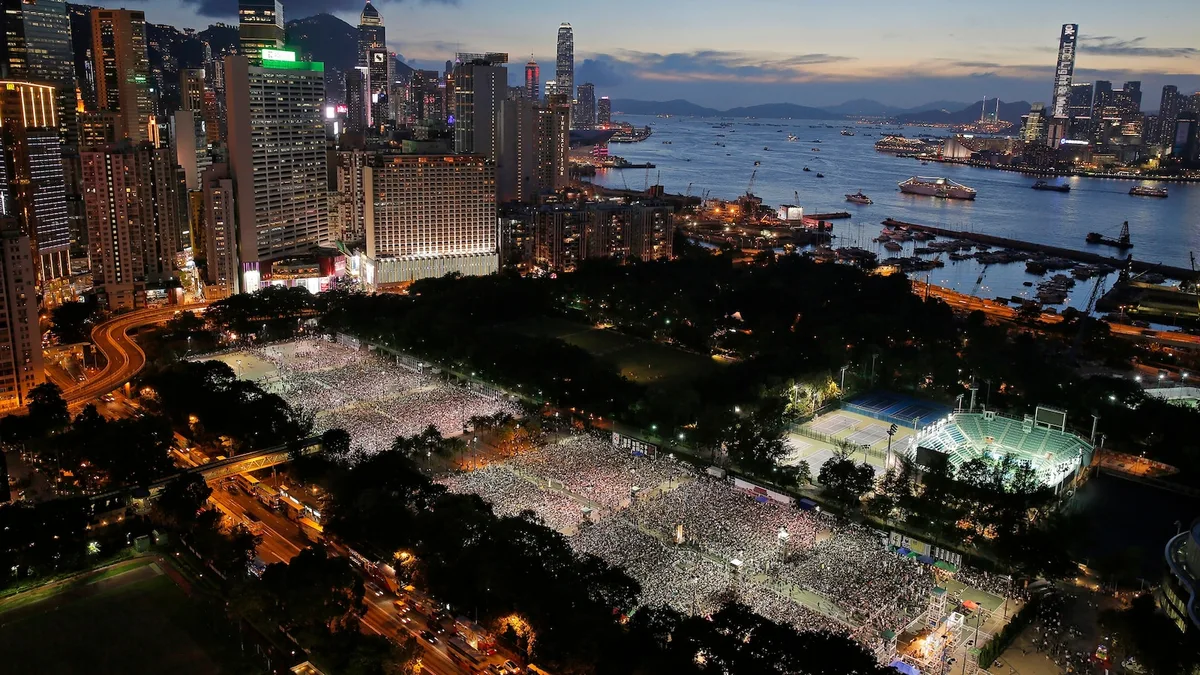
For three decades, the now-disbanded alliance organized the only large-scale, public commemoration in China that attracted tens of thousands annually until the event was banned in 2020 following the outbreak of the coronavirus pandemic.
Observers say the activists' prosecution and the disappearance of the vigil symbolized the loss of freedoms that Beijing promised to maintain for 50 years when the former British colony returned to Chinese rule in 1997. The government said its law enforcement actions were evidence-based and strictly in accordance with the law.
The 1989 pro-democracy protests in Beijing's Tiananmen Square were one of the biggest challenges to the Communist Party’s rule in China. The government sent tanks into the heart of the capital city and troops opened fire on the student-led demonstrations in a bloody crackdown that killed hundreds, possibly thousands.
The event immediately became an official taboo in mainland China. But the alliance held annual vigils in Hong Kong to keep memories alive across the border until authorities banned the public remembrances during the pandemic, citing risks to public health.
Weeks after the ban, Beijing imposed the national security law that was later used to prosecute Lee, the alliance's former chairperson, and Chow, a former vice chair. Authorities deemed the legislation crucial for Hong Kong’s stability following anti-government protests in 2019.
The alliance voted to disband in the same month as the pair was charged.
Many other leading activists are now also jailed under the 2020 law, including the pro-democracy former media tycoon Jimmy Lai .
5News aggregated this summary from the outlet’s public feed. The full article, with all the context, is on abcnews.go.com — the content belongs to ABC News International.