Intero Biosystems wants drugmakers to test on mini human intestines, not animals
Last two days at Disrupt are half off. Don’t miss any more moments. REGISTER NOW
Disrupt doors open Oct. 13. Get your pass and bring someone with you at 50% off. REGISTER NOW.
Drug development has long relied on animal models, but differences between species mean what works in animals doesn’t always translate to humans, and most drugs still fail during development. Intero Biosystems , a Denver-based startup, is developing human intestinal organoids, lab-grown tissue that mimics the gut, as another way to study how drugs and other compounds might affect the human body before they are tested in people. Researchers and pharmaceutical companies are increasingly looking for models that better reflect human biology to supplement animal testing and reduce their reliance on it.
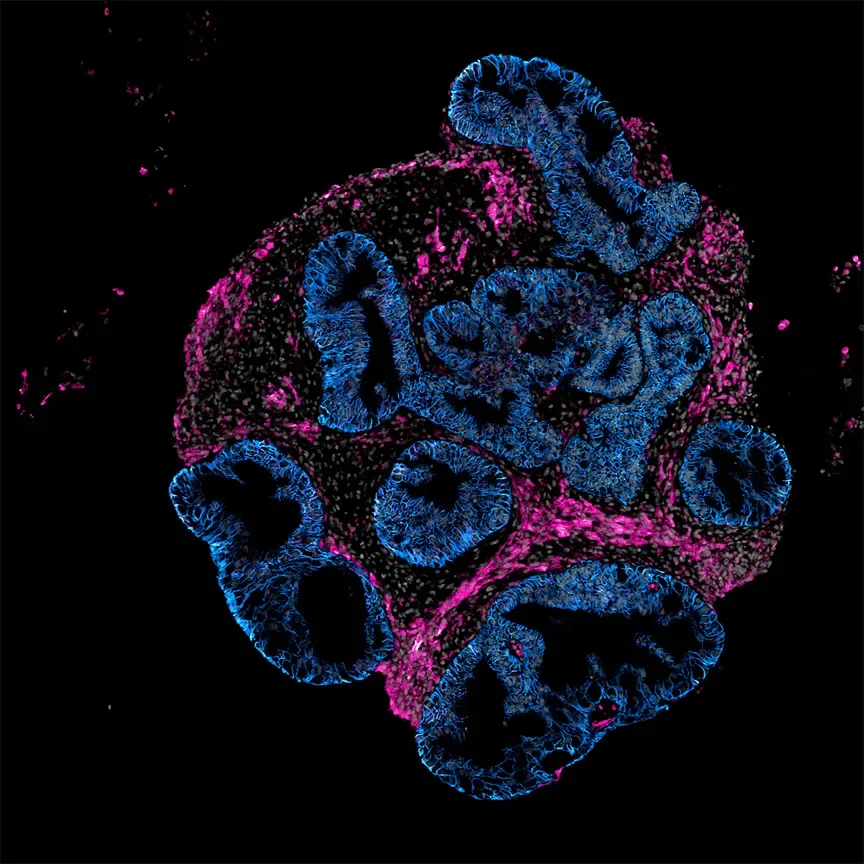
Intero, which spun out of the University of Michigan, says its organoids differ from simpler models that replicate only part of the gut. They contain multiple cell and tissue types found in the human intestine, which the company believes makes them a more human-relevant model for testing drugs and other compounds, co-founder and CTO Madeline Eiken told TechCrunch.
“Most drugs fail clinical trials, and I think it’s pretty easy to appreciate that we are neither mice nor flat layers of cells,” Eiken said.
The startup’s flagship product, GastroScreen , is a human intestinal organoid model that it sells to pharmaceutical, biotech, food, and chemical companies for testing drugs and other compounds. Each organoid is about one millimeter across, and the company ships roughly 100 at a time in a tube, co-founder and CEO Charlie Childs said. Customers can use them as healthy intestinal models or induce disease-like conditions to test how the tissue responds to different compounds.
“We’re literally shipping mini living organs in the mail to people,” Childs said.
Beyond the organoids themselves, Intero sells the supplies needed to grow and work with them, such as the nutrient mixes that feed the cells and the chemicals used in experiments. It also runs studies for customers, including designing custom experiments, performing lab tests, and delivering the resulting data. Much of this work focuses on drug safety and disease research. For example, a customer can expose the organoids to a drug candidate to see whether it could harm the gut, or use organoids modeling a gut condition to see how the tissue responds to a compound.
Founded in 2024, the startup now has seven employees and just under 10 customers after raising a $2.3 million pre-seed round last year. It generated more than $400,000 in revenue from the fourth quarter of last year through the third quarter of this year, the CEO noted.
Regulatory changes have also helped drive interest in alternatives to animal testing. In April of last year, the U.S.
5News aggregated this summary from the outlet’s public feed. The full article, with all the context, is on techcrunch.com — the content belongs to TechCrunch.