Appeals court delivers unsettling ruling — and says Supreme Court left it no choice
A federal appeals court says decades-old Supreme Court precedent forced it to protect the in-home possession of AI-generated child sexual abuse material , as judges warned that rapidly advancing technology has complicated legal lines drawn nearly 25 years ago.
The ruling exposes a widening gap between Supreme Court precedent and rapidly advancing artificial intelligence.
The Seventh Circuit said it was bound by a 2002 Supreme Court decision that rejected restrictions on sexually explicit depictions of fictional children when no actual child was involved in their creation.
But two judges warned that modern AI can now generate images virtually indistinguishable from material depicting the abuse of real children.
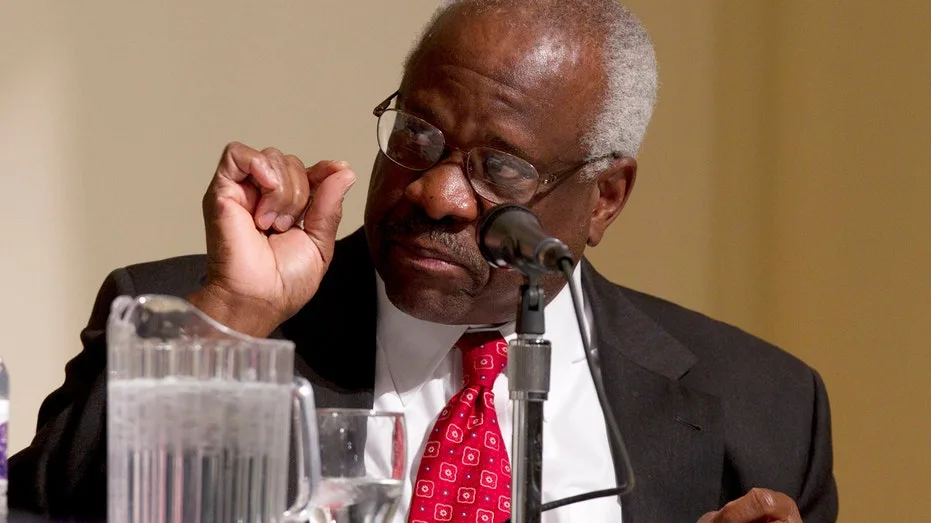
"Indeed, in Free Speech Coalition, the Supreme Court addressed the scope of First Amendment protections for virtual CSAM, but that was nearly twenty-five years ago, and the image-generation technology available today was likely unimaginable back then," Judge John Lee wrote.
"Given the relentless advancement in artificial intelligence models, we have some concerns about the lines these cases draw, but we are not free to redraw them ourselves." WORKER AT SWANKY COUNTRY CLUB ACCUSED OF USING AI TO CREATE EXPLICIT PHOTOS OF TEEN: POLICE The Seventh Circuit affirmed a lower court’s dismissal of one of four charges against Steven Anderegg, who investigators said had hundreds of AI-generated sexually explicit images depicting children on devices seized from his Wisconsin home.
Anderegg was charged with producing and distributing the AI-generated material, transferring it to a minor under 16, and possessing it.
A federal district court dismissed only the possession charge on First Amendment grounds, leaving the other three charges intact.
The Justice Department appealed that dismissal , arguing that the government should be permitted to prohibit possession of obscene virtual child sexual abuse material even when no actual child was involved in its creation.
But the Seventh Circuit sided with the lower court.
The government generally cannot criminalize the private possession of obscene material inside someone's home, but it can prohibit possession of child sexual abuse material involving real children because its creation exploits actual victims.
However, the Supreme Court complicated that distinction in 2002 when it struck down restrictions covering sexually explicit images of fictional children created without using actual minors.
The justices reasoned that the government's overriding interest in protecting children from exploitation did not apply in the same way when no real child was involved.
5News aggregated this summary from the outlet’s public feed. The full article, with all the context, is on www.foxnews.com — the content belongs to Fox News.